Roofer Liability Insurance in California Explained
Does your roofer need liability insurance in California? Learn what general liability covers, the disclosure the law requires, and how to verify coverage.
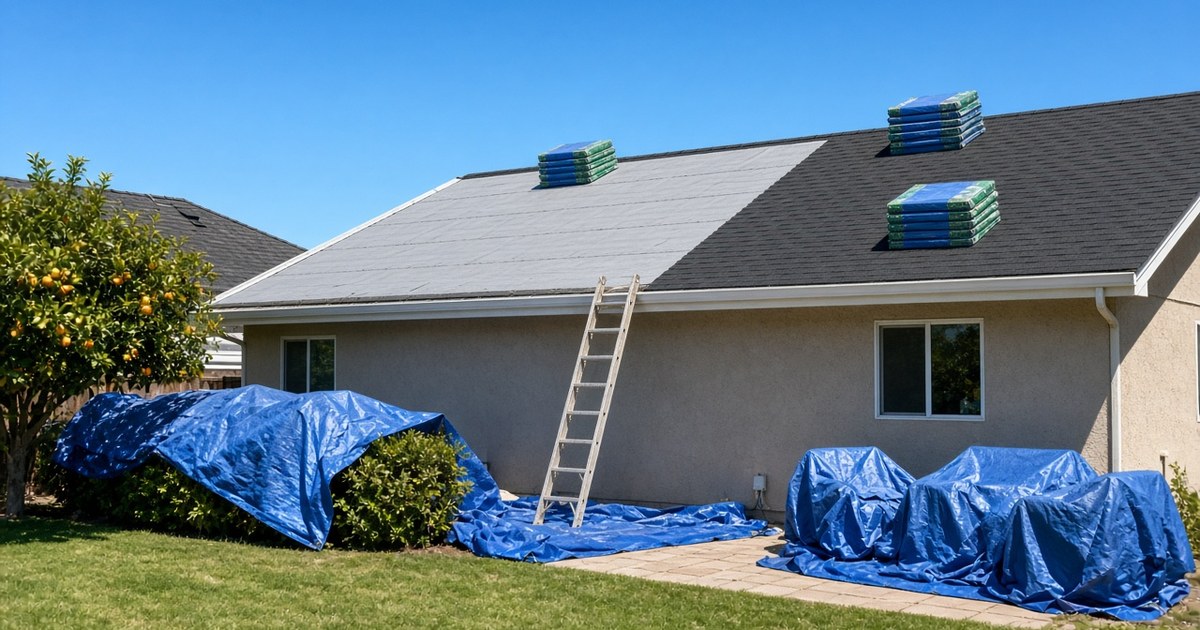
A roof replacement puts heavy materials, power tools and a crew above your home for days. If a bundle of tile slides off and cracks your skylight, or a ladder falls through a neighbor's fence, who pays? Usually the answer depends on the roofer's commercial general liability insurance. In California that coverage is strongly recommended but not required for most contractors, so you need to ask. This guide explains what roofer liability insurance covers, the disclosure California law requires, how it differs from workers' comp and bonds, and how to verify coverage before you sign.
Is liability insurance required for roofers in California?
Generally, no. The Contractors State License Board (CSLB) says commercial general liability insurance is not required, but that it strongly recommends all contractors carry it. CSLB cautions homeowners to evaluate the risk to their family and property when hiring a contractor who is not insured.
Source: CSLB, "Information About Commercial General Liability Insurance" (home improvement notice), cslb.ca.gov, read November 22, 2026
CSLB's own memo on the law says that although it strongly suggests contractors carry this insurance, the law does not mandate it.
Source: CSLB, SB 2029 requirements memo for home improvement contractors, cslb.ca.gov, read November 22, 2026
The disclosure your roofer must give you
What the law does require is honesty about it. Under Business and Professions Code section 7159.3, CSLB says home improvement contractors must tell you in writing whether or not they carry commercial general liability insurance, and that this written statement must accompany the bid, if there is one, and the contract. If they are insured, they must give you the name and telephone number of the insurance company.
Source: CSLB, "Information About Commercial General Liability Insurance," cslb.ca.gov, read November 22, 2026
So look for a section headed Commercial General Liability Insurance in your roofing contract. Our guide on what should be in a roofing contract in California covers the other required notices.
What general liability insurance covers
CSLB says commercial general liability insurance can protect against third-party bodily injury and accidental property damage, and that it is not intended to cover the work the contractor performs.
Source: CSLB, "Information About Commercial General Liability Insurance," cslb.ca.gov, read November 22, 2026
Examples on a roofing job
- Debris falls and damages your car, patio cover or landscaping.
- A crew member steps through a skylight or ceiling and causes interior damage.
- Rain gets in because the roof was left open, and the ceiling is damaged.
- A neighbor or visitor is hurt by falling material.
Whether a specific claim is paid depends on the policy. What liability insurance generally does not do is fix poor workmanship on the roof itself. That is a warranty and contract issue. Our guide on how long a roofing warranty should be explains that side.
Liability insurance vs workers' comp vs bond
Homeowners often mix these up. They protect against different things:
| Coverage | What it is for | Required? |
|---|---|---|
| General liability | Third-party injury and accidental property damage | Not required for most contractors, but must be disclosed |
| Workers' compensation | Injuries to the contractor's employees | Required if the contractor has employees |
| License bond | A limited fund for certain claims against the license | Required for licensed contractors |
CSLB says that in California, if a contractor has employees, they are required to carry workers' compensation insurance, and that if a worker is injured on your property and the contractor does not have insurance, you could be financially liable. It also says commercial general liability insurance is not required, but that if the contractor does not carry it, they should be able to explain how damage or losses will be covered; otherwise you or your insurance company could end up paying.
Source: CSLB, "How do I find the right licensed contractor?," cslb.ca.gov, read November 22, 2026
Roofing has a stricter workers' comp rule than many trades. For roofers specifically, read does your roofer need workers' comp, and for the bond, see the California contractor license bond explained.
What if a roofer is self-insured or uninsured?
CSLB describes a self-insured contractor as one who has made a business decision to be personally responsible for losses that would ordinarily be covered by insurance. Its advice for both self-insured and uninsured contractors is the same question: if something went wrong, would this contractor be able to cover the losses?
Source: CSLB, "Information About Commercial General Liability Insurance," cslb.ca.gov, read November 22, 2026
A small, careful roofer without a policy is not automatically a bad choice, but you should go in with open eyes, and you may want to ask your own insurer how your homeowners policy would respond.
How to verify a roofer's liability insurance
- Read the disclosure in the bid and contract. Note the insurer's name and phone number.
- Ask for a certificate of insurance. CSLB suggests asking to see a copy of the certificate or the name of the carrier and agency, and says this information is also available on the license history page.
- Call the insurer. CSLB says to check with the insurance company that the coverage will cover your project.
- Match the names. The business on the policy should match the business on the license and the contract.
- Ask about subcontractors. If another company will do the work, ask what coverage it carries. See our guide on roofing subcontractors in California.
Source: CSLB, "How do I find the right licensed contractor?" and "Information About Commercial General Liability Insurance," cslb.ca.gov, read November 22, 2026
Start with the license itself. Our step by step guide on how to check a contractor's license in California shows where the insurance details appear.
If your roofer damages your home
Take dated photos right away, tell the contractor in writing, and ask them to open a claim with their insurer. Keep copies of every message and estimate. If the contractor will not respond, you can call the insurer named in the disclosure yourself, and talk with your own homeowners insurer about how your policy would apply. Do not let the crew close up the area until the damage is documented.
Frequently asked questions
Do roofers need liability insurance in California?
Most do not legally have to carry it, but CSLB strongly recommends it, and home improvement contractors must tell you in writing whether they have it.
Does general liability cover a bad roof installation?
CSLB says it is not intended to cover the work the contractor performs. Workmanship problems fall under your contract and warranty.
Is a certificate of insurance enough?
It is a good start. Call the insurer listed to confirm the policy is active and fits your project.
What if the roofer has no insurance at all?
Ask how they would pay for damage, and treat a contractor with employees but no workers' comp as a red flag. See our list of unlicensed contractor red flags.
See the record before you sign
A ConFacts roofer background check pulls the public record on a California C-39 roofing contractor, including CSLB license status, workers' comp, bond, the qualifier, certifications and reviews, with a 0 to 100 Trust Score. Your first report is free, then $7, or 3 for $15. We take no money from contractors. We show you the record, you make the decision.
Two companies. Two reports.
Got more than one bid? Check them side by side, against the same records.
Compare bids side by side