Emergency Roof Tarping: When and How It Works
A roof tarp buys time after a storm, leak or fallen tree. Learn when you need one, what a proper tarp job looks like, and how cost and insurance work.
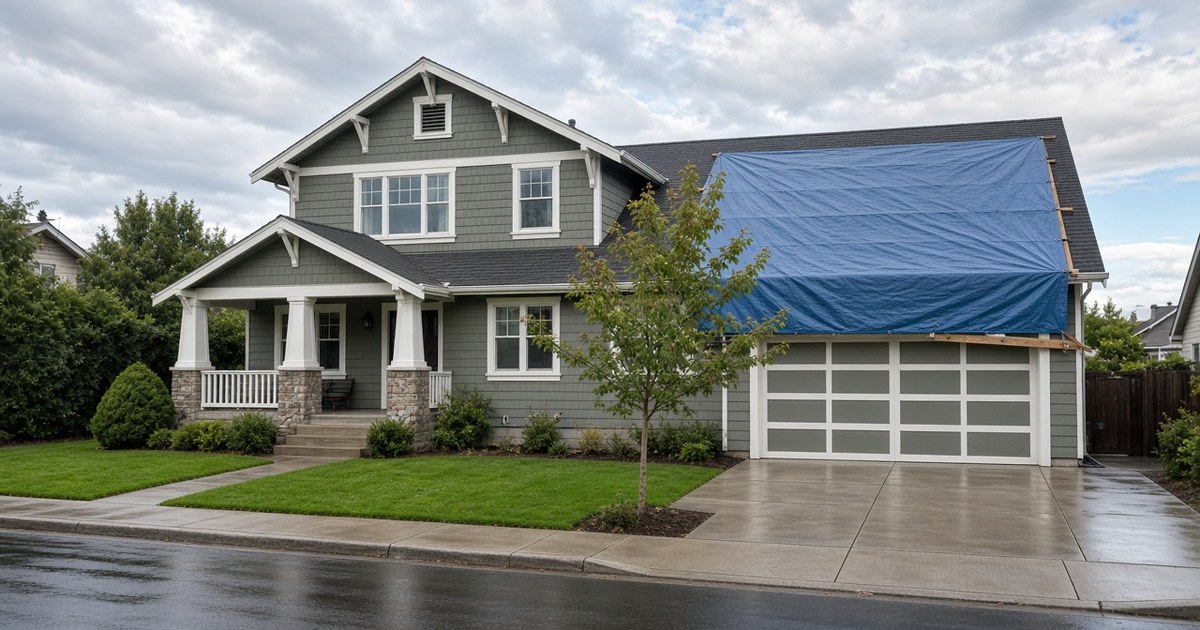
When a storm tears off shingles, a branch punches a hole in the roof, or a leak shows up in the middle of a rainy week, an emergency roof tarp is often the fastest way to keep water out. It is a short term fix, not a repair, but done well it can protect your ceilings, insulation and belongings until the real work happens. This guide explains when you need emergency roof tarping, why it is usually a job for a pro, what a good tarp job looks like, and how insurance and costs work in California.
Source: OSHA, "Fall Prevention Campaign," osha.gov (BLS data); U.S. Army Corps of Engineers, "Operation Blue Roof," usace.army.mil; Contractors State License Board, "Before Applying for a License," cslb.ca.gov; all read November 27, 2026
When a roof needs an emergency tarp
A tarp makes sense when there is an opening or damaged area that will let water in before a permanent repair can be made. Common reasons include:
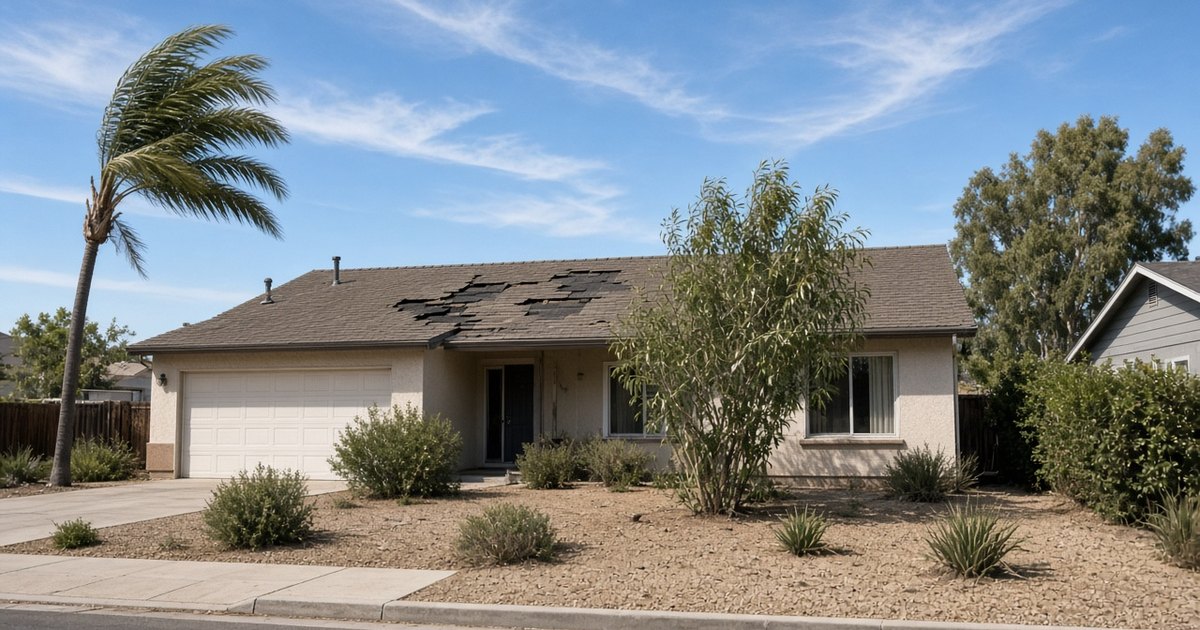
- Shingles or tiles torn off by wind, leaving bare underlayment or decking.
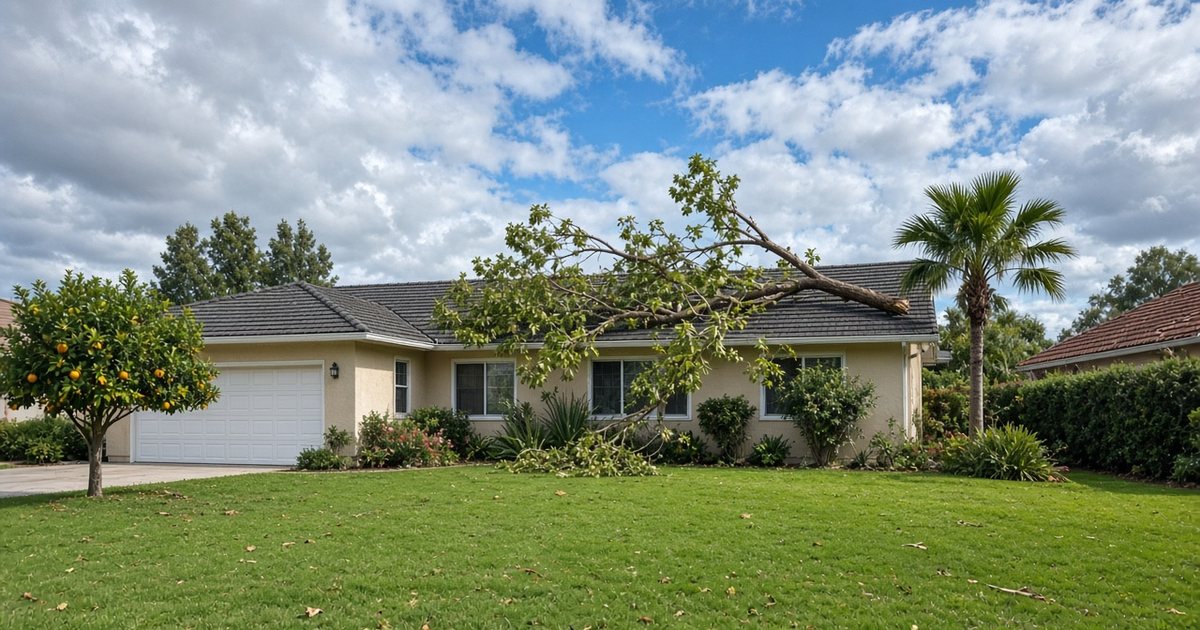
- A tree or large limb that has damaged the roof. Our guide to what to do when a tree fell on your roof in California covers the first steps.
- An active leak during a rainy stretch when a roofer cannot make a full repair right away. See our guide to a roof leaking when it rains for what to do inside the house.
- Fire, ember or impact damage that has opened the roof.
The California Department of Insurance says one of the most important things to do after a property loss is to make temporary repairs to prevent further damage, such as covering damage in the roof with plastic sheeting or plywood. It also warns that homeowners policies may not cover ensuing damage if you did not take reasonable steps to secure the property.
Source: California Department of Insurance, "Residential Property Claims Guide," insurance.ca.gov, read November 27, 2026
Safety first: should you tarp it yourself?
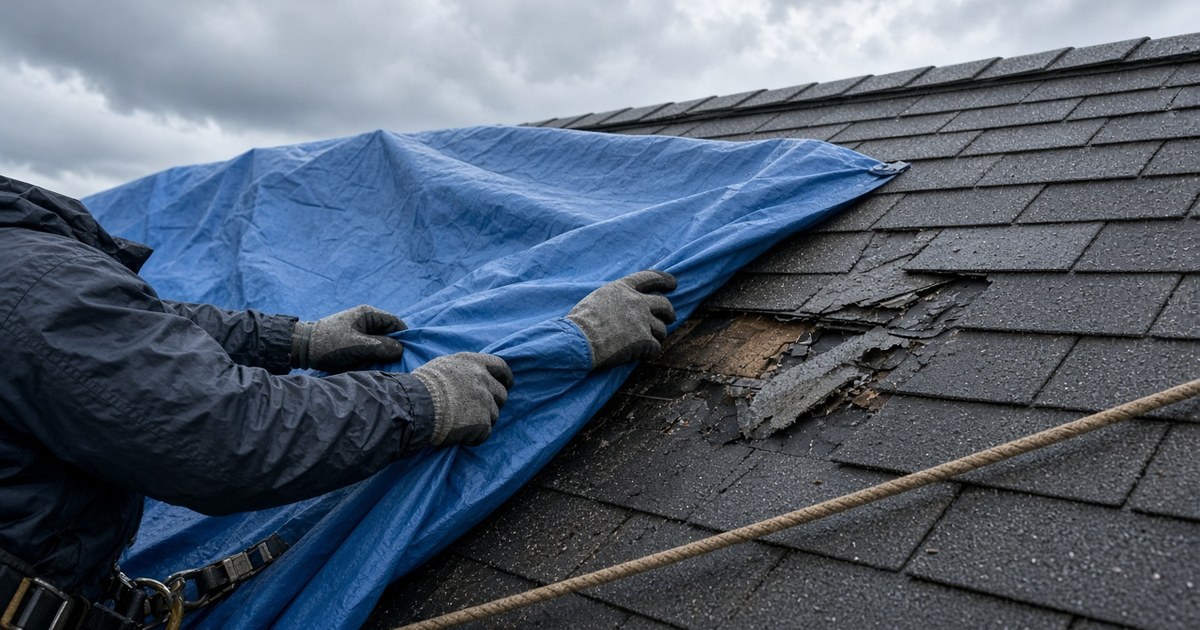
For most homeowners, the honest answer is no. A wet, damaged roof is slippery, storm debris can hide weak spots, and wind can turn a tarp into a sail. OSHA calls falls the leading cause of death in construction and reports 389 fatal falls to a lower level out of 1,034 construction deaths in 2024, among workers who do this for a living. The insurance department also tells homeowners not to risk their own safety when making repairs.
Source: OSHA, "Fall Prevention Campaign," osha.gov; California Department of Insurance, "Residential Property Claims Guide," insurance.ca.gov; both read November 27, 2026
What you can safely do from the ground or inside the house:
- Keep everyone away from sagging ceilings and downed lines.
- Move belongings, put buckets under drips and take photos of everything.
- Call your insurer to report the damage and ask what they expect for emergency tarping.
- Call a licensed roofer and ask for a written price for the tarp alone.
Ask the roofer: can you give me a written price for the emergency tarp only, separate from any repair?
What a proper tarp job looks like
A good emergency tarp covers more than the hole. Our guide to roof damage after a storm describes the basic method, and a roofer should be able to explain each of these points:
- Coverage: the tarp extends well past the damage on every side and, where possible, over the ridge, so water runs over it rather than under it.
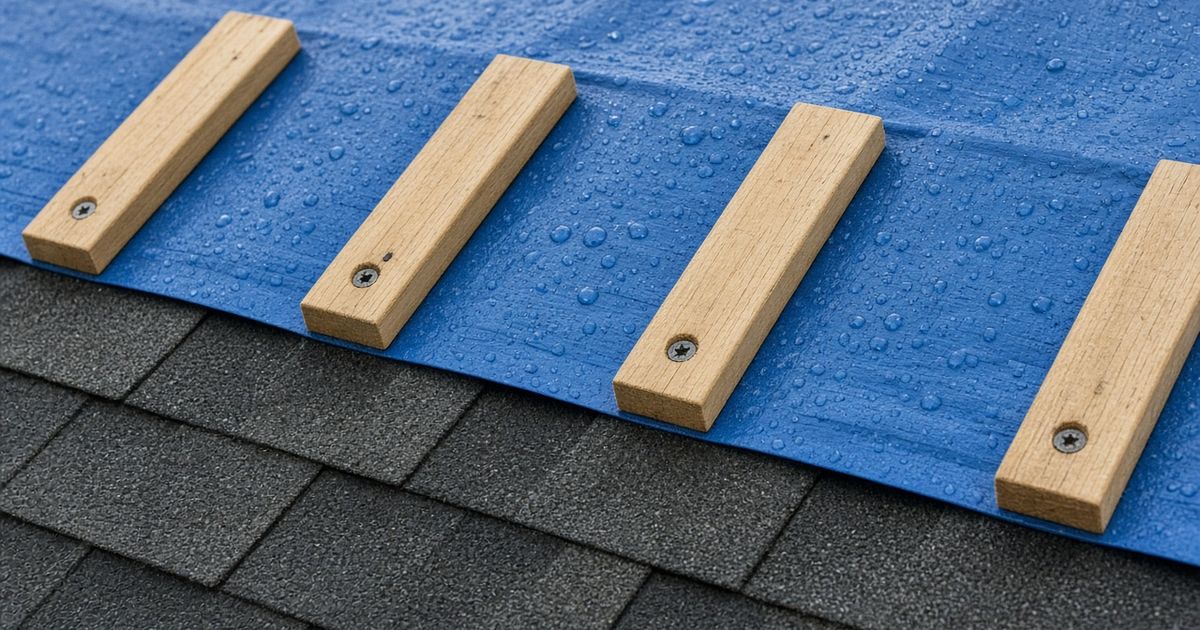
- Anchoring: the edges are held with wood boards fastened through the tarp, not with loose weights.
- Few new holes: fasteners go where they do the least harm to good roofing.
- Drainage: no pockets where water can pool and add weight.
- Photos: the roofer photographs the damage before covering it, so your adjuster can see it later.
Tile roofs are harder to tarp, because tiles can crack underfoot and boards cannot be fastened as easily. Ask how the roofer will protect tile around the damaged area.
How long a tarp can stay
A tarp is meant to last until the permanent repair, not for seasons. Sun and wind wear it down, so check it after each storm from the ground and ask the roofer to come back if it shifts, tears or starts to pool water.
Cost, insurance and Operation Blue Roof
What tarping costs
Prices depend on the size and pitch of the roof, the damage, access and how urgent the call is. We do not quote a price range, because a written price for your roof is the only reliable number. The insurance department warns homeowners to beware of contractors who encourage you to spend a lot of money on temporary repairs.
How insurance treats it
According to the Department of Insurance, your insurer will reimburse reasonable costs to protect your property as long as you save receipts, and payments for temporary repairs are part of the total loss settlement. It also says not to make extensive permanent repairs until the adjuster has seen the damage. Our guide on how to file a roof insurance claim in California walks through the rest of the process.
Source: California Department of Insurance, "Residential Property Claims Guide" and "Top Ten Tips for People Affected by Winter Storms," insurance.ca.gov, read November 27, 2026
Free tarps after a federal disaster
After some major disasters, FEMA asks the U.S. Army Corps of Engineers to run Operation Blue Roof, which installs free fiber reinforced sheeting on qualifying homes. To qualify, the home must be your primary residence, no more than 50 percent of the roof framing can be damaged, and the roof must be shingles or a similar material that can be nailed. The program cannot cover clay tile, slate or asbestos roofs. It runs only when a mission is assigned, and it is free, so anyone charging for Blue Roof service should be reported to the FEMA Disaster Fraud Hotline.
Source: U.S. Army Corps of Engineers, "Operation Blue Roof," usace.army.mil, read November 27, 2026
Questions to ask before someone tarps your roof
• What is your California contractor license number?
• What is the written price for the tarp alone, and what does it include?
• Will you photograph the damage before you cover it?
• How will you fasten the tarp, and how many new holes will that make?
• How long should this tarp hold, and will you come back if it shifts?
• Does signing for the tarp commit me to you for the full repair?
Frequently asked questions
Does homeowners insurance pay for an emergency roof tarp?
Does a roofer need a license to tarp a roof?
How much can a roofer charge up front?
Should I sign a repair contract when the tarp goes on?
Source: Contractors State License Board, "Before Applying for a License" and "Finding the Right Contractor," cslb.ca.gov, read November 27, 2026
Check the roofer before the tarp goes on
Storms bring door knockers, so learn how to spot a storm chaser roofer and how much a roofer can legally ask as a deposit in California. Read our before-you-sign checklist, then run a ConFacts check on the roofer to review the state license, bond and workers' comp records in one place, even for a small emergency job.
Two companies. Two reports.
Got more than one bid? Check them side by side, against the same records.
Compare bids side by side