Tree Fell on Your Roof? What to Do in California
A tree fell on your roof? Here is what to do first in California: safety, temporary repairs, insurance limits for tree removal, and hiring licensed help.
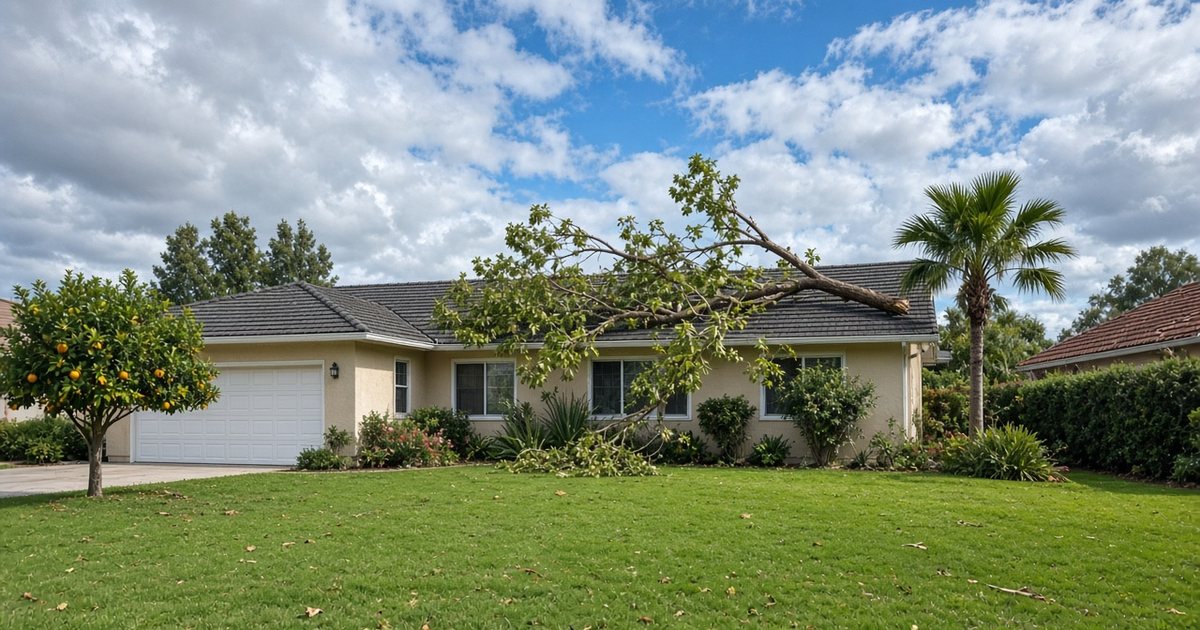
Winter storms and strong winds bring down limbs and whole trees across California every year. When one lands on your house, the next few hours and days matter for your safety, your insurance claim and the quality of the repair. This guide walks you through what to do after a tree falls on your roof: getting everyone safe, protecting the home, how homeowners insurance usually handles trees and debris, and who you need to hire for the tree and for the roof.
First steps after a tree falls on your roof
1. Get everyone safe
Leave the damaged part of the house. Stay away from downed power lines and call 911 or your utility if any lines are involved. Do not climb onto the roof or try to cut the tree yourself; a loaded trunk can shift or roll without warning. Our guide on what to do after storm damage to your roof covers the wider safety checklist.
2. Document everything
Before anything is moved, take photos and video of the tree, the roof, the attic and every room with damage. Note the date and time.
3. Prevent more damage
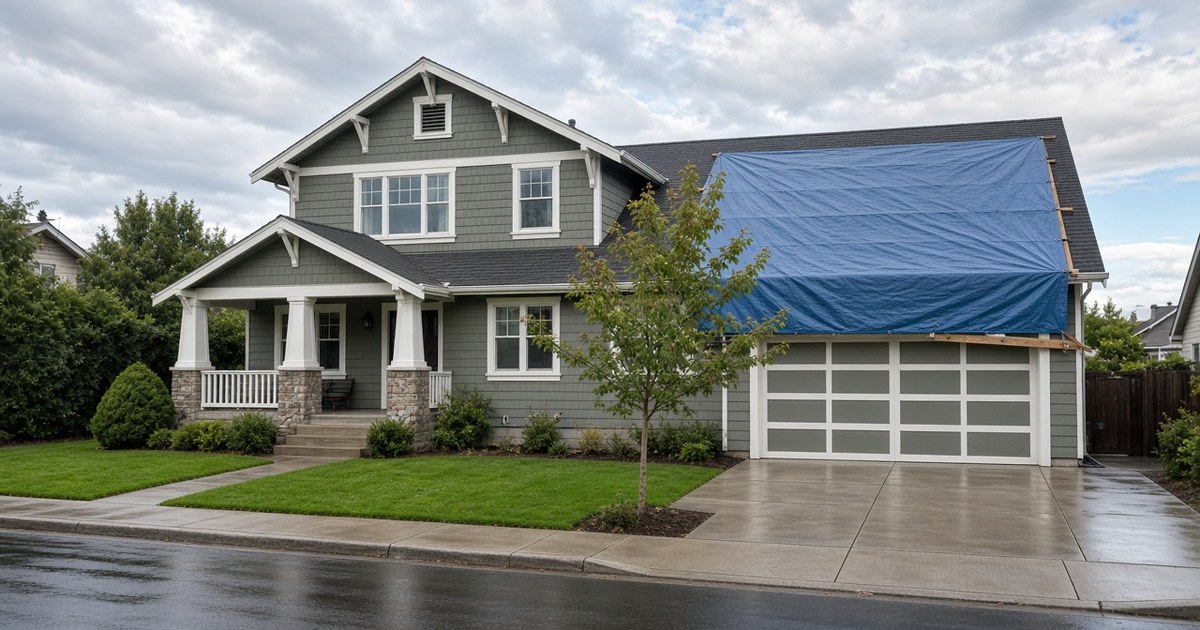
The California Department of Insurance (CDI) says one of the most important things to do after a property loss is make temporary repairs to prevent further damage, such as covering damage in the roof, walls, doors and windows with plastic sheeting or plywood. It warns that homeowners policies may not cover ensuing damage if you have not taken reasonable steps to secure the property, and says your insurer will reimburse all reasonable costs to protect your property as long as you save receipts. Our guide to emergency roof tarping covers what a proper tarp job looks like.
Source: California Department of Insurance, "Residential Property Claims Guide," insurance.ca.gov, read November 22, 2026
CDI also warns to beware of building contractors that encourage you to spend a lot of money on temporary repairs, notes that payments for temporary repairs are part of the total loss settlement, and advises against making extensive permanent repairs until the adjuster has assessed the damage.
Source: California Department of Insurance, "Residential Property Claims Guide," insurance.ca.gov, read November 22, 2026
4. Call your insurer
Report the damage to your insurance company or agent to start the claim. Our guide to filing a roof insurance claim in California explains the adjuster visit, estimates and payments.
Does homeowners insurance cover a tree on the roof?
Damage to the house from a covered event is usually handled under the dwelling part of your policy. The tree itself and its removal are treated more narrowly. CDI's claims guide says trees, shrubs and other plants are insured on a limited basis. It says the aggregate limit generally is 5% of the dwelling limit as an additional amount of insurance, with a sub-limit of $500 (and in some cases $250) for loss to any one tree, shrub or plant, and tells you to check your own policy language.
Source: California Department of Insurance, "Residential Property Claims Guide," insurance.ca.gov, read November 22, 2026
Debris removal
CDI says that if a covered loss leaves debris that must be removed, the coverage generally lets you apply a percentage, generally 5%, of the coverage limit to pay for removal, and that these costs are included as part of the limit of liability for covered property.
Source: California Department of Insurance, "Residential Property Claims Guide," insurance.ca.gov, read November 22, 2026
Policies differ, so read the trees, shrubs and debris removal sections of yours, and ask your adjuster how the tree removal, the roof repair and your deductible fit together.
What if it was the neighbor's tree?
You will usually start with your own policy for damage to your own home. Questions about whether a neighbor should pay are a separate matter between the insurers, and sometimes the courts. Keep any earlier letters or messages about the tree's condition, and give them to your insurer.
Who to hire: tree service and roofer
The tree
Removing a tree from a roof is skilled, dangerous work. CSLB created the C-49 Tree and Palm Contractor classification, which it began accepting applications for on January 1, 2024, to make sure tree service contractors are tested on health and safety protocols. CSLB says contractors who hold the older C-61/D-49 Tree Service classification issued before that date may keep working under it.
Source: CSLB, "New C-49 Tree and Palm Classification Takes Effect January 1, 2024," industry bulletin, cslb.ca.gov, read November 22, 2026
The roof
Once the tree is off, a licensed C-39 roofer should inspect the decking, rafters, flashing and underlayment, not just the shingles or tiles you can see. Impact damage often reaches the roof deck; our guide on roof decking replacement explains what that work involves. Large structural damage may also need a general contractor or engineer, and a permit from your city.
Watch for storm chasers
After big storms, door knockers show up offering to handle the tree, the roof and the insurance claim for you. Slow down. Get the license number, check it, and get more than one written bid. Our guide on how to spot a storm chaser roofer lists the warning signs, and California also limits how much a contractor can ask up front; see how much deposit a California roofer can ask for.
Ask every contractor working on or around your roof whether they carry general liability insurance. Our guide to roofer liability insurance in California explains why it matters during cleanup and repair.
How to lower the risk next time
- Have a qualified tree professional look at large trees that lean toward the house.
- Trim limbs that hang over the roof; overhanging branches also give rodents a path, as our guide to roof rats in the attic explains.
- Keep gutters clear so storm debris does not back water onto the roof.
- Photograph your roof and trees each year so you have a before picture for any claim.
Frequently asked questions
Who do I call first when a tree falls on my house?
Call 911 if anyone is hurt or power lines are down. Then protect the home with temporary covering, document the damage, and call your insurer.
Does insurance pay to remove a fallen tree?
CDI says trees and debris removal are covered on a limited basis, with specific limits per tree and overall. Check your policy and ask your adjuster.
Can I fix the roof before the adjuster comes?
Make temporary repairs to prevent more damage and keep receipts, but CDI advises against extensive permanent repairs until the adjuster has assessed the damage.
Does a tree removal company need a license?
CSLB says any construction project valued at $1,000 or more in combined labor and materials needs a state contractor license, and it lists tree removal, tree pruning higher than 15 feet and stump removal among projects that require one. A C-49 Tree and Palm or C-61/D-49 Tree Service contractor may do this work. Check the license before work starts.
Source: CSLB, "Fast Facts: Choosing the Right Landscaper," cslb.ca.gov, read November 22, 2026
Check the roofer before the repair
Before you sign for the roof repair, run a ConFacts check on the California roofer. You get a sourced background check from public records, including CSLB license status, workers' comp, bond, the qualifier, certifications and reviews, with a 0 to 100 Trust Score. Your first report is free, then $7, or 3 for $15. We take no money from contractors. We show you the record, you make the decision.
Two companies. Two reports.
Got more than one bid? Check them side by side, against the same records.
Compare bids side by side