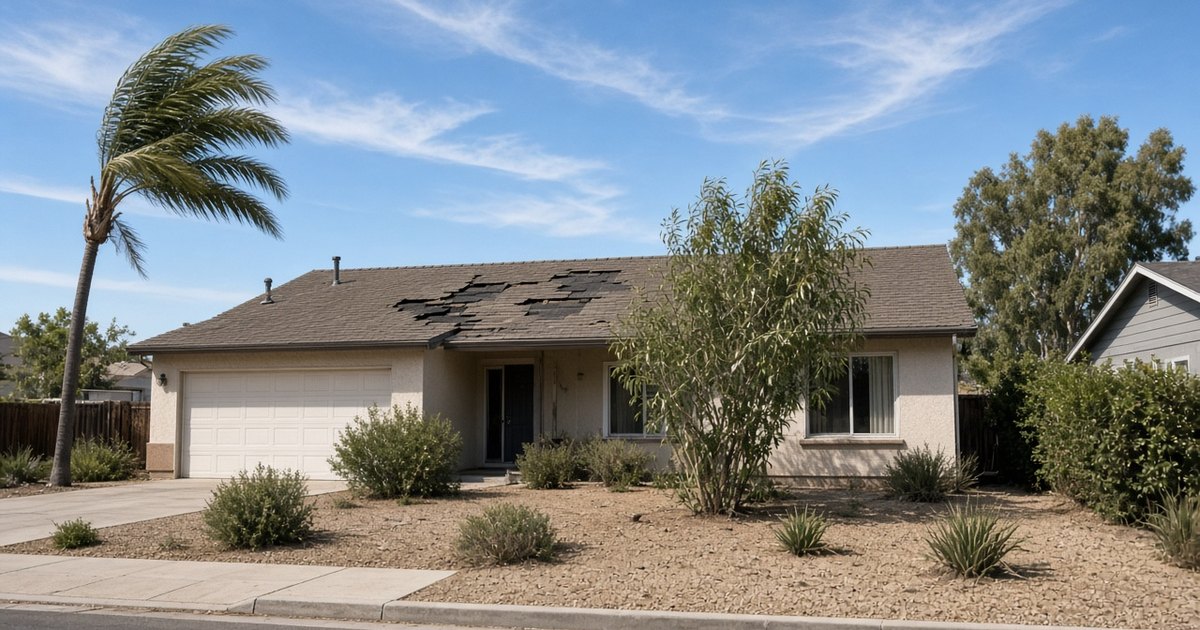
Attic Mold After a Roof Leak: What to Do
Found attic mold after a roof leak? Learn why it grows, the 24 to 48 hour drying window, when to clean it yourself, when to hire help and how to stop the leak.

A roof leak does not always show up as a drip in the living room. Sometimes the first sign is a musty smell, dark spots on the attic sheathing, or a stain that keeps spreading on a ceiling. Mold in the attic after a roof leak is common, and it is fixable, but only if you deal with the water first. This guide explains why attic mold grows, how fast you need to act, when cleanup is a do-it-yourself job, when to hire help, and how to keep it from coming back.
Source: U.S. Environmental Protection Agency, "A Brief Guide to Mold, Moisture and Your Home," epa.gov, read November 28, 2026
Why mold grows after a roof leak
The EPA puts it simply: the key to mold control is moisture control. Mold spores are everywhere, and none of them grow without water or moisture. When a roof leak soaks the wood sheathing, rafters or insulation in your attic and they stay damp, mold has what it needs. The EPA says that if wet or damp materials are dried within 24 to 48 hours after a leak, in most cases mold will not grow.
Source: U.S. Environmental Protection Agency, "A Brief Guide to Mold, Moisture and Your Home," epa.gov, read November 28, 2026
Common sources of attic moisture
- Roof leaks at flashing, pipe boots, valleys or damaged shingles.
- Bathroom or kitchen fans that vent into the attic instead of outside.
- Poor attic ventilation that traps warm, damp air.
- Clogged gutters that back water up under the roof edge.
Our guide to finding a roof leak in the rain helps you trace where water is getting in, and roof ventilation and attic heat explains how airflow keeps an attic dry.
Why attics hide leaks
Attics are easy to ignore. Most people only go up there once or twice a year, and insulation can soak up a slow leak for months before a stain shows on the ceiling below. Water also travels. It can enter at a vent or flashing, run down a rafter, and drip several feet away from where it came in. That is why a stain on the ceiling is not always directly under the roof problem. A quick look in the attic after the first big storm of the season is one of the simplest ways to catch a leak early, before it turns into rot or a large patch of mold.
Signs of mold in the attic
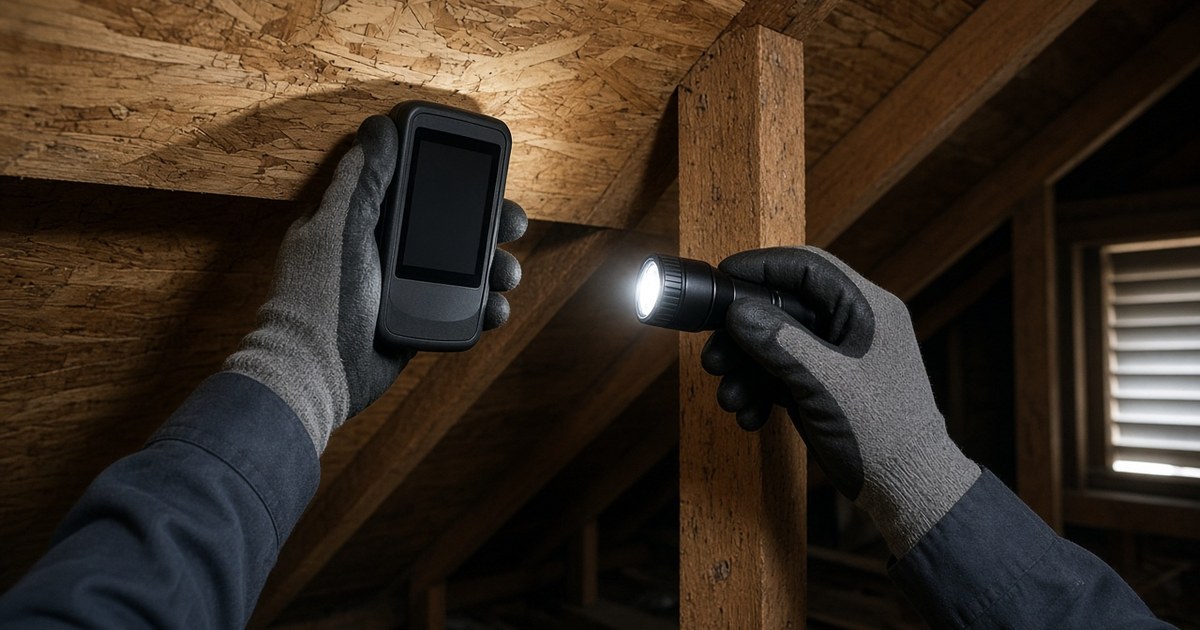
Look for dark or fuzzy patches on the underside of the roof deck, water stains around nails or rafters, damp or matted insulation, and a musty smell. Use a flashlight and step only on framing members, never on the drywall between them.
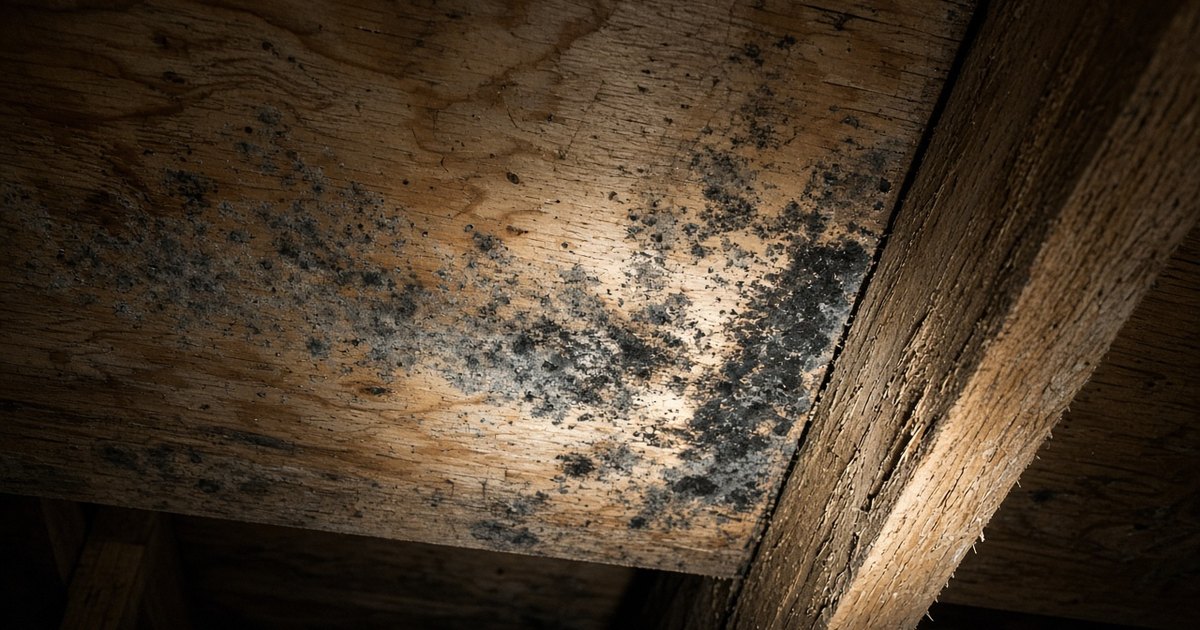
Is attic mold dangerous?
The EPA says molds have the potential to cause health problems. They produce allergens, irritants and in some cases potentially toxic substances. Breathing in or touching mold or spores can cause allergic reactions in sensitive people, such as sneezing, runny nose and red eyes. If anyone in your home has asthma, allergies or a weak immune system, take attic mold seriously and talk with a doctor about health concerns.
Source: U.S. Environmental Protection Agency, "A Brief Guide to Mold, Moisture and Your Home," epa.gov, read November 28, 2026
Do you need a mold test?
Usually not. The EPA says that in most cases, if you can see mold growing, sampling is unnecessary. It also notes there are no EPA or other federal limits for mold or mold spores, so a test cannot tell you whether your home meets a federal standard. Be wary of anyone who wants to sell expensive testing before fixing an obvious leak.
Source: U.S. Environmental Protection Agency, "A Brief Guide to Mold, Moisture and Your Home," epa.gov, read November 28, 2026
Fix the water first. Cleaning mold without stopping the leak only buys time until it grows back.
Cleaning it yourself vs hiring help
The EPA ties the decision mostly to size. If the moldy area is less than about 10 square feet, roughly a 3 foot by 3 foot patch, it says most people can handle the job themselves by following its guidelines. If there was a lot of water damage, or the mold covers more than 10 square feet, the EPA points to its professional remediation guidance.
Source: U.S. Environmental Protection Agency, "A Brief Guide to Mold, Moisture and Your Home," epa.gov, read November 28, 2026
EPA cleanup basics
- Scrub mold off hard surfaces with detergent and water, then dry them completely.
- Porous materials such as insulation or ceiling tiles may need to be thrown away if they become moldy.
- Do not paint or caulk over moldy surfaces. Clean and dry them first, because paint over mold is likely to peel.
- Do not run your heating and cooling system if you suspect it is contaminated with mold, since it could spread mold through the house.
- Wear gloves, eye protection and a respirator such as an N-95.
Source: U.S. Environmental Protection Agency, "Mold Cleanup in Your Home" and "A Brief Guide to Mold, Moisture and Your Home," epa.gov, read November 28, 2026
Hiring a mold cleanup contractor
If you hire someone, the EPA says to make sure the contractor has experience cleaning up mold, check references, and ask them to follow EPA's professional guidance or other recognized guidelines. Get a written scope that says what will be removed, how the area will be contained, and how they will confirm the attic is dry.
Source: U.S. Environmental Protection Agency, "A Brief Guide to Mold, Moisture and Your Home," epa.gov, read November 28, 2026
Fix the roof so mold does not return
Once the leak is found, the roof repair is a job for a licensed roofer. If the sheathing has softened or rotted, it may need to be replaced, which our guide to roof decking dry rot replacement explains. Ask the roofer to show you photos of the damaged area before and after the repair.
If the leak came from a storm or sudden event, your homeowners policy may cover part of the damage, while long-term leaks and wear often are not covered. Our guide to filing a roof insurance claim in California walks through the process. Renters should read our guide to landlord responsibility for roof leaks in California.
Questions to ask about attic mold and the roof leak
• Where exactly is the water getting in, and can you show me photos?
• Does any roof sheathing or framing need to be replaced?
• Will wet insulation be removed, and how will it be disposed of?
• How will you make sure the attic is dry before it is closed up?
• Are bath or kitchen fans venting into the attic, and should that be fixed?
• Is attic ventilation adequate, or should vents be added?
Frequently asked questions
How fast does mold grow after a roof leak?
Can I clean attic mold myself?
Should I test for mold?
Will insurance pay for attic mold?
Check the roofer before you sign
The mold will only stay gone if the leak is fixed right. Read our before-you-sign checklist, and before you hire, run a ConFacts check on the roofer to review the state license, bond and workers' comp records in one place, and keep every photo and invoice with your home records.
Two companies. Two reports.
Got more than one bid? Check them side by side, against the same records.
Compare bids side by side