Shingles Blown Off in Wind? What to Do Next
Wind blew shingles off your roof? Learn what to do first, why shingles fail in wind, when a repair is enough, how insurance works and what to ask the roofer.
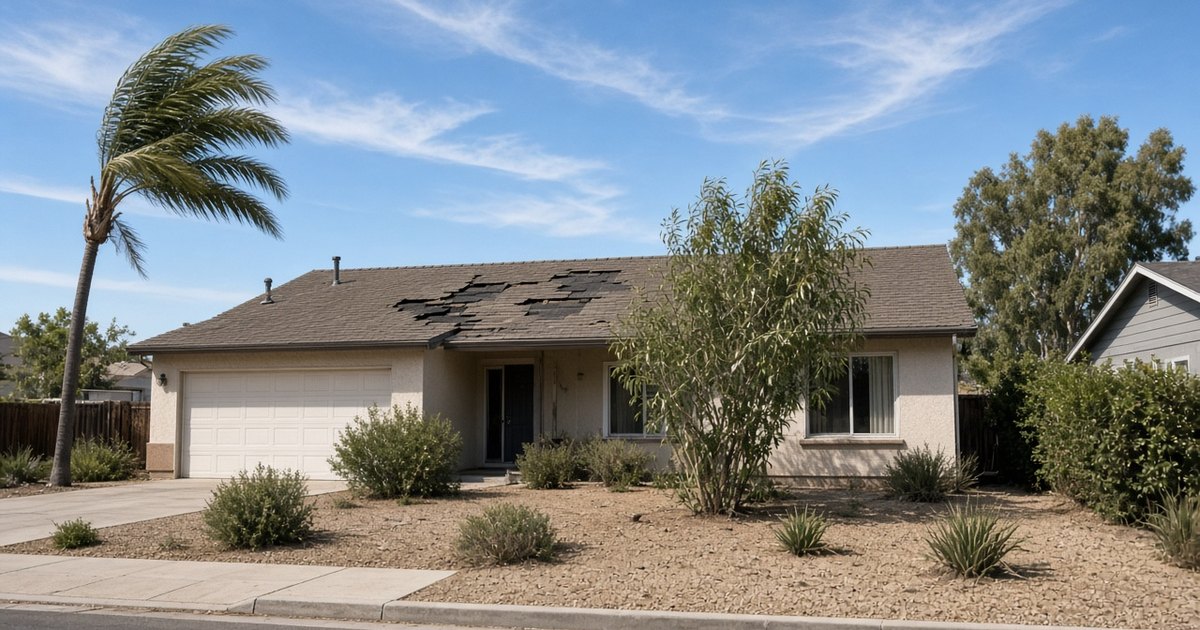
A gusty night, a few dark shingle pieces on the lawn and a bare patch on the roof. Santa Ana winds, winter storms and coastal gusts all strip shingles off California roofs every year. The good news is that a few missing shingles are usually a straightforward repair if you act before the next rain. This guide covers what to do right away, why shingles blow off, when a repair is enough and when it is a sign of a bigger problem.
Source: 2025 California Residential Code, Sections R905.2.5, R905.2.6 and R908.4, via up.codes, read November 28, 2026
What to do in the first 24 hours
- Stay safe. Keep off the roof, especially in wind or rain. Look for downed power lines or hanging branches before you walk the yard.
- Document the damage. Photograph the roof from the ground, the shingle pieces in the yard and any stains inside, with the date. Keep a few of the fallen shingles; they help with matching.
- Check the attic. With a flashlight, look for daylight, damp insulation or drips under the bare area.
- Get it covered. If rain is coming, ask a roofer to tarp or temporarily seal the bare spot. Keep the receipt.
- Call your insurer if the damage is more than a few shingles or water got inside.
Our guide on what to do after storm damage to your roof has a fuller checklist.
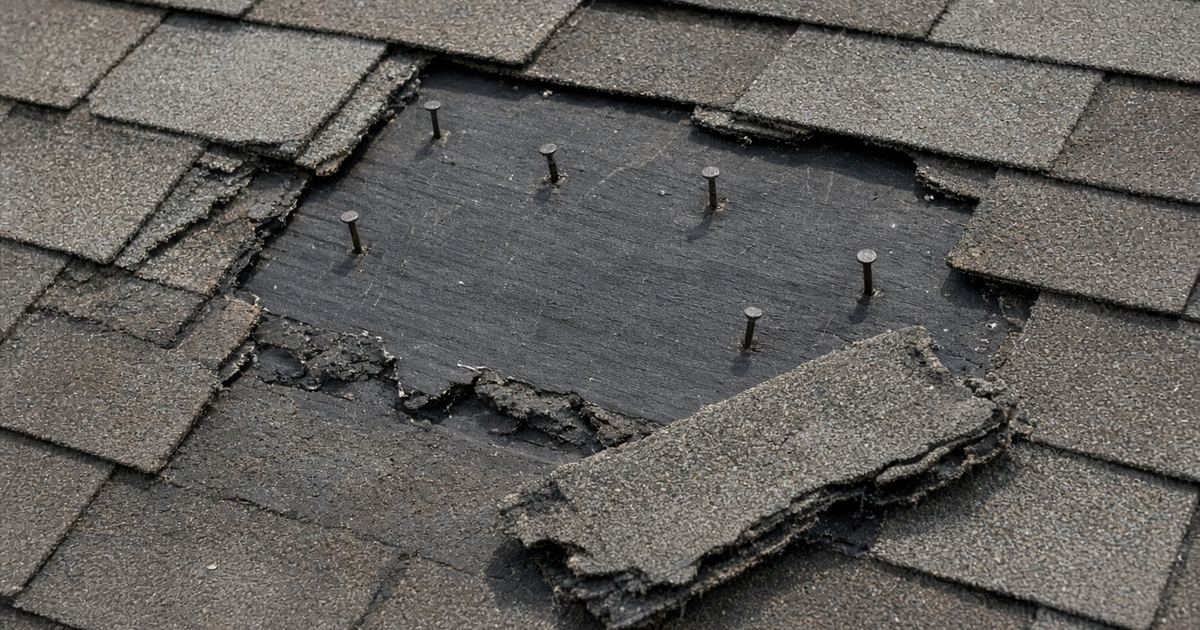
Why shingles blow off
Seal strips that never bonded or have let go
Asphalt shingles have a strip of adhesive that bonds each course to the one below once the sun warms it. If that bond never formed, or has dried out with age, wind can get under the edge and lift it. Older shingles that have become brittle are more likely to crack and tear at the nail line.
Nailing problems
Wind resistance depends on correct nailing. The California Residential Code requires corrosion resistant roofing nails with at least a 12-gage shank and a 3/8 inch head, long enough to go at least 3/4 inch into the sheathing or through it, and at least four fasteners per strip shingle or the number the manufacturer requires. Nails placed too high, too few or driven crooked are a common reason one slope loses shingles while the rest of the roof holds.
Source: 2025 California Residential Code, Sections R905.2.5 and R905.2.6, via up.codes, read November 28, 2026
Exposed edges
Rakes, eaves and ridges take the most wind. Missing ridge caps or shingles along the edges are common first failures, and they let wind start peeling the next row.
Old patches and roof work
Spots that were patched before, areas around satellite dish or solar mounts, and shingles walked on during other work are often the first to go. Foot traffic and prying can break the seal strip without anyone noticing. If the bare patch lines up with past repairs or recent roof work, mention it to the roofer, because it changes who should pay for the fix and how it should be done.
Ask the roofer: did these shingles fail because of the wind alone, or because of age, sealing or nailing, and what do the nails on the bare spot show?
Repair or replace?
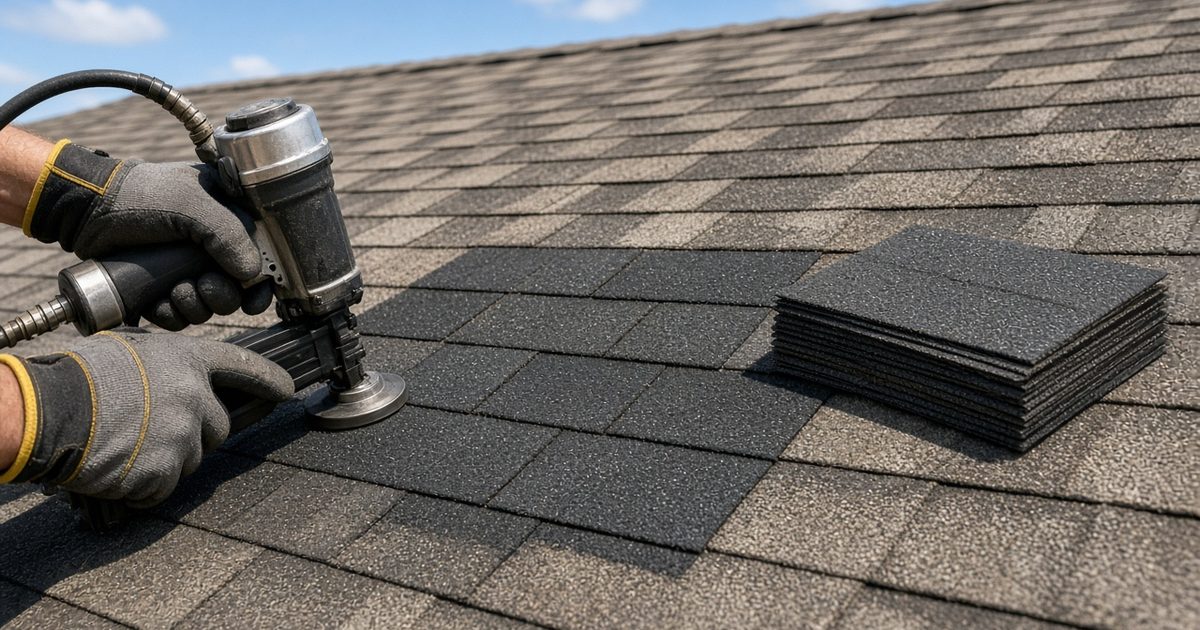
A handful of missing shingles on a roof that is otherwise in good shape is usually a repair: the roofer slides in new shingles, nails them correctly and hand seals the area. It makes sense to look at the whole roof, though, when:
- Shingles keep blowing off after every windy spell.
- The shingles are brittle, curling or losing granules. Our guides to curling shingles and shingle granule loss explain those signs.
- The roof is near the end of its expected life.
- Water has already damaged the deck under the bare area.
If you are weighing a full job, our guide to roof repair vs replacement walks through the decision. Note that the code does not allow a new roof over an existing roof that already has two or more layers, so a roof with layers already stacked up will need a tear off.
Source: 2025 California Residential Code, Section R908.4, via up.codes, read November 28, 2026
Matching the old shingles
New shingles rarely match weathered ones exactly, even in the same color name, and some older styles are discontinued. Saved shingles from the original job are the best match. If you have none, ask the roofer to bring samples and show you how the patch will look before they start. If you are curious about the difference between flat and dimensional styles, see architectural vs 3-tab shingles.
Temporary fixes that help, and ones that do not
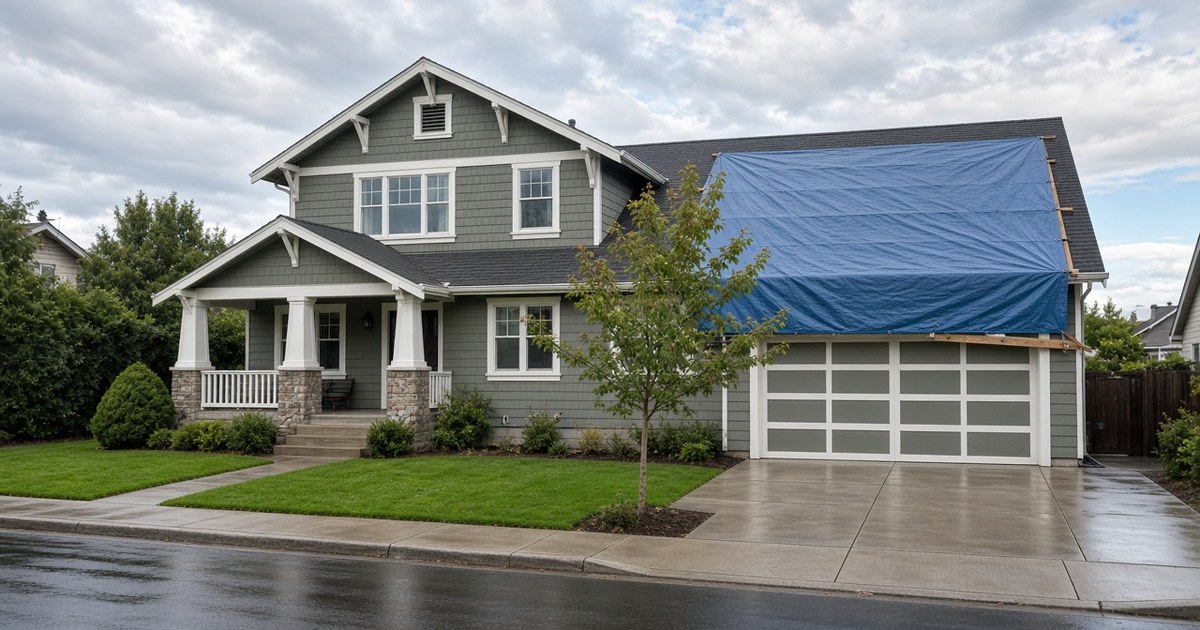
A properly secured tarp, or a roofer's temporary patch over the bare spot, can keep water out for a few days or weeks. A tarp that is only weighted with bricks or tacked along one edge can blow off and tear more shingles on the way. Roofing cement smeared over exposed nails is not a fix either. Treat any temporary cover as exactly that, and book the permanent repair before the next storm.
Insurance and wind damage
The California Department of Insurance lists windstorm among the perils typically covered by a homeowners policy, and wear and tear, maintenance and neglect among those generally not covered. That means a claim can turn on whether the wind or the roof's age caused the loss. Photos taken right away, the date of the storm and a roofer's written description of the cause help.
Source: California Department of Insurance, "Residential Insurance: Homeowners and Renters," insurance.ca.gov, read November 25, 2026
For a small repair, the cost may be below your deductible, so get a quote before you file. For bigger damage, our guide to a roof insurance claim in California explains the process. After a big wind event, watch for door knockers offering a free roof; our guide on how to spot a storm chaser roofer lists the warning signs.
Questions to ask the roofer after wind damage
• How many shingles are missing or loose, and can you show me photos?
• Why did these shingles fail: wind, age, sealing or nailing?
• How will you match the existing shingles?
• Did water reach the underlayment or the roof deck?
• Will you check the rest of the roof for lifted or unsealed shingles?
• Is the repair covered by a written workmanship warranty?
Frequently asked questions
Is it urgent if a few shingles blew off?
Can I put the old shingles back on?
Will insurance pay for missing shingles?
Do I need a new roof if shingles keep blowing off?
Check the roofer before you sign
After a windstorm, the roofer who shows up first is not always the right one. Before you sign, run a ConFacts check on the California roofer to review the state license, bond and workers' comp records in one place.
Two companies. Two reports.
Got more than one bid? Check them side by side, against the same records.
Compare bids side by side