Why Skylights Leak and How to Fix Them
Why skylights leak, how to tell a flashing problem from condensation, when to repair or replace the unit, and why a reroof is the right time to fix it.
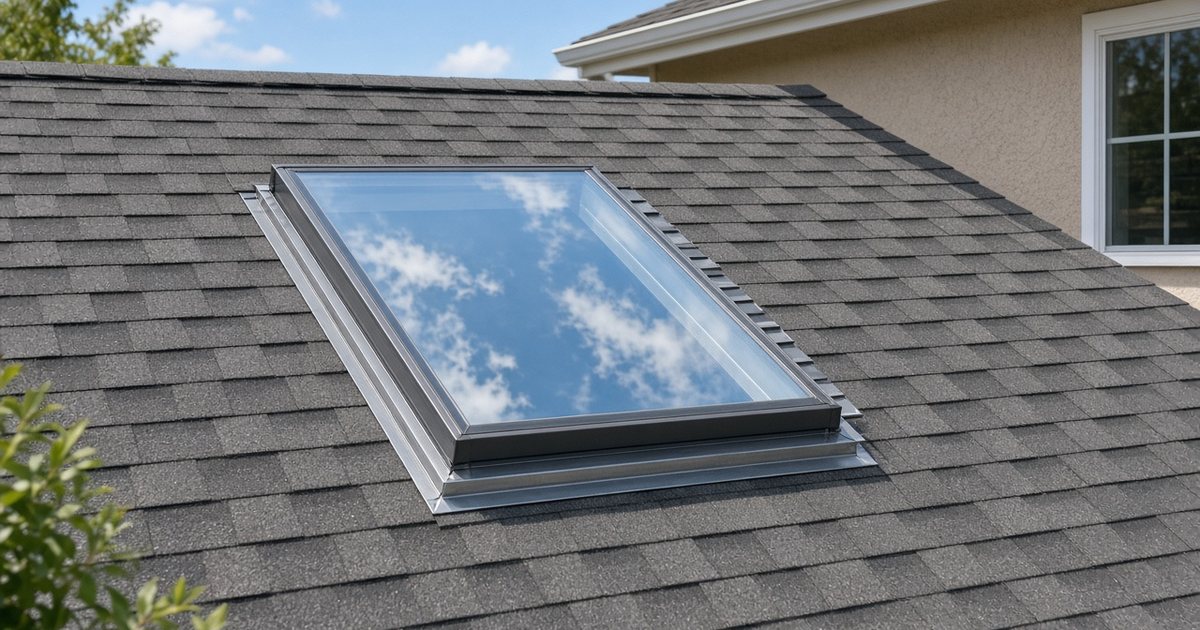
A wet spot under a skylight is alarming, and it is easy to blame the glass. Skylight leaks often start at the roof around the unit, in the flashing that is supposed to shed water past the opening. Sometimes the unit itself has failed. And sometimes the glass is only wet because of indoor moisture, not a leak at all. This guide explains why skylights leak, how to tell a flashing problem from condensation, when to repair or replace the unit, and why a reroof is the smart time to deal with it.
Why skylight leaks happen
A skylight is a hole in the roof's water control layer. Rain has to be directed around that opening and back onto the roof, down and out. The U.S. Department of Energy's Building America program notes that skylights are among the most common sources of water infiltration in a home, and that weathering and improper installation can let leaks start around the unit.
Source: PNNL Building America Solution Center, "Existing Skylights Repaired or Replaced and Fully Flashed"; U.S. Department of Energy Building Science Education, "Replacing Existing Skylights"
The usual weak points are:
- Flashing. Step flashing, sill flashing and head flashing have to be woven with the underlayment and the shingles, tile or metal so water cannot run behind the unit. Old flashing rusts, pulls loose or gets covered the wrong way on a later repair.
- The joint between the skylight and the roof. If the curb, the membrane or the counterflashing is incomplete, water follows the opening into the attic.
- The unit itself. Leaks can run through joints in the frame, or through worn gaskets and weather stripping on an operable skylight.
- Failed glass seals. On a double- or triple-pane unit, moisture between the panes means the insulated glass seal has failed, often after long exposure to water.
Source: U.S. Department of Energy Building Science Education, "Replacing Existing Skylights"; PNNL Building America Solution Center, "Existing Skylights Repaired or Replaced and Fully Flashed"
A stain on the ceiling under a skylight is a reason to look carefully, not a complete diagnosis. The water may have traveled along a rafter from a nearby valley, a pipe jack or a clogged roof edge. See what to do about a roof leaking when it rains.
Is it a leak, or is it condensation?
These are easy to confuse, and the fix is different.
Moisture between the panes (the glass looks foggy from the inside of the sealed unit) is a failed insulated glass unit. That is a product failure, and it usually means replacement of the glass or the whole skylight, not a tube of caulk on the roof.
Source: U.S. Department of Energy Building Science Education, "Replacing Existing Skylights"
Moisture on the room side of the glass is often indoor humidity, not a roof leak. Warm, moist air rises to the ceiling. When it hits cool glass, water beads on the surface. A manufacturer help page notes that the cause is usually excess moisture in the room, and that a dehumidifier plus better ventilation and air circulation will do more than a roof repair.
Source: VELUX USA Help Center, "Why is there condensation on my VELUX skylight?"
Clues that you are dealing with indoor condensation include moisture that appears on cool mornings and dries later, no stains in the attic around the curb, and similar dampness on other cold windows. Clues that you have a leak include wet insulation, stained wood around the opening, peeling paint that keeps coming back, or water that shows up during rain even when indoor humidity is low. If you are not sure, a licensed roofer can check the attic and the flashing before you buy a new unit.
Repair the flashing, or replace the skylight?
A sound, relatively new unit can often stay in place if the leak is in the flashing and the roof around it. The repair is to remove enough roofing to redo the membrane and metal flashing the right way, and to fix any damaged wood.
Federal building-science guidance says you should consider replacing the unit if it is damaged, relatively old, or no longer meets your goals for insulation, solar heat gain and air sealing. Problems that often warrant replacement include a failed insulated glass unit, leaks through frame joints, and gaskets or weather stripping that are missing, damaged or worn and cannot be replaced.
Source: U.S. Department of Energy Building Science Education, "Replacing Existing Skylights"; PNNL Building America Solution Center, "Existing Skylights Repaired or Replaced and Fully Flashed"
A new unit can also be tighter and more efficient, with better glass and higher condensation resistance. If you are already deciding whether to repair or replace a larger part of the roof, see roof repair vs replacement.
Why a reroof is the right time
When the old roof comes off, the flashing around a skylight comes off with it. That is the cleanest chance to inspect the curb and the deck, replace any rotten wood, and install new underlayment and flashing in the correct order, working from the bottom up so each layer sheds water onto the one below it. Building-science guidance says that any time you reroof, the installer should inspect the skylights for leaks, confirm the flashing details, and then decide whether to keep the existing unit or put in a new one, with new flashing integrated into the new roof.
Source: PNNL Building America Solution Center, "Existing Skylights Repaired or Replaced and Fully Flashed"
Trying to reuse the old flashing on a new roof is a common way to buy a second leak. Put the skylight plan in the reroof contract: keep and reflash, or replace, and which flashing kit will be used. Curb-mounted units sit on a framed curb. Deck-mounted units attach with a flange on the deck that has to be integrated with the underlayment. Either type can work when it is flashed correctly.
A re-roof should be permitted, and some city handouts check skylight flashing at the final inspection. See do you need a permit to replace a roof in California. In a wildfire-prone area, wildland rules can also affect operable skylights, including mesh over the opening. See fire resistant roofing in California.
Source: City of Menifee, "Re-Roof Permit Guide"; City of San Bruno, "2025 Reroof Requirements" (citing CWUIC §504.8.2 for operable skylight mesh)
What should you ask a roofer?
"Is this water coming through the flashing, through the skylight itself, or from condensation, and will you reflash or replace the unit when the roof is done?"
Get the answer in writing, including the flashing product, whether the curb or deck will be repaired, and how hidden rot is priced. Before you sign, confirm the roofing contractor holds a California contractor license from CSLB and is licensed and insured. See questions to ask a roofer before hiring and how to check a contractor's license in California.
Frequently asked questions
Can caulk fix a leaking skylight?
Caulk is not a substitute for flashing. It may slow a drip for a short time, but it will not replace a correctly layered membrane and metal flashing.
Should I replace a skylight that is not leaking?
If the unit is old, fogged between the panes, hard to operate or very inefficient, a reroof is a sensible time to replace it, because the flashing has to be redone either way.
Who should do the work, a roofer or a window company?
The leak is usually a roofing detail. A C-39 roofing contractor is the usual choice for flashing and reroof work. A window or skylight specialist may supply the unit. Make sure whoever is on the roof is properly licensed for the work.
Is a wet attic around the curb always the skylight?
Not always. Check nearby valleys, vents and the roof covering before you replace a unit that may be dry.
Where ConFacts fits
A skylight repair is still roof work, and you want a contractor with a clean record. A ConFacts report builds a sourced background check on California C-39 roofing contractors from public records, including CSLB license status, workers' comp, bond and disciplinary history, and scores them from 0 to 100. Your first report is free, then $7, or 3 for $15. We take no money from contractors. We show you the record, you make the decision.
Two companies. Two reports.
Got more than one bid? Check them side by side, against the same records.
Compare bids side by side