Slate Roof Repair: When to Fix or Replace
A slate roof can last generations if it is repaired the right way. Learn how slate fails, how a proper repair works, the 20 percent rule and who to hire.
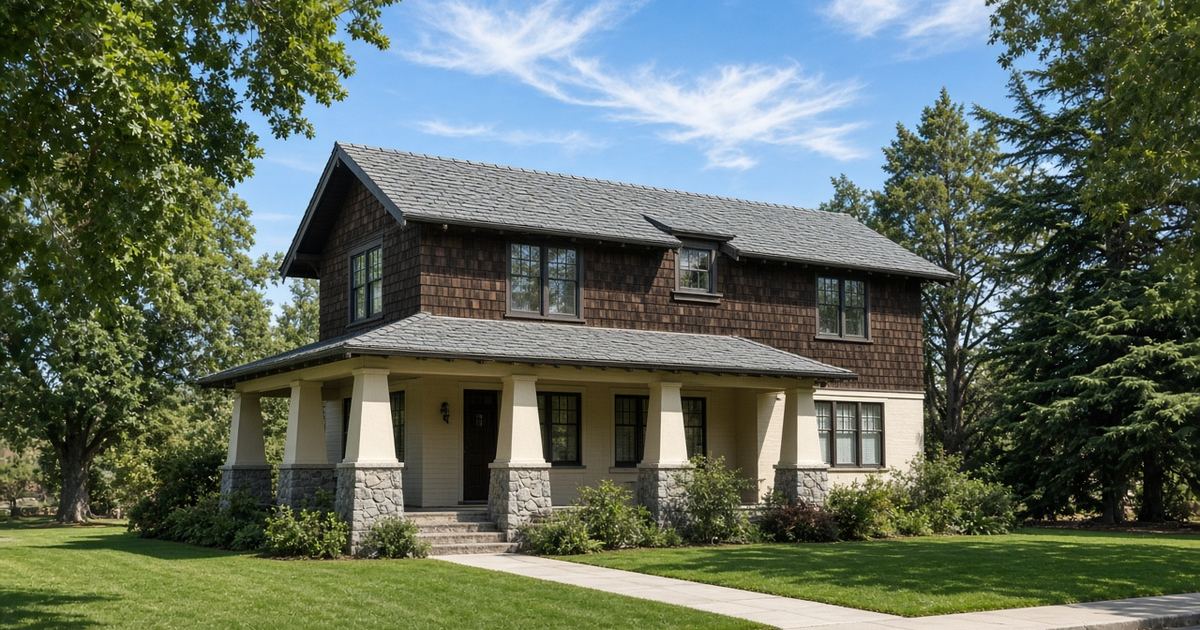
Slate is one of the longest lasting roofing materials there is, and you still see it on older homes in San Francisco, Pasadena and other historic California neighborhoods. When a slate roof starts to leak, the first question is usually whether it can be repaired or has to be replaced. The honest answer depends on the stone itself, the nails holding it, and how much of the roof is damaged. This guide explains how slate roofs fail, what a proper slate roof repair looks like, when replacement makes more sense, and how to hire someone who actually knows slate.
Source: National Park Service, Preservation Brief 29, "The Repair, Replacement, and Maintenance of Historic Slate Roofs," nps.gov; 2025 California Residential Code, Section R905.6.6, via up.codes; both read November 28, 2026
How long a slate roof lasts
The National Park Service says a properly installed slate roof needs relatively little maintenance and will last 60 to 125 years or longer, depending on the type of slate, the shape of the roof and where the house is. It also notes that some slates have lasted over 200 years. That long life is the main reason owners try hard to save a slate roof instead of tearing it off.
Source: National Park Service, Preservation Brief 29, nps.gov, read November 28, 2026
The stone is rarely the first thing to fail
On many older roofs, the slate outlasts the parts around it. The Park Service points to rusting nails as a common cause of slate loss on historic roofs, and says non-ferrous nails such as solid copper or stainless steel should always be used, because plain steel and galvanized nails usually rust out long before the slate wears out. Flashings, valleys and gutters can also fail decades before the stone does. Our guide to roof flashing explains why those metal details matter on any roof.
Source: National Park Service, Preservation Brief 29, nps.gov, read November 28, 2026
Signs your slate roof needs attention
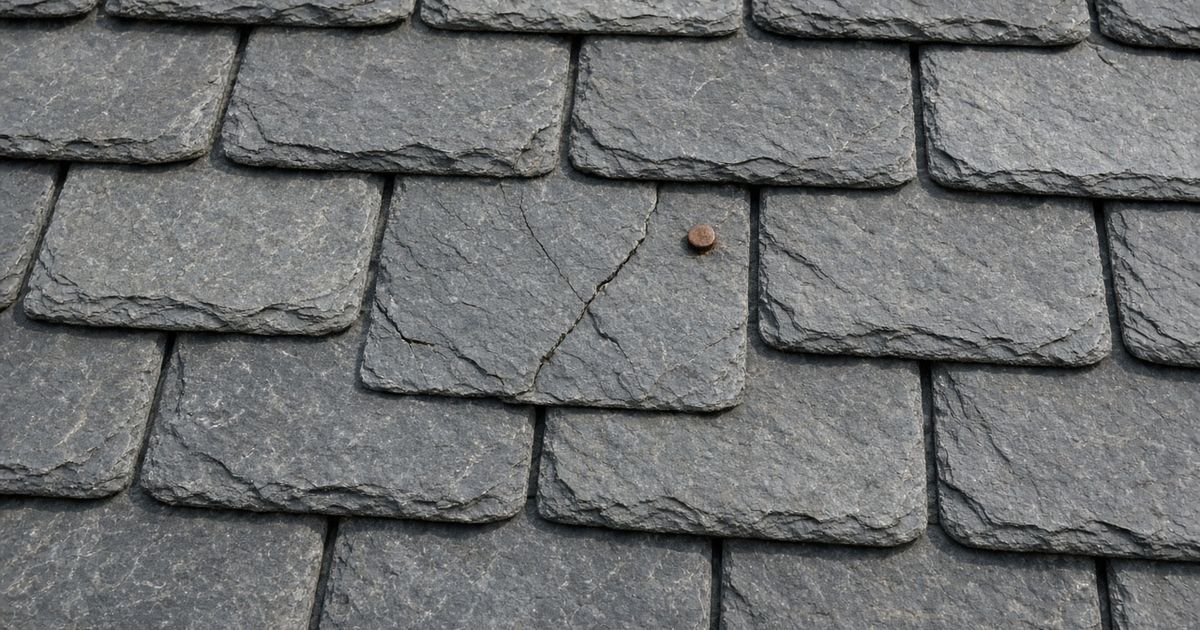
- Cracked, broken or missing slates, or pieces of slate on the ground.
- Slates that have slipped down out of line with their neighbors.
- Stains on ceilings or in the attic after rain.
- Rusty or loose flashing around chimneys, valleys and walls.
- Patches of black tar or sealant smeared over slates from earlier repairs.
How a proper slate roof repair works
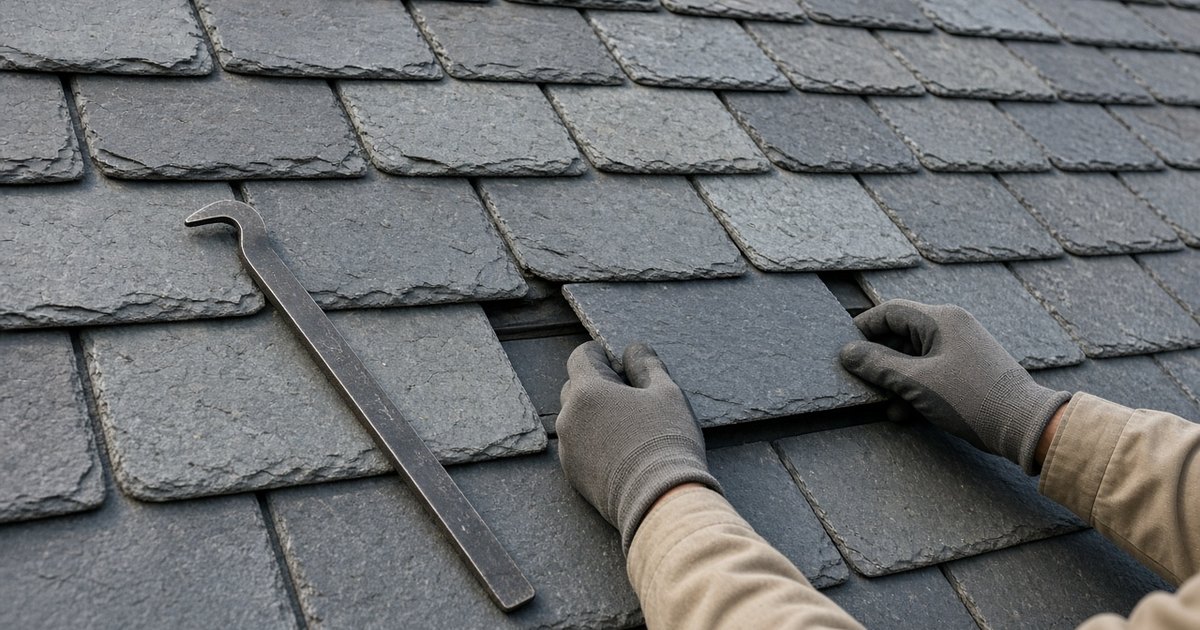
The Park Service describes the traditional repair this way. The damaged slate is removed by cutting or pulling its nails with a tool called a slate ripper. A new or salvaged slate that matches the size, shape, texture and weathered color of the old one is slid into place and held with one nail through the joint in the course above. A piece of copper is then slipped under the joint above the nail so water cannot get into the new nail hole. Hooks, clips and straps are other accepted ways to hold a replacement slate.
Source: National Park Service, Preservation Brief 29, nps.gov, read November 28, 2026
Why tar and sealant are not a repair
The same guidance says roofing mastic or sealant on damaged slates should not be treated as a real repair. These materials work at first, then harden and crack and let water in. Mastic also makes later repairs harder, looks bad, and speeds up corrosion when it is spread on metal flashing. If a roofer proposes to coat cracked slates with tar, ask for a quote on replacing them instead.
Walking on slate
Slate breaks when people walk on it. The Park Service suggests doing roof surveys from the ground with binoculars or from a lift where possible, and leaving hands-on work to people experienced with slate and steep slopes. A crew that does not know slate can crack more pieces in one visit than the original problem.
Source: National Park Service, Preservation Brief 29, nps.gov, read November 28, 2026
Ask the roofer: how will you remove and replace each damaged slate, and what nails and flashing metal will you use?
Repair or replace: the 20 percent rule
Repair makes sense for local problems on a roof that still has plenty of life left. The Park Service says that if 20 percent or more of the slates on a roof or roof slope are broken, cracked, missing or sliding out of position, it is usually less expensive to replace the roof than to keep making individual repairs, especially on an older roof near the end of its life.
Replacement does not always mean giving up on slate. Sound slates can often be salvaged and relaid over new underlayment, with matching new or salvaged slate filling the gaps. When many slates come off, the Park Service also recommends checking the wood sheathing for rot. Our guide to roof decking dry rot replacement covers what that repair involves. For a broader look at the decision, see roof repair vs replacement.
Source: National Park Service, Preservation Brief 29, nps.gov, read November 28, 2026
What the California code requires
If your slate roof is replaced, the California Residential Code sets basic rules. Slate must be fastened to a solidly sheathed roof and used only on slopes of 4 in 12 or steeper. Each slate must be secured with two fasteners, and the required headlap depends on the slope: 4 inches on slopes from 4 in 12 up to 8 in 12, 3 inches up to 20 in 12, and 2 inches on steeper roofs. Flashing must be sheet metal, and valley flashing must be at least 15 inches wide.
Source: 2025 California Residential Code, Section R905.6, via up.codes, read November 28, 2026
Most re-roofing in California needs a permit, so ask who will pull it. Our guide to roof replacement permits in California explains the rules. If you are weighing slate against other heavy materials, our guide to tile vs shingle vs metal roofs in California compares the main options.
What about synthetic slate?
Some owners consider synthetic or artificial slate when a roof needs replacing. The Park Service does not recommend artificial mineral fiber slate for restoration work on historic buildings, because it looks man-made. If your home is in a historic district, check with your city before you change materials, and ask the roofer how a product's look and life compare with real slate.
Source: National Park Service, Preservation Brief 29, nps.gov, read November 28, 2026
Questions to ask a slate roofer
• How many slate roofs have you repaired, and can I see photos of that work?
• Roughly what share of my slates are damaged, and does repair still make sense?
• Where will you get matching slate, new or salvaged?
• What nails and flashing metal will you use?
• How will your crew avoid walking on and cracking good slates?
• Will this job need a permit, and who will pull it?
Frequently asked questions
Can a leaking slate roof be repaired?
How long does a slate roof last?
When should I replace a slate roof instead of repairing it?
Is sealant a good fix for cracked slate?
Check the roofer before you sign
Slate work is a specialty, so ask for experience and a clear written scope. Before you sign, review our C-39 roofing license guide and run a ConFacts check on the slate roofer to review the state license, bond and workers' comp records in one place.
Two companies. Two reports.
Got more than one bid? Check them side by side, against the same records.
Compare bids side by side