Ponding Water on a Flat Roof: Causes and Fixes
Ponding water on a flat roof can shorten its life and lead to leaks. Learn what causes it, what California code requires for slope and drains, and the fixes.
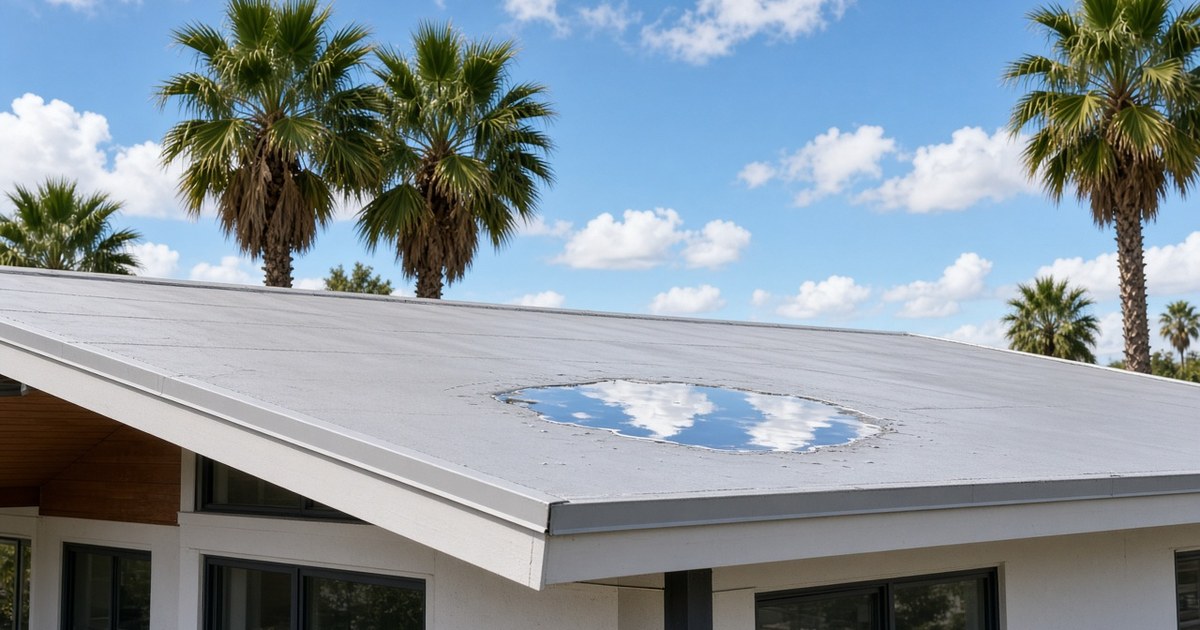
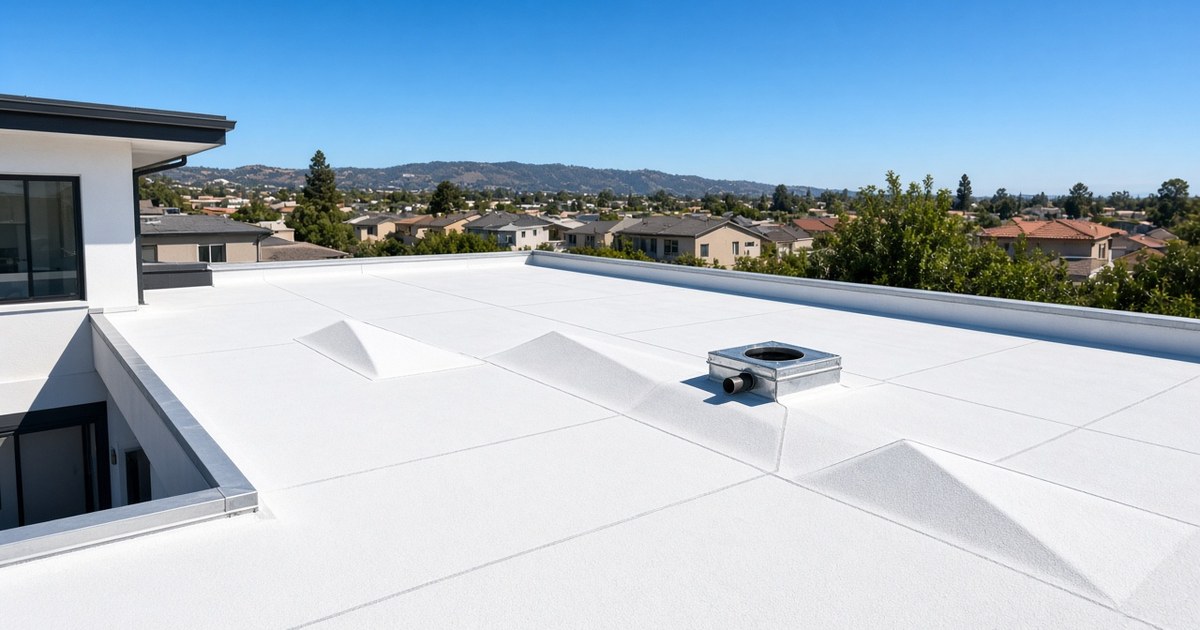
Flat roofs are common on California homes, from mid-century modern houses to garage roofs, patio covers and newer modern builds. They are not truly flat, though. They are built with a gentle slope so rain runs to a drain or edge. When water sits in a puddle instead, that is called ponding. This guide explains why ponding water on a flat roof matters, what causes it, what the California code says about slope and drains, and how roofers fix it.
Source: 2025 California Residential Code, Sections R903.4.1, R905.9.1, R905.11.1 and R905.12.1, via up.codes, read November 28, 2026
What is ponding water on a flat roof?
Ponding water is rain that stays in a low spot on a flat or low slope roof after the rest of the roof has dried. A thin film that evaporates within a day is normal. A puddle that is still there a couple of days after the rain stops, or that leaves a dirty ring when it finally dries, is the warning sign roofers look for.
Why it matters
- It wears the membrane. Standing water, sun and dirt work on the same spot over and over, which can age seams and coatings faster.
- It adds weight. Water is heavy. A deep pond can make a sagging deck sag further, which then holds even more water.
- It finds weak spots. Any small split or open seam under a pond is underwater for days instead of minutes.
- It may affect your warranty. Read your membrane and workmanship warranties and look for any language about standing water.
What causes ponding on a flat roof?
Clogged drains, scuppers and gutters
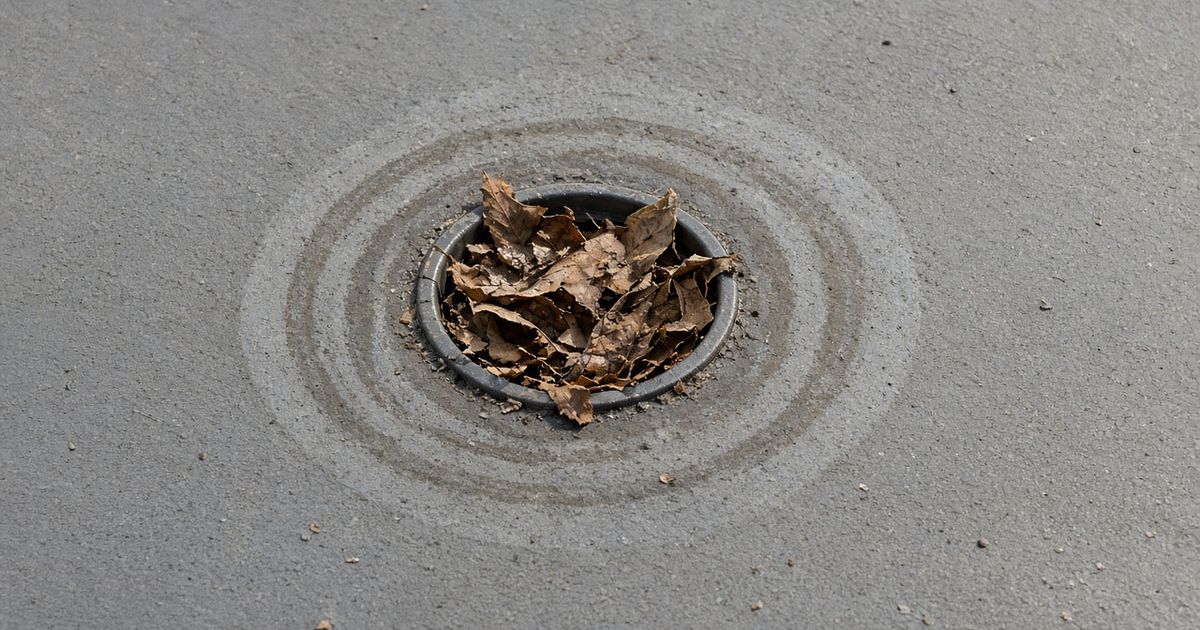
Leaves, seed pods and wind blown dirt collect at the exact spots where water needs to leave. A blocked drain turns the lowest part of the roof into a basin. Our article on how clogged gutters damage a roof explains why drainage problems at the edge spread to the roof itself.
Not enough slope
Some older flat roofs were built with very little slope, or none. Later reroofs may have added layers that changed how water moves. If the roof was never pitched well toward its drains, water will collect no matter how clean they are.
A sagging or damaged deck
Long term leaks can soften the wood deck under the membrane. Once the deck dips, a low spot forms. Our guide to roof decking dry rot and replacement covers what a roofer looks for when the deck feels soft.
Uneven insulation or equipment
Crushed insulation boards, heavy equipment curbs, and foot traffic around HVAC units can all create dips where water settles.
What California code says about slope and drains
The 2025 California Residential Code sets minimum design slopes for common flat roof systems. Built up roofs, modified bitumen roofing and thermoplastic single ply membranes such as TPO and PVC must have a design slope of at least 1/4 unit vertical in 12 units horizontal, which is a 2 percent slope, for drainage. Coal tar built up roofs may use a 1/8 in 12 slope.
Source: 2025 California Residential Code, Sections R905.9.1, R905.11.1 and R905.12.1, via up.codes, read November 28, 2026
The code also says that unless a roof is sloped to drain over its edges, roof drains must be installed at each low point. Where the roof edge rises above the roof and could trap water if the main drains clog, secondary overflow drains or scuppers are required. Overflow drains sit with their inlet 2 inches above the low point, and overflow scuppers must be three times the size of the roof drains.
Source: 2025 California Residential Code, Sections R903.4 and R903.4.1, via up.codes, read November 28, 2026
Ask the roofer: where are the low points on my roof, and does each one have a drain and an overflow?
Your city or county may add its own rules, and the building department decides what applies to your project. A roofer should explain how the plan meets the code where you live.
How roofers fix ponding water
| Cause | Common fix | Size of the job |
|---|---|---|
| Clogged drain or scupper | Clear debris, add strainers, schedule regular cleaning | Small |
| One small low spot | Build up the area with approved material and patch the membrane | Small to medium |
| Too few drains | Add a drain, scupper or cricket to move water to an outlet | Medium |
| Poor slope across the roof | Tapered insulation under a new membrane | Large, usually with a reroof |
| Sagging or rotted deck | Replace deck sections and correct framing, then reroof | Large |
Coatings can help an aging membrane, but a coating alone does not change where water flows. Our comparison of roof coating vs roof replacement explains when a coating makes sense. If you are reroofing anyway, our guide to flat roof materials: TPO vs PVC vs EPDM helps you choose the membrane.
What you can safely do yourself
- Look at the roof from a window, a neighbor's view or a ladder at the edge, not by walking on it.
- Take dated photos after rain so you can show how long water stays.
- Watch ceilings below the low spot for stains.
- Keep trees trimmed back so fewer leaves land on the roof.
If you rent out the home or share a roof with a neighbor, such as a duplex or a condo building, tell the owner or the association in writing as soon as you notice ponding. A written note with photos creates a clear record of when the problem started.
Leave drain clearing on a steep drop or high roof to a pro. Walking on a wet membrane is slippery, and soft decks can give way.
Questions to ask the roofer
• What is causing the ponding: drains, slope, deck or insulation?
• Will your fix change where the water flows, or only patch the surface?
• Does each low point have a drain and an overflow?
• Will tapered insulation raise the roof edge, and how will flashing be handled?
• Does the work need a permit where I live?
• What does your warranty say about standing water?
Frequently asked questions
Is some standing water on a flat roof normal?
Can ponding water cause a roof leak?
How much slope does a flat roof need in California?
Will a roof coating fix ponding?
Check the roofer before you sign
Fixing ponding often means changing slope or drains, so the skill of the roofer matters as much as the material. Get more than one written bid, and read our tips on how to compare roofing bids. Then run a ConFacts check on the roofer before you sign.
Two companies. Two reports.
Got more than one bid? Check them side by side, against the same records.
Compare bids side by side