Moss and Algae on a California Roof
Black streaks and moss on a California roof: what causes them, how to clean safely without pressure washing, zinc strips, and when growth means bigger trouble.
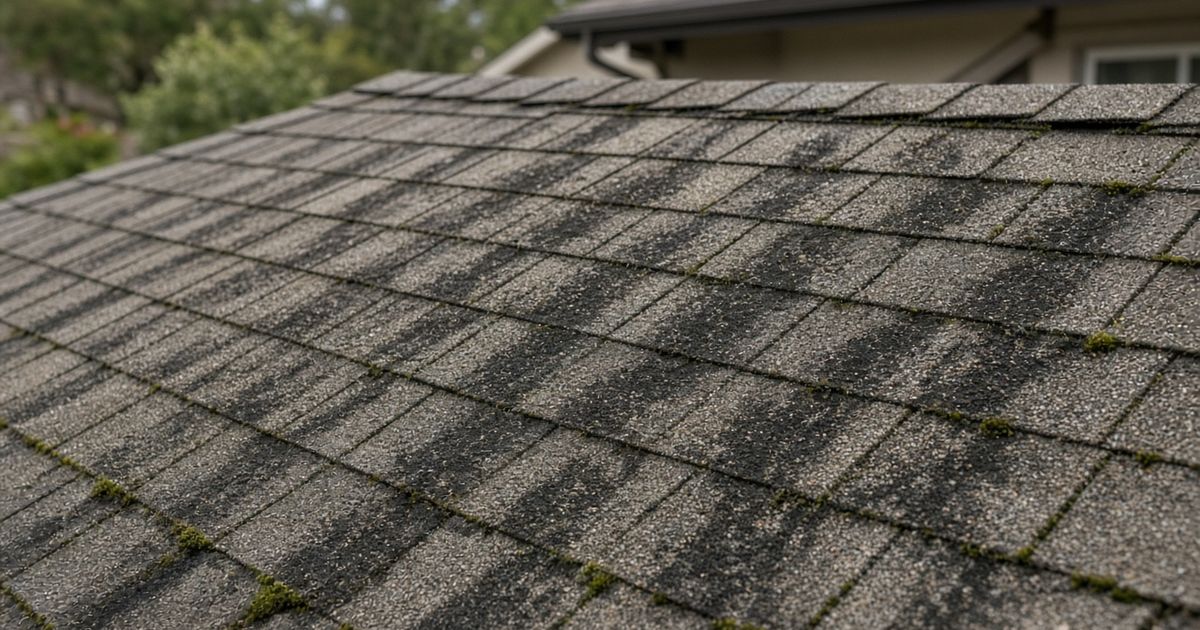
You look up one morning and the roof has dark streaks, or a green film in the shade under the trees. Moss and algae on a California roof are common, and it is easy to assume the shingles are rotting. Often they are not. On asphalt roofs, those black streaks are usually algae. Moss is a different problem, and it can do real harm if you leave it alone.
This guide explains what those stains are, why they show up on California roofs, how to clean them safely (and why you should not pressure wash), what zinc or copper strips can and cannot do, and when growth is a sign of bigger trouble. If you hire a roofer, check that the company is licensed and insured before you sign.
What are those black streaks?
The dark stains on many asphalt shingle roofs are caused by a cyanobacterium often called blue-green algae, Gloeocapsa magma. It is frequently mistaken for mold, mildew, dirt or granule loss. The organism protects itself from sunlight with a dark sheath, which is what you see. The stains often start as spots, then run down the slope in streaks. They are usually heavier on the lower roof and on the northern exposure, which stays damp longer, and they taper as they reach the ridge.
Source: GAF Technical Advisory Bulletin TAB-R-102, "Blue-Green Algae Staining On Shingled Roof Surfaces" (Sept. 19, 2024); Asphalt Roofing Manufacturers Association, "Algae and Moss Prevention and Cleaning for Asphalt Roofing Systems"
Algae spreads from roof to roof on airborne spores. That is why a whole block can start to look the same. Coastal and humid climates are especially inviting, and dew is a primary moisture source. California's coast, foggy hills and shaded lots are common places to see it.
Source: GAF TAB-R-102; Asphalt Roofing Manufacturers Association, "Algae and Moss Prevention and Cleaning for Asphalt Roofing Systems"
There is no scientific evidence that this algae damages asphalt shingles. It is mainly an appearance problem. On a cool roof, though, the dark film can reduce how well the reflective surface works, which is why it is worth addressing. See cool roof and Class A roofing in California.
Source: Asphalt Roofing Manufacturers Association, "Algae and Moss Prevention and Cleaning for Asphalt Roofing Systems"; GAF blog, "Talking with Customers about GAF Time-Release Algae-Fighting Technology"
How is moss different?
Moss is a plant. It needs a moist surface, so it favors north-facing planes, heavy shade and spots where leaves and needles sit and hold water. Overhanging branches add shade and drop debris that feeds the growth.
Source: Asphalt Roofing Manufacturers Association, "Algae and Moss Prevention and Cleaning for Asphalt Roofing Systems"
Unlike algae, moss can hurt an asphalt roof. It can lift or curl the leading edges of shingles, which raises the risk of blow-off in wind. In severe cases, the buildup can move water sideways and damage the roof deck, or cause leaks.
Source: Asphalt Roofing Manufacturers Association, "Algae and Moss Prevention and Cleaning for Asphalt Roofing Systems"
How do you clean a roof safely?
Roofs are slippery when they are wet, and walking on shingles can knock granules loose. Cleaning is often better left to a professional who follows the shingle manufacturer's instructions. If you do anything yourself, work from the ground or a stable ladder when you can, and protect the plants below.
The Asphalt Roofing Manufacturers Association says the most effective cleaning method is a 50/50 mix of laundry-strength liquid chlorine bleach and water. Spray it on, let it sit for 15 to 20 minutes without letting it dry completely, then rinse thoroughly with low-pressure water. Algae stains often fade and wash away with later rains. Moss loosens over time and may be removed with a leaf blower. Severe moss may need more than one treatment.
Source: Asphalt Roofing Manufacturers Association, "Algae and Moss Prevention and Cleaning for Asphalt Roofing Systems"
GAF's own bulletin uses a slightly different mix: 4 gallons of water, 1 gallon of bleach and 1 cup of TSP or a phosphate-free substitute, applied with a garden sprayer, left for up to 20 minutes, then rinsed with low-pressure water. Follow the instructions for the brand of shingles on your roof, and protect shrubs below.
Source: GAF TAB-R-102, "Blue-Green Algae Staining On Shingled Roof Surfaces" (Sept. 19, 2024)
Do not pressure wash, power wash or blast the roof with a high-pressure sprayer. Both GAF and the manufacturers' association warn that this can dislodge granules and lead to premature shingle failure. A company that offers a pressure-washed "roof cleaning" is not following that guidance.
Source: GAF TAB-R-102; Asphalt Roofing Manufacturers Association, "Algae and Moss Prevention and Cleaning for Asphalt Roofing Systems"
What actually prevents it from coming back?
Cleaning is temporary. The same shade, dew and spores will invite growth again. The lasting steps are maintenance and, when the roof is replaced, better materials.
- Trim branches so more sun reaches the roof and less debris lands on it.
- Clear leaves and needles with a leaf blower or another non-abrasive method. Blow down the slope so you do not drive debris under the shingles.
- Keep gutters clean so water leaves the roof edge. Do not let an upper-roof downspout dump onto a lower roof; extend it into the lower gutter. See clogged gutters and roof damage and roof maintenance before winter.
Source: Asphalt Roofing Manufacturers Association, "Algae and Moss Prevention and Cleaning for Asphalt Roofing Systems"
When it is time for a new roof, algae-resistant shingles that use copper granules are widely available. Zinc or copper strips near the ridge can also help, because metal ions wash down the slope in the rain. Those strips belong in a reroof, not as a retrofit on an existing shingle roof. The manufacturers' association does not recommend adding zinc or copper strips to a roof that is already in place. Doing so usually means either leaving nails exposed, which can leak, or breaking the shingle seal to slide the strip under, which can lead to wind damage.
Source: Asphalt Roofing Manufacturers Association, "Algae and Moss Prevention and Cleaning for Asphalt Roofing Systems"; GAF blog, "Talking with Customers about GAF Time-Release Algae-Fighting Technology"
When is it a sign of bigger trouble?
Algae streaks alone are usually cosmetic. Call a licensed roofer for a closer look if you also see:
- Moss that is lifting, curling or packing under the edges of shingles.
- Soft spots, sagging or staining on the deck or ceiling, which can mean trapped moisture.
- Widespread bald spots, cracked shingles or leaks after you have already cleaned the growth.
- Debris dams in valleys or at the gutters that keep the roof wet.
Those signs may point to a roof that is near the end of its life, not just a dirty surface. See signs you need a new roof and how long a roof lasts in California.
Before you sign a cleaning or reroof contract, confirm the roofing contractor holds a California contractor license from CSLB and is licensed and insured. See how to check a contractor's license in California and unlicensed contractor red flags.
Frequently asked questions
Will bleach damage my shingles?
Manufacturer and association guidance uses a diluted bleach mix and a low-pressure rinse, with plants protected. Follow the instructions for your shingle brand, and do not add harsh scrubbing that pulls granules off.
Can I put zinc strips on my current roof?
The Asphalt Roofing Manufacturers Association advises against adding them to an existing shingle roof because of leak and wind-damage risks. Consider them when the roof is replaced.
Does algae mean I need a new roof?
Not by itself. Look at the roof's age, leaks, moss damage and the condition of the shingles, not just the color.
Is a "free roof cleaning" after a storm a good deal?
Be cautious. A pressure-washed cleaning can do more harm than the stains. Get the method in writing, and check the contractor before you sign.
Where ConFacts fits
A cleaning or a reroof is only as good as the company on your roof. A ConFacts report builds a sourced background check on California C-39 roofing contractors from public records, including CSLB license status, workers' comp, bond and disciplinary history, and scores them from 0 to 100. Your first report is free, then $7, or 3 for $15. We take no money from contractors. We show you the record, you make the decision.
Two companies. Two reports.
Got more than one bid? Check them side by side, against the same records.
Compare bids side by side