Shingle Granule Loss: What It Means for Your Roof
Finding shingle granules in your gutters? Learn what granules do, when granule loss is normal, when it signals an aging roof, and what to ask a roofer next.
Gritty, sand like bits in your gutters or at the bottom of a downspout are usually granules from your asphalt shingles. A little is normal. A lot, or bare patches on the roof, can mean the shingles are wearing out. This guide explains what shingle granules do, the common causes of shingle granule loss, how to check your own roof safely, and when it is time to call a roofer.
What shingle granules do
Asphalt shingles are a mat coated in asphalt with a layer of small stones pressed into the top. The Asphalt Roofing Manufacturers Association describes granules as ceramic coated colored crushed rock applied to the exposed surface of asphalt roofing products. On a fiberglass shingle, the base is coated in asphalt and then surfaced with weather resistant mineral granules.
Source: ARMA, "Frequently Asked Questions," asphaltroofing.org, read November 24, 2026
Those granules give the roof its color, and they shield the asphalt underneath from direct sun. Once they are gone, the asphalt is exposed and tends to age faster. That is why granule loss matters more than its looks.
Granules and cool roofs
Some shingles use special reflective granules to keep the roof cooler, which matters for California energy rules on some reroofs. Our guide to cool roofs and Title 24 in California explains when those rules apply.
Normal vs heavy granule loss
A new roof
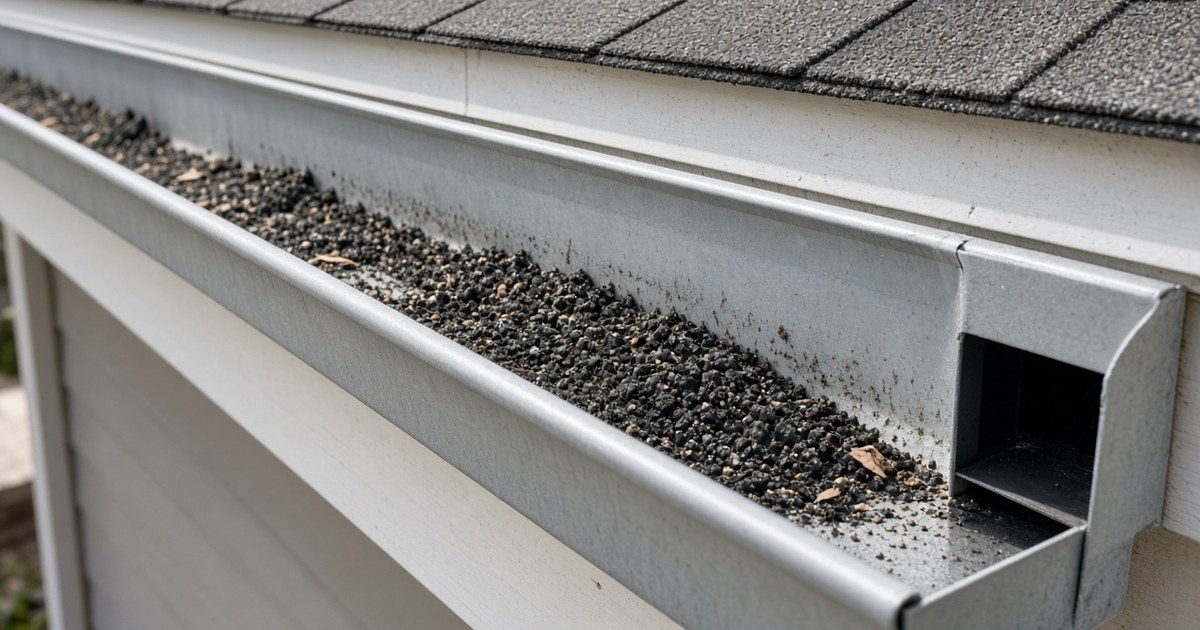
It is common to see some loose granules in the gutters after a new roof goes on. ARMA also notes that fine backing particles can rub off onto the colored granules in the bundle and that natural rainfall eventually washes this loose material away.
Source: ARMA, "Variations in Color Appearance on Newly Installed Asphalt Shingle Roofs," asphaltroofing.org, read November 24, 2026
Slow, even wear
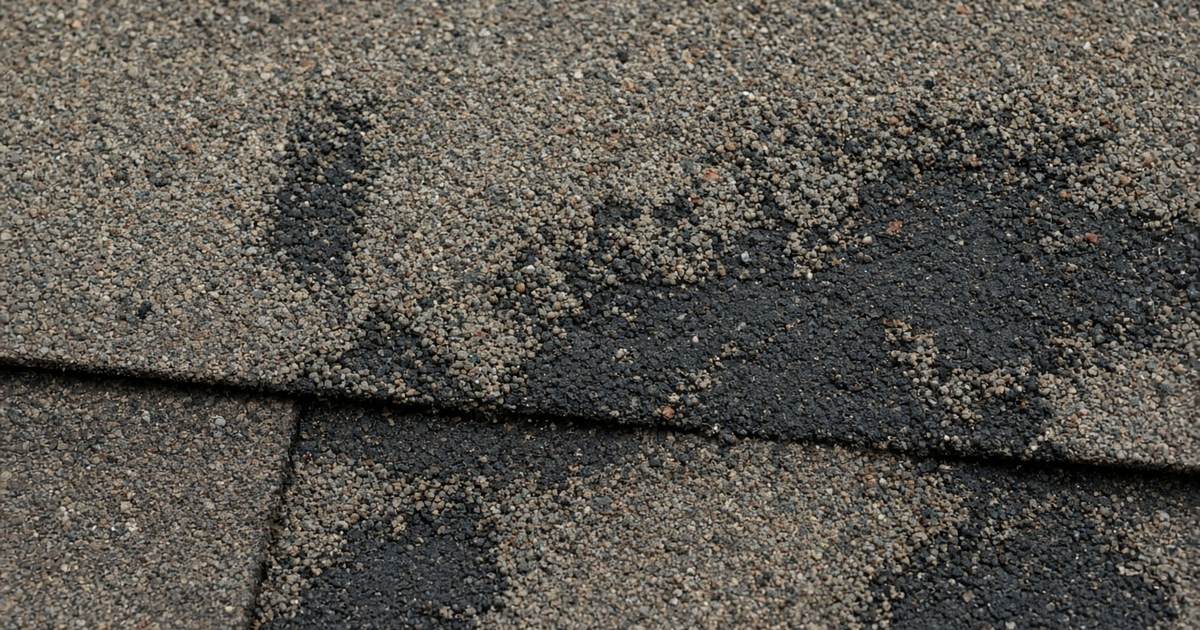
Over many years, every asphalt roof slowly sheds granules. A light, even dusting in the gutters after big storms is part of normal aging. What you want to watch for is a sudden increase, or bare spots you can see from the ground.
It also helps to know your roof's age. Check your purchase papers, old permits or the roofer's invoice. A ten year old roof and a twenty five year old roof shedding the same amount of granules tell two very different stories, and a roofer will ask you this first. If you do not know the age, a roofer can often estimate it from the shingle style and condition.
Causes of heavy shingle granule loss
- Age: as shingles near the end of their life, granules loosen and wash off faster. Our guide on how long a roof lasts in California covers typical life spans.
- Heat and sun: hot, sunny slopes can age faster than shaded ones, so wear may show first on the sunniest sides.
- Impact and storms: falling branches or hail can knock granules off in spots.
- Foot traffic: walking on a hot shingle roof can scuff granules away.
- Scrubbing the roof: ARMA advises against scrubbing the roof surface, because friction may loosen and remove granules.
- Gutter and downspout outflow: water from an upper roof that pours onto a lower roof can wear one spot down.
Source: ARMA, "Algae Discoloration of Roofs," asphaltroofing.org, read November 24, 2026
If you are dealing with dark streaks rather than bare spots, our guide to moss and algae on a California roof covers safe cleaning.
How to check your roof for granule loss
You do not need to climb on the roof. ARMA suggests walking around the home with binoculars and looking for cracked, curled or missing shingles and any excessive loss of the protective mineral granules.
Source: ARMA, "Frequently Asked Questions," asphaltroofing.org, read November 24, 2026
- Check gutters and the ground at downspout outlets for piles of granules.
- Look for shingles that are darker, shiny or patchy compared with the rest.
- Note where the wear is: one spot, one slope or the whole roof.
- Take dated photos so you can see whether it is getting worse.
- Check the attic on a sunny day for spots of daylight or stains on the roof deck.
Ask the roofer: is this normal shedding, local damage, or a sign the whole roof is wearing out?
Stay off the roof itself. Walking on worn shingles can knock off even more granules, and a fall from a roof is a serious risk. Granule loss is one of several warning signs. Our guide to signs you need a new roof or just a repair lists the others.
Repair, warranty or replacement?
Small areas
If the loss is in one spot, such as under a downspout or where a branch hit, a roofer may replace those shingles and fix the cause, like adding a diverter.
A young roof losing granules fast
If the roof is fairly new and granule loss is heavy across it, ask the installer to look and check the shingle warranty. Manufacturer and workmanship warranties cover different things. Our guide on how long a roofing warranty should be explains the difference.
An aging roof
Widespread bare patches on an older roof usually mean the shingles are near the end of their life. At that point, patching one area tends to lead to the next repair, and it is usually better to plan a replacement before the wet season than to wait for a leak.
If storm damage caused the loss, such as a branch strike, your homeowners policy may cover part of the repair. Our guide on how to file a roof insurance claim in California explains the steps. Take photos before any work is done.
Coatings are sometimes sold as a fix, but ARMA strongly advises against field applied coatings or rejuvenators over installed asphalt shingles, and notes that problems reported after such treatments include loosening of the granule surfacing.
Source: ARMA, "Application of Coatings or Rejuvenators on Asphalt Shingles After Installation," asphaltroofing.org, read November 24, 2026
Our guide to roof coating vs roof replacement covers when coatings fit and when they do not.
Questions to ask the roofer about granule loss
• How much of the roof is affected, and can you show me photos?
• What do you think caused it?
• Is any of this covered by the shingle or workmanship warranty?
• Can the worn area be repaired, or does the roof need replacing soon?
• If you recommend a coating or treatment, does the shingle maker approve it in writing?
Frequently asked questions
Is it normal to find shingle granules in the gutter?
Does granule loss mean I need a new roof?
Can lost shingle granules be replaced?
Is granule loss covered by a shingle warranty?
Check the roofer before you sign
Whether you need a repair or a new roof, the roofer matters. Before you sign, run a ConFacts check on the California roofer to review the state license, bond and workers' comp records in one place.
Two companies. Two reports.
Got more than one bid? Check them side by side, against the same records.
Compare bids side by side