Roof Overlay vs Tear-Off in California
Can you put new shingles over old ones in California? What the code allows, the layer limit, the pros and cons of a roof overlay, and when tear-off wins.
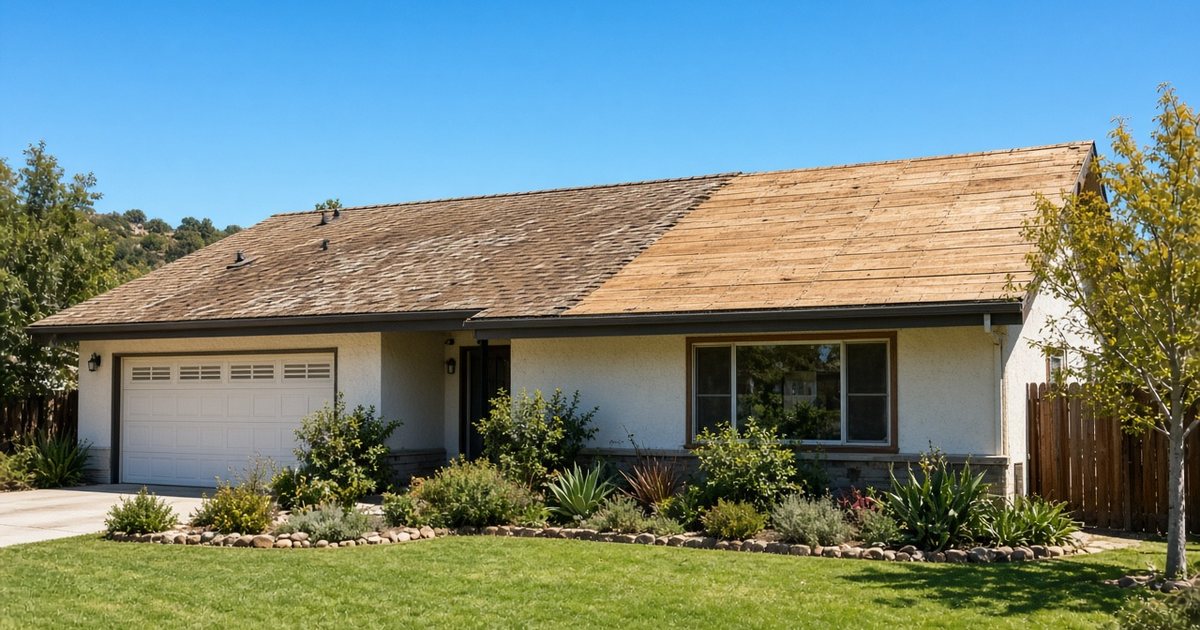
When you collect bids for a new roof, one may come in noticeably lower than the rest. Often the reason is a single word: overlay. Instead of stripping the old shingles, the roofer installs new ones on top. In California, a roof overlay vs tear-off decision is not only about price. The state's residential code sets limits on when a new layer is allowed at all.
This guide explains what the code says about installing shingles over shingles, how many layers a California roof can have, the real pros and cons of each approach, and the questions to ask before you sign.
What is a roof overlay, and what is a tear-off?
A tear-off removes the existing roofing down to the wood deck, then installs new underlayment, flashing and roofing. The California Residential Code calls this a roof replacement, and it requires removing the existing layers of roof covering down to the roof deck.
Source: 2025 California Residential Code §R908.3 (effective January 1, 2026)
An overlay, sometimes called a layover or a roof recover, installs a new roof covering over the existing one. The code allows a recover where the new covering is installed according to the roof covering manufacturer's approved instructions, subject to the limits below.
Source: 2025 California Residential Code §R908.4
Can you put new shingles over old shingles in California?
Sometimes. The code says a roof recover is not permitted in any of these cases:
- The existing roof or roof covering is water soaked, or has deteriorated to the point that it is not an adequate base for more roofing.
- The existing roof covering is slate, clay, cement or asbestos cement tile.
- The existing roof already has two or more applications of any type of roof covering.
Source: 2025 California Residential Code §R908.4, Exceptions 1 to 3
The code also has a rule for wood. If a new covering over wood shingles or shakes would create a combustible concealed space, the entire existing surface must first be covered with gypsum board, mineral fiber, glass fiber or another approved material.
Source: 2025 California Residential Code §R908.4.1
Your local building department enforces these rules through the reroof permit, and some cities add their own requirements. See do you need a permit to replace a roof in California.
How many layers of shingles are allowed in California?
In practice, one existing layer is the most you can cover. Because a recover is not allowed when the roof already has two or more applications of roof covering, a house with one layer of shingles may be eligible for one overlay. A house that already has two layers needs a full tear-off.
Source: 2025 California Residential Code §R908.4, Exception 3
Manufacturers matter too. The Asphalt Roofing Manufacturers Association notes that, depending on local codes, a maximum of two roofs, the original plus one reroof, may be installed before a tear-off becomes mandatory, and that most manufacturers do not recommend installing over laminated shingles. Since the code ties a recover to the manufacturer's approved instructions, ask the roofer to show you what the instructions for your chosen shingle say.
Source: Asphalt Roofing Manufacturers Association, Residential Asphalt Roofing Manual (2014 edition), Chapter 13; 2025 California Residential Code §R908.4
Pros and cons of a roof overlay
Why homeowners consider it
- Lower cost. Less labor and no disposal of the old layer.
- Faster. No tear-off day, and less debris in your yard.
- Less exposure. The house is never open to the deck during the job.
The trade-offs
- You cannot see the deck. Rot, soft spots and old leak damage stay hidden under two layers.
- More weight. The roof structure has to carry the new roof, the old roof and the crew and materials during installation. The code requires the structure to be capable of supporting those loads.
- Flashing and details. Old flashing, vents and drip edge are harder to redo correctly when you are working over a second layer.
- A shorter road ahead. The next reroof will be a full tear-off of both layers.
Source: 2025 California Residential Code §R908.2; Asphalt Roofing Manufacturers Association, Residential Asphalt Roofing Manual (2014 edition), Chapter 13
Roof overlay vs tear-off: when tear-off is better
A tear-off is required whenever the code exceptions apply. Beyond that, the roofing industry's own guidance points to tear-off when the surface underneath will not make a good base. ARMA's manual says old shingles that are curled or badly weathered, so that a level surface will be hard to achieve, must be removed. It says the same for surfaces with holes, or with depressions or sagging that suggest structural problems. It also says a deck that will not hold new fasteners, or that is not smooth and structurally sound, should be replaced.
Source: Asphalt Roofing Manufacturers Association, Residential Asphalt Roofing Manual (2014 edition), Chapter 13
A tear-off also makes sense if:
- You have had leaks and want to see the deck and fix the cause.
- You are planning solar and want the longest life out of the new roof. See replace roof before solar in California.
- You want new underlayment and flashing installed as one system. See roof underlayment explained.
- You live in a high fire hazard area and are upgrading the roof assembly. See fire resistant roofing in California.
A tear-off is also the cleanest time to redo the roof edges. On a shingle roof, the code requires drip edge at the eaves and rakes, extending back onto the deck and fastened to it. That detail is easier to get right when the deck is bare. Ask every bidder whether new drip edge is included.
Source: 2025 California Residential Code §R905.2.8.5
How to read an overlay bid
If one bid proposes an overlay and the others propose a tear-off, you are not comparing the same job. Line them up item by item, as explained in how to compare roofing bids. Then ask the overlay bidder:
How many layers are on my roof now, and how did you confirm it? How did you check the deck? Does the shingle manufacturer allow installation over my existing roof? Will the permit show a recover or a replacement?
Get the answers in the written contract. A home improvement contract over $500 has to be in writing, and changes have to be in a signed change order. See what should be in a roofing contract in California.
Source: California Business and Professions Code §7159(b) and (d)
Check the roofer before you sign
Whatever you choose, the roofing contractor should hold an active California contractor license from CSLB, usually in the C-39 roofing classification, and be licensed and insured. A low overlay price is not a bargain if the company is not properly licensed. See how to check a contractor's license in California and roof repair vs replacement.
Frequently asked questions
Is a roof overlay legal in California?
Yes, in limited cases. The code allows a recover per the manufacturer's instructions, but not over tile or slate, not over a water soaked or deteriorated roof, and not when there are already two or more layers.
Can you overlay a tile roof with shingles?
No. A recover is not permitted where the existing roof covering is slate, clay, cement or asbestos cement tile.
Does an overlay affect my warranty?
Ask before you sign. Have the roofer show you, in writing, whether the shingle manufacturer's warranty covers installation over an existing roof. See how long a roofing warranty should be.
Will the roofer find rot during an overlay?
Usually not, because the deck stays covered. That is the main reason a tear-off is often worth the extra cost.
Where ConFacts fits
A ConFacts report is a sourced background check on California C-39 roofing contractors built from public records, including CSLB license status, workers' comp, bond, the qualifier, certifications and reviews, scored from 0 to 100. Your first report is free, then $7, or 3 for $15. We take no money from contractors. We show you the record, you make the decision.
Two companies. Two reports.
Got more than one bid? Check them side by side, against the same records.
Compare bids side by side