Clay vs Concrete Roof Tiles: Which Is Better?
Clay and concrete roof tiles look alike but age differently. Compare weight, lifespan, color, upkeep, cost and code rules before you choose a tile roof.
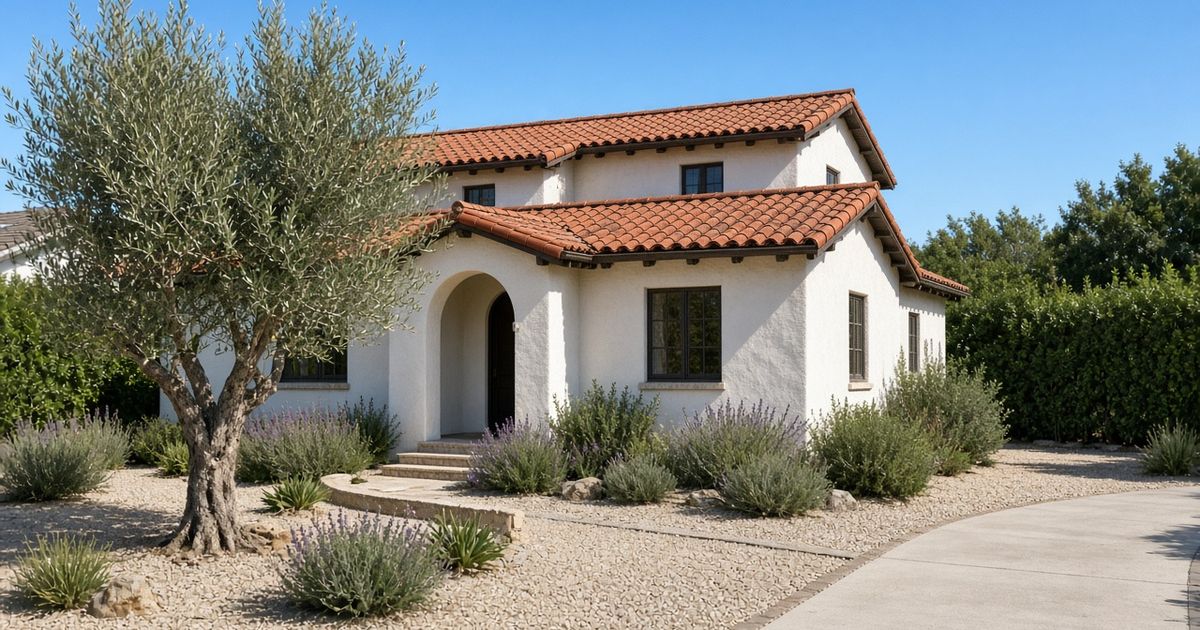
Tile roofs are part of the look of California, from Spanish revival bungalows to newer tract homes. From the street, clay and concrete roof tiles can be hard to tell apart, but they are made differently, weigh differently and age differently. This guide walks you through how clay vs concrete roof tiles compare on looks, weight, lifespan, upkeep, cost and the code rules that apply, so you can talk to a roofer with confidence and pick the tile that fits your house.
Source: InterNACHI, "Standard Estimated Life Expectancy Chart for Homes," nachi.org; Tile Roofing Industry Alliance, "FAQs," tileroofing.org; 2025 California Residential Code, Section R905.3.2, via up.codes; all read November 27, 2026; code citation rechecked against the 2025 edition on November 28, 2026
How clay and concrete tiles differ
What each tile is made of
Clay tile is shaped from natural clay and fired in a kiln, much like pottery. Concrete tile is molded from a mix of cement, sand and water, then cured, and it is usually colored. Both are covered by the same section of the California Residential Code, but each has its own product standard: clay roof tile must meet ASTM C1167 and concrete roof tile must meet ASTM C1492. If a bid lists a tile, it is fair to ask which standard it meets.
Source: 2025 California Residential Code, Sections R905.3, R905.3.4 and R905.3.5, via up.codes, read November 28, 2026
Looks and color over time
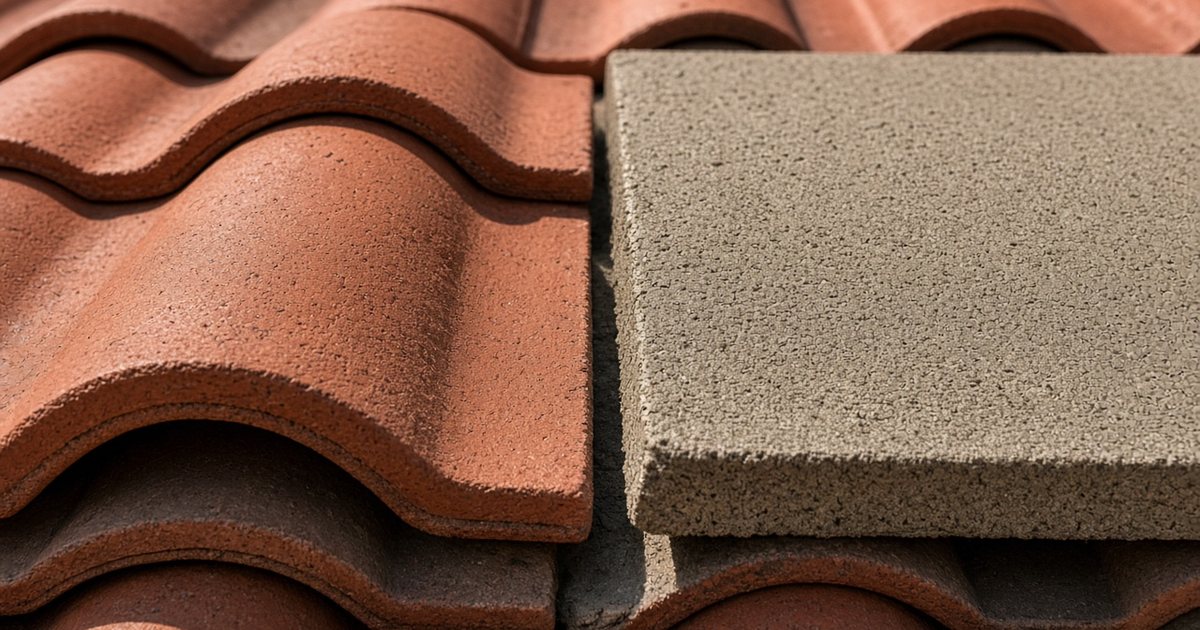
Clay is the classic choice for barrel and Spanish profiles, and its color comes from the fired clay itself. Concrete tile comes in many profiles too, including flat shapes that imitate slate or shake. How a concrete tile gets its color depends on the product, so ask whether the color runs through the tile or sits on the surface.
The Tile Roofing Industry Alliance, a trade group for tile makers and installers, says tile color may soften after long exposure to the weather. It also notes that concrete tile can show efflorescence, a temporary whitish discoloration that does not damage the tile and usually fades on its own.
Source: Tile Roofing Industry Alliance, "FAQs," tileroofing.org, read November 27, 2026
Weight and your roof framing
Both clay and concrete tile are far heavier than asphalt shingles, and the exact weight depends on the profile and the product. Our comparison of tile vs shingle vs metal roofs in California lists typical weight ranges per square. The tile trade group says a home that has never carried tile or slate should be inspected to see whether more support is needed.
Source: Tile Roofing Industry Alliance, "Why Weight Matters," tileroofing.org, read November 27, 2026
That matters most when you switch materials. If your home has shingles today and you want tile, ask the roofer whether an engineer will review the framing, and whether the permit set will show the new roof load. If you already have tile and are replacing like for like, the framing was built for that weight, but damaged rafters or sheathing still need repair.
What the roof deck must be
The code says clay and concrete tile go only over solid sheathing, with a limited exception for spaced lumber sheathing in lower seismic design categories. Tile also needs a roof slope of at least 2 1/2 in 12, and slopes from 2 1/2 in 12 up to 4 in 12 need a double layer of underlayment. Fasteners must be corrosion resistant.
Source: 2025 California Residential Code, Sections R905.3.1, R905.3.2 and R905.3.7, via up.codes, read November 28, 2026
Ask the roofer: has anyone checked whether my framing can carry this tile, and will the permit show it?
Lifespan, upkeep and repairs
Tile itself lasts a very long time. InterNACHI, a home inspector association, estimates clay and concrete roofing at 100 years or more, and the tile trade group says most tile makers offer warranties of 50 years or more. Read any tile warranty closely, because it usually covers the tile, not the labor or the layers under it. Our guide to tile and metal roof warranties in California explains what to look for.
Source: InterNACHI, "Standard Estimated Life Expectancy Chart for Homes," nachi.org; Tile Roofing Industry Alliance, "FAQs," tileroofing.org; both read November 27, 2026
The layer that wears out first
The underlayment beneath the tile does most of the waterproofing, and it does not last as long as the tile. When it fails, a roof can leak even though the tiles look fine. The code allows existing clay or cement tile to be reinstalled, but not tiles that are damaged, cracked or broken. That is why many older tile roofs get a tile roof underlayment replacement instead of new tile.
Source: 2025 California Residential Code, Section R908.5, via up.codes, read November 28, 2026
Breakage and cleaning
Both kinds of tile can crack if someone steps in the wrong place or a branch falls on them, so keep foot traffic to people who know where to step. Our guide to cracked roof tile repair covers matching and replacing broken pieces. For cleaning, the tile trade group says glazed or matte clay tile is essentially maintenance free and concrete tile rarely needs treatment beyond optional low pressure washing.
Source: Tile Roofing Industry Alliance, "FAQs," tileroofing.org, read November 27, 2026
Cost, fire safety and code rules
Tile prices vary widely by profile, color, product line and labor, and the cost of fixing the deck or framing can change the total a lot. The only reliable number is a written bid for your roof. Get at least two or three, and use our guide to compare roofing bids line by line, including underlayment type, flashing and how many spare tiles are included.
On fire, the tile trade group says clay and concrete tiles are noncombustible and carry a Class A fire rating, while noting that no roof makes a home fireproof. Ask how the full roof assembly is rated, not just the tile.
Source: Tile Roofing Industry Alliance, "FAQs," tileroofing.org, read November 27, 2026
Two code rules surprise many owners. You cannot lay a new roof over existing clay or cement tile, so a material change means a full tear-off. And a reroof usually needs a building permit, so read our guide to the roof replacement permit in California before you sign.
Source: 2025 California Residential Code, Section R908.4, via up.codes, read November 28, 2026
Which tile suits which house
- Clay often suits historic and Spanish style homes where an original look matters, or where you want color that comes from the fired clay.
- Concrete often suits homes that need a flat or shake style profile, or a wider range of colors.
- Neither may suit a house whose framing was built for shingles, unless an engineer confirms it. Lighter options such as stone-coated steel roofing can imitate a tile profile.
Questions to ask the roofer about clay or concrete tile
• Is this tile clay or concrete, and which ASTM standard does it meet?
• Can my roof framing carry this tile, and who confirmed that?
• What underlayment will you use, and will my slope need a double layer?
• Will you reuse any of my existing tiles, and how will you sort out cracked ones?
• How many spare tiles will you leave for future repairs?
• What does the tile warranty cover, and what does your workmanship warranty cover?
Frequently asked questions
Is clay or concrete tile better?
How long does a tile roof last?
Can I switch from shingles to tile?
Can I walk on a tile roof?
Check the roofer before you sign
Tile work takes skill, and the state license classification for roofing is C-39 Roofing. The Contractors State License Board says C-39 roofers must carry workers' comp whether or not they have employees. Before you sign, run a ConFacts check on the tile roofer to review the state license, bond and workers' comp records in one place.
Source: Contractors State License Board, "Licensing Classifications" and "Finding the Right Contractor," cslb.ca.gov, read November 27, 2026
Two companies. Two reports.
Got more than one bid? Check them side by side, against the same records.
Compare bids side by side