Tile Roof Underlayment Replacement Explained
Why tile roofs leak when the tiles look fine, how a tile roof underlayment replacement (lift and relay) works, what the code requires, and what to ask.
Clay and concrete tile is famous for lasting a long time. So it can be confusing when a tile roof starts leaking and the tiles from the street look almost new. In many cases, the problem is not the tile at all. It is the layer underneath. This guide explains what tile roof underlayment does, why it wears out first, how a tile roof underlayment replacement works, and what to ask before you hire someone to do it.
Why do tile roofs leak when the tiles look fine?
On most tile roofs, the tile is the outer shell. It sheds most of the water and takes the sun, but water still gets between and under tiles, especially in wind driven rain. The underlayment below is what keeps that water off the wood deck. When the underlayment dries out, cracks, tears or gets punctured, water reaches the deck even though the tiles above are intact.
The California Residential Code treats underlayment as a required part of a tile roof. It lists clay and concrete tile among the roof coverings that need underlayment, and it requires double underlayment on tile roofs with slopes from 2 1/2:12 up to 4:12. Tile cannot be installed below a 2 1/2:12 slope.
Source: 2025 California Residential Code, Sections R905.1.1, R905.3.2 and R905.3.3, via up.codes, read November 20, 2026
Not sure what your slope is? Our guide to roof underlayment types and code requirements explains the layers and how slope changes what is required.
Signs the underlayment may be failing
- Water stains on ceilings or in the attic, often after a heavy or windy storm.
- Damp, dark or soft spots on the underside of the roof deck.
- Leaks around chimneys, skylights, valleys or walls, where flashing and underlayment meet.
- Slipped, cracked or missing tiles that let more water reach the layer below.
Leaks at walls and penetrations are often a flashing problem, or both. See roof flashing types, leaks and repair to tell them apart.
What is a tile roof underlayment replacement?
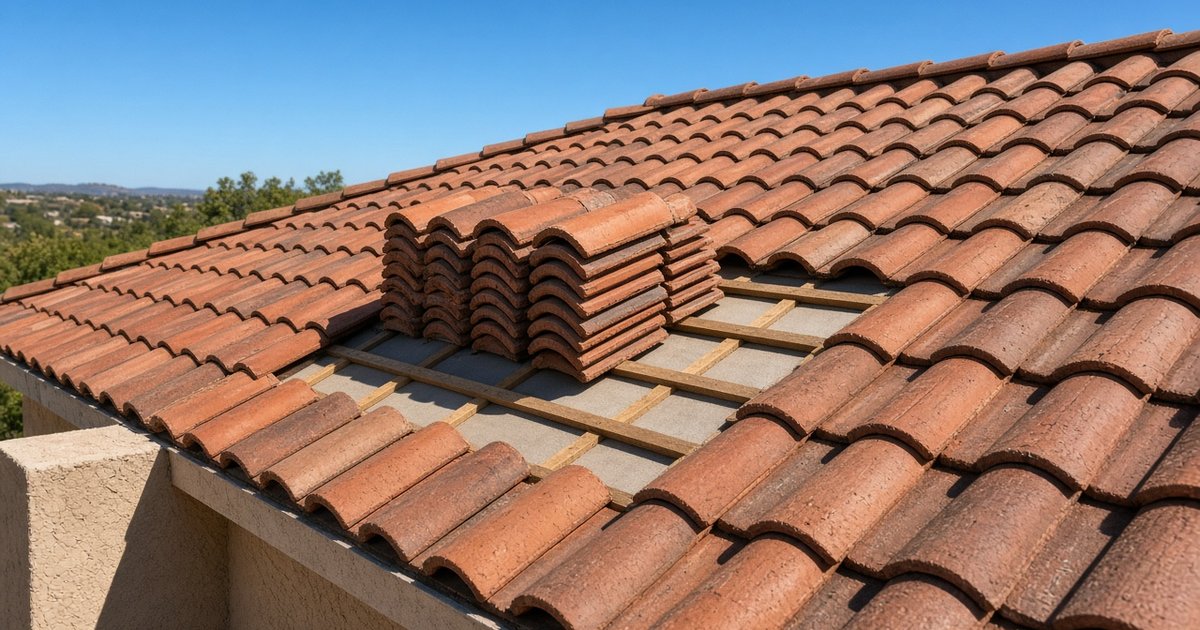
Roofers often call it a "lift and relay," "re-felt" or "underlayment replacement." The idea is simple. The crew removes the tiles and stacks them, strips the old underlayment down to the deck, repairs any damaged wood, installs new underlayment and flashing, and then puts the same tiles back.
Can you reuse the old tiles?
Yes, within limits. The California Residential Code allows existing clay or cement tile to be reinstalled, but damaged, cracked or broken tile may not be reinstalled. Existing flashings, edgings, vents and similar parts of the roof must be replaced where they are rusted, damaged or deteriorated.
Source: 2025 California Residential Code, Section R908.5, "Reinstallation of Materials," via up.codes, read November 20, 2026
That means your bid should plan for some broken tiles. Older or discontinued profiles can be hard to match, so ask where replacement tiles will come from and where they will be placed. Some roofers put salvaged tiles on the most visible slopes and matched new tiles on the back.
What happens to the deck
The code says roof replacement includes removing existing layers of roof coverings down to the roof deck, and tile must be installed over wood structural panels or solid lumber sheathing, with limited exceptions for spaced sheathing in some seismic design categories.
Source: 2025 California Residential Code, Sections R908.3 and R905.3.1, via up.codes, read November 20, 2026
Once the old underlayment is off, rot and soft spots become visible. Our guide on roof decking replacement and dry rot explains how that work is usually priced, so a surprise does not turn into a blank check.
How tile goes back on
The code requires tile to be applied according to the code and the manufacturer's installation instructions, based on the climate, roof slope, underlayment system and type of tile. Nails must be corrosion resistant and long enough to penetrate the deck at least 3/4 inch or go through it, whichever is less.
Source: 2025 California Residential Code, Sections R905.3.7 and R905.3.8, via up.codes, read November 20, 2026
You do not need to memorize fastener rules. You do want a contractor who names the underlayment product, says whether it will be one layer or two, and explains how tiles will be fastened.
What to expect during the job
- Tiles are usually stacked on the roof or in the yard while the old layer comes off, so plan for clear space around the house.
- Expect dust in the attic and noise during tear-off. Cover stored items under the roof.
- The crew should dry in each section with new underlayment before the end of the day.
- Ask for photos of the bare deck and the new underlayment before tiles go back on. Once the tile is down, you cannot see that work again without lifting it.
Repair, underlayment replacement or a new roof?
- Spot repair can make sense for a single leak with a clear cause, such as a few broken tiles or one bad flashing.
- Tile roof underlayment replacement fits when the tiles are in good shape but the layer underneath is failing across large areas.
- A new tile or different roof may make sense when many tiles are broken or no longer made, or when you want a lighter material. Our comparison of tile vs shingle vs metal roofs in California covers the tradeoffs.
Do you need a permit?
In many California cities, replacing underlayment across a roof counts as reroofing that needs a permit. Rules vary by city, so read whether you need a permit to replace a roof in California and confirm with your local building department.
Questions to ask before you sign
• Which underlayment will you install, and how many layers?
• How will you handle broken tiles, and where will matching tiles come from?
• Will you replace flashing at walls, chimneys, skylights and valleys?
• How is deck repair priced if you find rot?
• How will the house be protected if rain comes while tiles are off?
• Who pulls the permit and schedules the inspection?
When you have more than one bid, our guide on how to compare roofing bids shows what to line up side by side. If the work will happen in the rainy months, also read whether you can replace a roof in winter in California.
Frequently asked questions
Can you replace tile roof underlayment without new tiles?
Often, yes. The code allows reinstalling existing clay or cement tile, as long as damaged, cracked or broken pieces are not reused.
Is tile roof underlayment replacement cheaper than a new roof?
It can be, because you keep the tile. But labor is significant, and broken tile and deck repair add cost. Compare written bids for each option.
Can I walk on my tile roof to check it?
We do not recommend it. Tiles can crack under foot, and roofs are a fall hazard. Look from the ground and in the attic, and let a licensed roofer inspect.
Where ConFacts fits
Tile work takes skill, and the crew lifting your tiles should hold the right license. Before you sign, a ConFacts roofing contractor check gives you a sourced background check on California C-39 roofers built from public records, including CSLB license status, workers' comp, bond, the qualifier, certifications and reviews, with a 0 to 100 Trust Score. Your first report is free, then $7, or 3 for $15. We take no money from contractors. We show you the record, you make the decision.
Two companies. Two reports.
Got more than one bid? Check them side by side, against the same records.
Compare bids side by side