Cracked Roof Tiles: Repair or Replace?
A cracked clay or concrete roof tile is not always a leak, but do not ignore it. Learn why tiles crack, how repair works and when underlayment is the issue.

Clay and concrete tile roofs are part of the look of California, from Spanish revival bungalows to newer stucco homes. Tile itself lasts a long time, but individual tiles crack, slip and break. This guide explains why roof tiles crack, what a cracked tile does and does not mean, how cracked roof tile repair works, and when the real problem is the layer underneath.
Source: 2025 California Residential Code, Sections R905.3.2, R905.3.7 and R905.3.8, via up.codes, read November 28, 2026
How a tile roof keeps water out
On a tile roof, the tiles are the outer shell. They shed most of the rain and protect what is underneath from sun and fire. The underlayment beneath them is what keeps the house dry when some water gets past the tiles, which it always does in wind driven rain.
The 2025 California Residential Code requires clay and concrete tile to go over solid sheathing in most cases and on slopes of at least 2 1/2 in 12. For slopes from 2 1/2 in 12 up to 4 in 12, it requires double underlayment.
Source: 2025 California Residential Code, Sections R905.3.1 and R905.3.2, via up.codes, read November 28, 2026
If you are not sure what your slope is, our guide to roof pitch and what 4/12 means explains how it is measured.
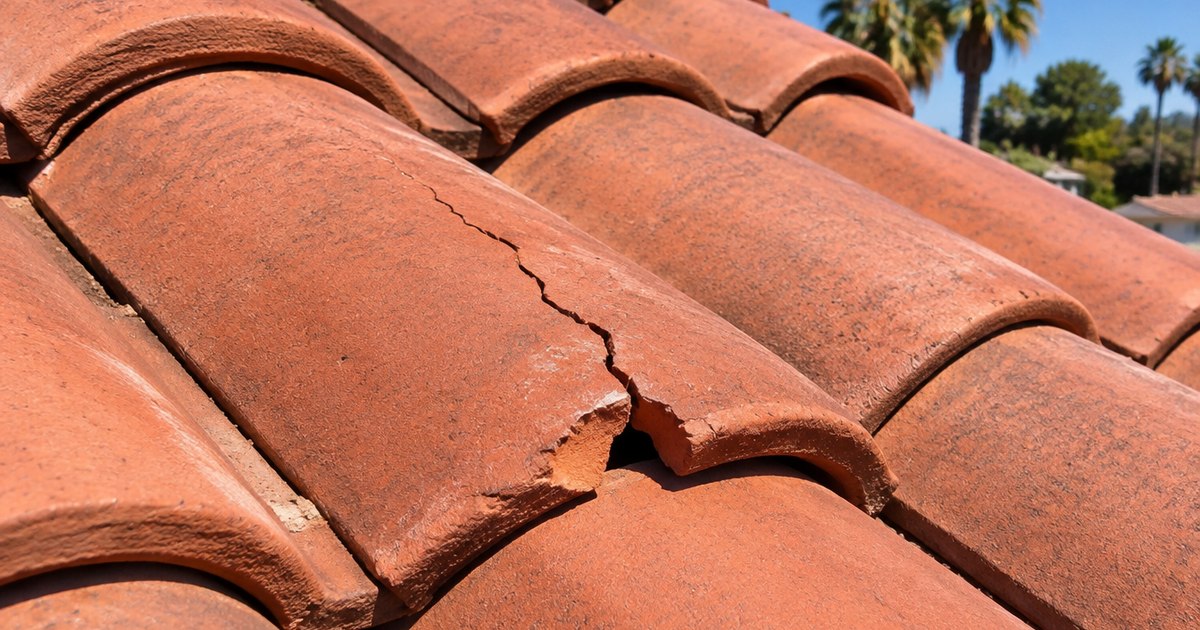
Why roof tiles crack
- Foot traffic: tiles can break when people step in the wrong place, such as during painting, gutter, antenna or solar work.
- Falling branches and debris: a heavy limb can crack several tiles at once.
- Earthquakes: shaking can loosen, slide or break tiles, especially at ridges and edges. Our guide to roof damage after an earthquake covers what to check.
- Loose fastening: tiles that are not well attached can shift in wind and knock against each other.
- Age and weather: older tiles, and some concrete tiles, can wear and become more brittle.
Solar installs are a common time for broken tiles, because crews have to walk the roof and mount hardware through it. If you have panels on a tile roof, see our guide to a roof leaking under solar panels.
Does one cracked tile mean a leak?
Not necessarily. Because the underlayment is the real water barrier, a single cracked tile often does not cause a leak right away. But the crack lets more water and sunlight reach the underlayment in that spot, and a broken piece can slide down and block water flow. Over time that wears the underlayment faster and can lead to a leak.
If you see stains on the ceiling or damp wood in the attic, the underlayment may already be failing. That is common on older tile roofs even when most tiles look fine.
What you can safely do yourself
Stay off the roof. From the ground, use binoculars to look for broken pieces, slipped tiles and gaps along the ridges and edges, and take photos. After a big storm or earthquake, check the attic with a flashlight for drips or wet wood. Share the photos with a roofer so they arrive knowing where to look, and keep them for your records in case you need to file an insurance claim.
Ask the roofer: is the leak from the broken tiles, or is the underlayment worn out under the whole roof?
How cracked roof tile repair works
Replacing a few tiles
For a handful of broken tiles, a roofer lifts the tiles around them, removes the broken pieces, checks the underlayment in that spot and slides in replacements. They fasten the new tiles as the code and the tile maker require. The code says perimeter tiles get at least one fastener each, and the perimeter zone includes three tile courses but not less than 36 inches from hips, ridges, eaves and rakes.
Source: 2025 California Residential Code, Sections R905.3.7 and R905.3.8, via up.codes, read November 28, 2026
Matching the tiles
Finding an exact match can be the hardest part, especially for older clay tile. Roofers may use spare tiles left from the original job, salvaged tiles, or move tiles from a hidden area and put new ones there. Ask how the repair will look before work starts. Not sure whether your roof is clay or concrete? Our guide to clay vs concrete roof tiles explains how to tell.
If you have spare tiles in the garage from when the roof was built, keep them. They are often the closest match you will find, and they can save time and money on a future repair. Store them flat and out of the way so they do not chip.
Sealing a crack
Some roofers seal a small hairline crack instead of replacing the tile. That can be a short term patch, but a replaced tile is usually the lasting fix.
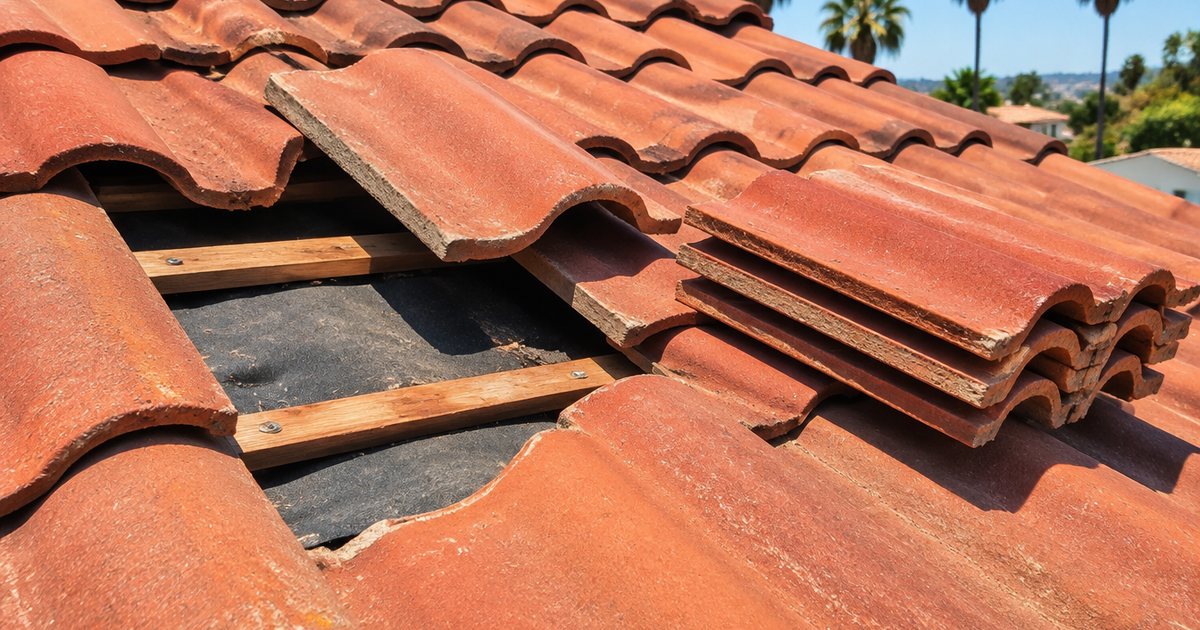
When the underlayment is the real issue
If the roof leaks in more than one place, or the underlayment you can see is brittle, torn or crumbling, replacing tiles will not stop the leaks. The common fix is a lift and relay: the roofer removes the tiles, replaces the underlayment and battens, and puts the good tiles back with new ones where needed. Our guide to tile roof underlayment replacement explains that job in detail.
Before you agree to a full relay, ask for the reasons in writing and photos of the underlayment they found. A second opinion is reasonable on a job this size. If you are weighing a different material altogether, see our comparison of tile vs shingle vs metal roofs in California.
Choosing a roofer for tile repair
Look for a roofer with real tile experience, because walking a tile roof and matching tiles takes skill. In California, roofing contractors hold a C-39 license; our guide to what a C-39 roofing license covers explains it. The CSLB says all active C-39 roofing contractors must carry workers' compensation insurance or have a valid certificate of self insurance on file, whether or not they have employees.
Source: CSLB, "How do I find the right licensed contractor?," cslb.ca.gov, read November 24, 2026
Questions to ask the roofer about cracked tiles
• How many tiles are broken, and can you show me photos?
• Where will the replacement tiles come from, and will they match?
• What condition is the underlayment in where you lifted the tiles?
• How will your crew walk the roof without breaking more tiles?
• Is the repair covered by a written workmanship warranty?
Frequently asked questions
Will a cracked roof tile cause a leak?
Can I replace a cracked roof tile myself?
Can old clay tiles be matched?
When does a tile roof need new underlayment?
Check the roofer before you sign
A tile repair should leave your roof better than before, not with more broken tiles. Before you sign, run a ConFacts check on the California roofer to review the state license, bond and workers' comp records in one place.
Two companies. Two reports.
Got more than one bid? Check them side by side, against the same records.
Compare bids side by side