Do You Need a Permit for a Deck in California?
Most California decks need a building permit. Learn the small deck exemption, the 30 inch rule, guard and ledger basics, and how to hire a deck builder.
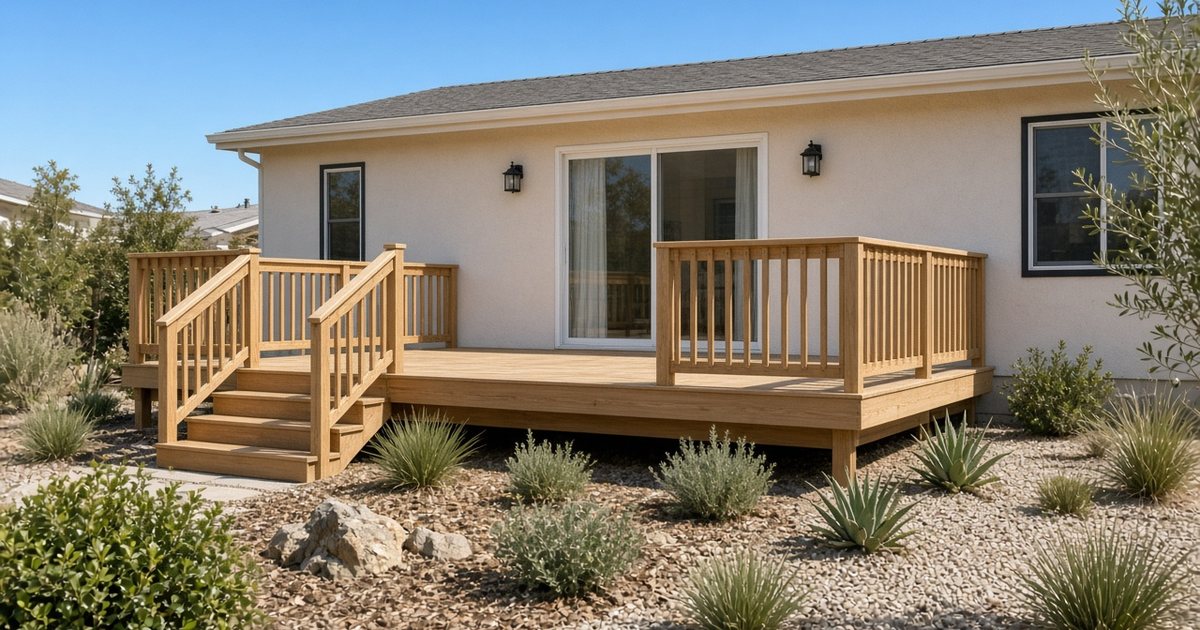
A new deck is one of the most popular backyard projects in California, and one of the most common to be built without a permit. The short answer is that most decks need a building permit. Only small, low, freestanding decks are exempt under the state's residential code, and your city or county can add its own rules. This guide explains when a deck permit is required, what plan review and inspections look at, and how to hire someone to build it right.
Source: 2025 California Residential Code, Sections R105.2 and R321.1.2, via up.codes, read November 28, 2026
When does a deck need a permit in California?
The California Residential Code says anyone who plans to build, enlarge, alter or repair a structure regulated by the code must first apply to the building official and get a permit. Decks are structures, so the starting point is that a deck needs a permit.
The small deck exemption
The code exempts a deck from a building permit only when all four of these are true:
- It is no more than 200 square feet in area.
- It is no more than 30 inches above grade at any point.
- It is not attached to the house.
- It does not serve the exit door the code requires for the home.
Miss any one and the exemption does not apply. A deck that is 150 square feet but bolted to the house needs a permit. So does a freestanding deck that is low at one end but 36 inches off the ground at the other, because the limit applies at any point. The code also says an exemption is not permission to build in a way that breaks the code or local law.
Source: 2025 California Residential Code, Sections R105.1 and R105.2, via up.codes, read November 28, 2026
Local rules come first
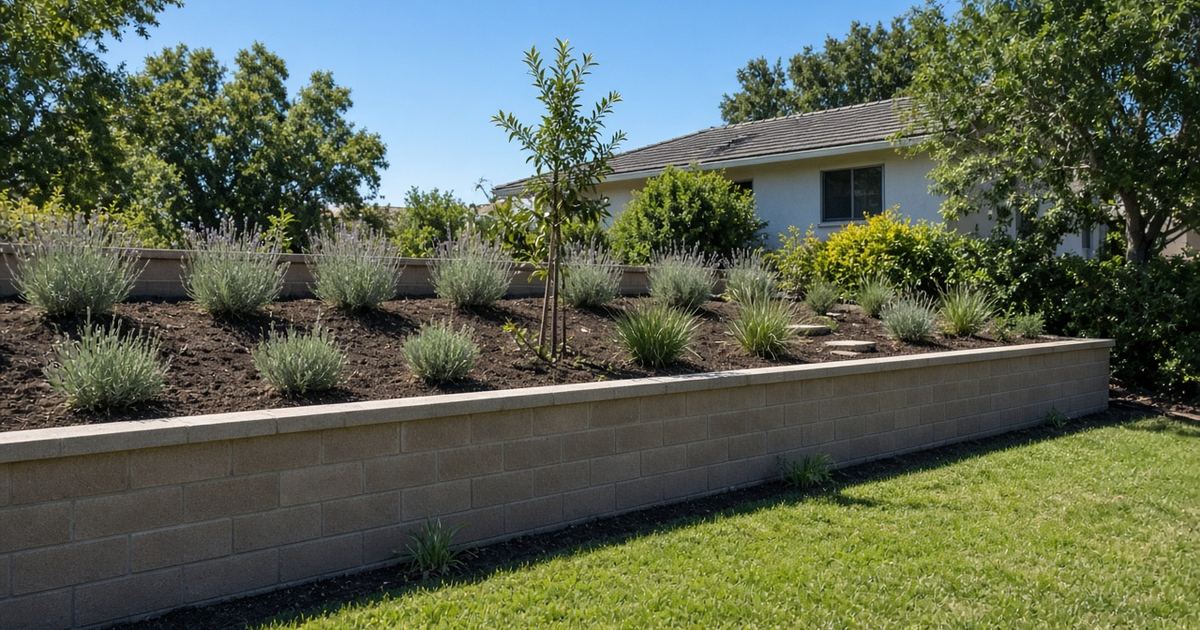
Cities and counties adopt the state code and can make it stricter. Some require permits for any deck, set limits for decks near property lines, or need planning review for setbacks, hillsides, coastal zones or homeowners association rules. Call or check the website of your local building department before you design the deck. Building on a slope? Many terraced yards also need a retaining wall permit.
What the code checks on a deck
A permit is not just paperwork. Plan review and inspections focus on the parts of a deck that fail and hurt people.
Guards and railings
Guards are required on open sides of walking surfaces more than 30 inches above the floor or grade below, measured within 36 inches of the edge. In California, required guards on decks and porches must be at least 42 inches tall, and openings must be small enough that a 4 inch sphere cannot pass through.
Source: 2025 California Residential Code, Sections R321.1.1, R321.1.2 and R321.1.3, via up.codes, read November 28, 2026
The ledger and connections
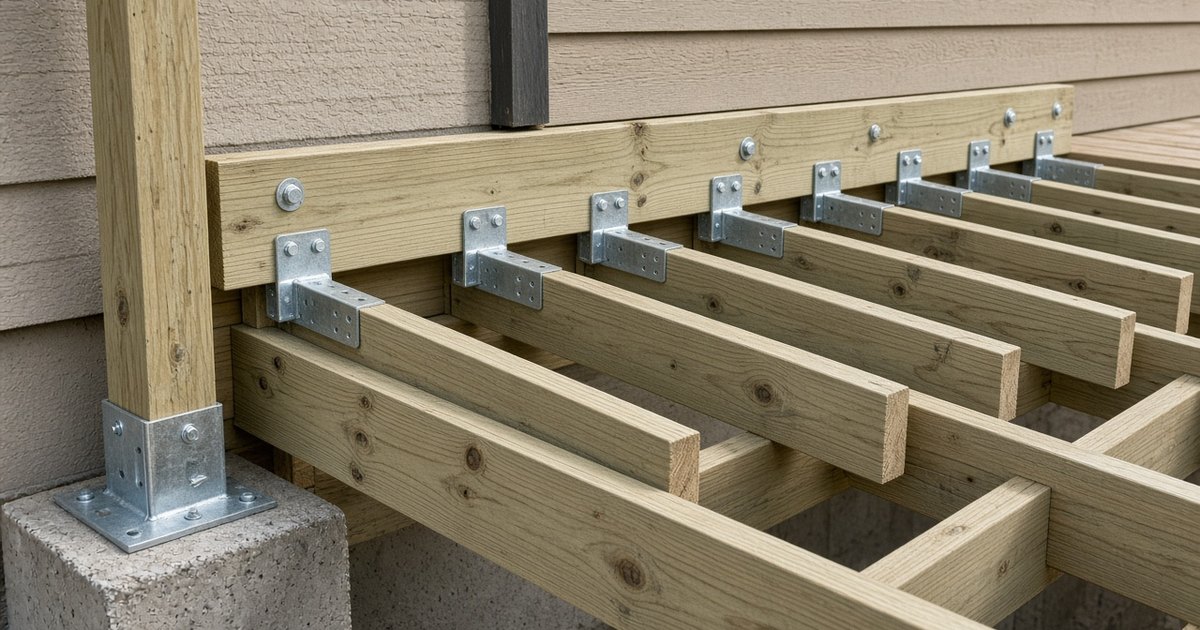
Where a deck attaches to the house, a ledger board carries much of the load. The code calls for a ledger of at least 2 by 8 inch nominal lumber of a treated or naturally durable grade, with fasteners that are hot-dipped galvanized or stainless steel. Flashing at the ledger must be corrosion resistant metal or an approved compatible material, to keep water from rotting the house framing behind it.
Source: 2025 California Residential Code, Sections R507.2.3, R507.2.4, R507.9.1.1 and R507.9.1.3, via up.codes, read November 28, 2026
Materials, footings and loads
Sawn lumber for deck joists, beams and posts must be No. 2 grade or better, and deck framing must be protected from decay, and from termites where required. Decks must be designed for the code's live load. Inspectors usually check footings before concrete is poured, framing before decking covers it, and the finished deck.
Source: 2025 California Residential Code, Sections R507.1 and R507.2.1, via up.codes, read November 28, 2026
Ask the builder: who is pulling the deck permit, and which inspections will happen before the framing is covered?
Why skipping the permit is risky
- Safety: the ledger connection, footings and railings hold people up, and they are exactly what inspections check.
- Selling your home: unpermitted work can come up in disclosures and buyer inspections, and may need to be permitted after the fact or removed.
- Enforcement: a city that learns of unpermitted work can require you to open up the deck for inspection or bring it up to code.
- Insurance: ask your insurer how it treats damage or injuries tied to unpermitted work.
How to get a deck permit
- Check local rules for setbacks, height limits and whether your city has a standard deck handout.
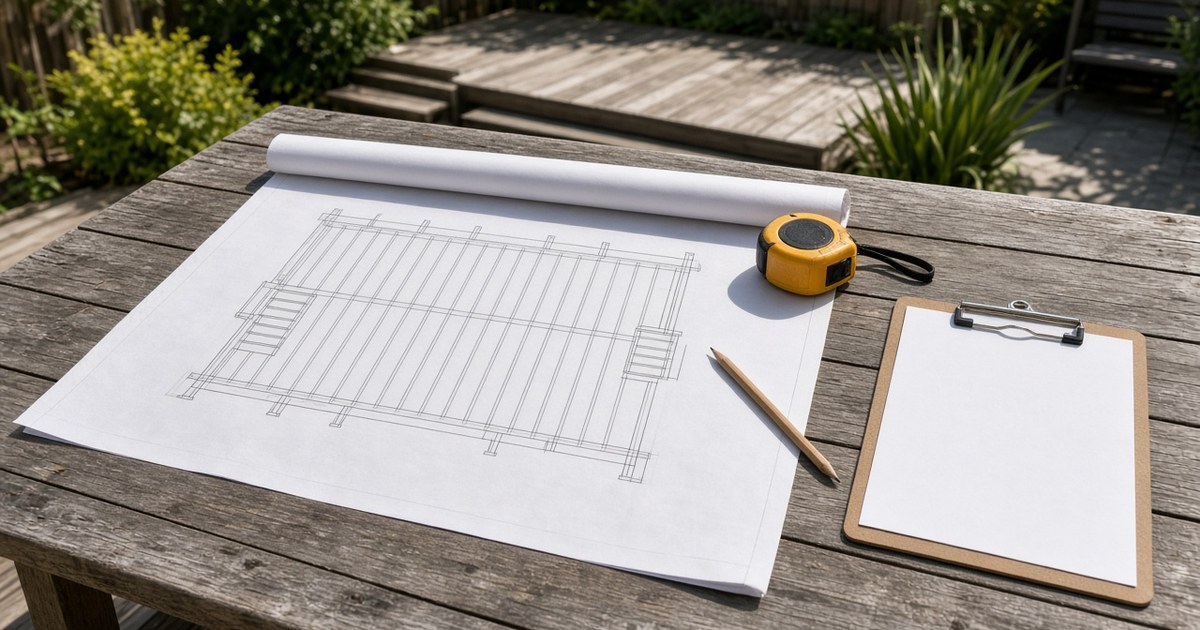
- Prepare plans showing the deck size, height, footings, framing, ledger, guards and stairs. Some decks, such as tall ones or decks on steep slopes, may need an engineer.
- Submit and pay fees, then answer any plan review comments.
- Schedule inspections at each stage, and keep the signed-off permit with your home records.
If you plan to pull the permit yourself as the owner, read our guide to owner-builder permits in California first, because it makes you responsible for the work. If the deck is part of a bigger project such as a new unit in the backyard, our guide to ADU permits in California may apply too.
Hiring a deck builder
Deck work is normally done by a licensed contractor. The Contractors State License Board lists a C-5 Framing and Rough Carpentry classification, and a B General Building contractor can also take on projects like a deck that involve several trades. Our guide to the B general building contractor license explains what that license covers.
Source: Contractors State License Board, "Licensing Classifications," cslb.ca.gov, read November 26, 2026
Before you sign, check the contractor's license in California, get a written contract that says who pulls the permit, and be wary of anyone who suggests skipping it to save money. Our list of unlicensed contractor red flags covers other warning signs.
Questions to ask a deck builder
• Does my deck need a permit here, and will you pull it?
• Will the deck be attached to the house, and how will the ledger be flashed?
• What footings will you use, and how deep?
• What lumber or composite and what fasteners will you use?
• How tall will the guards be, and what is the baluster spacing?
• What license classification do you hold?
Frequently asked questions
Do I need a permit to replace deck boards?
Does a ground level deck need a permit?
How tall must a deck railing be in California?
Can I get a permit for a deck that is already built?
Check the contractor before you sign
A deck is structural work that people stand on. Before you sign, read our before-you-sign checklist and run a ConFacts check on the California contractor to review the state license, bond and workers' comp records in one place.
Two companies. Two reports.
Got more than one bid? Check them side by side, against the same records.
Compare bids side by side