What Is a B General Building Contractor License?
What a California B General Building license and the B-2 Residential Remodeling license allow, when a general contractor can take your roof job, and how to check.
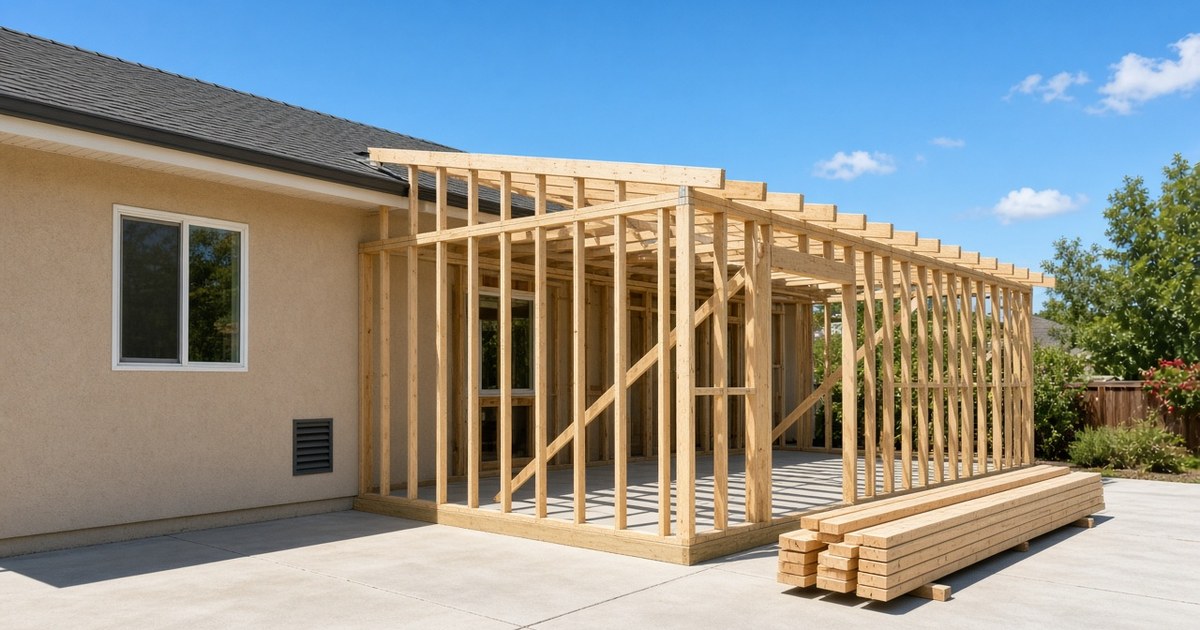
Planning a remodel, an addition or a new roof? You will see the letter B on a lot of contractor licenses. In California, the "B" General Building license is the classic general contractor license, and it is also the one homeowners most often misunderstand. This guide explains what a B general building contractor license allows, how the newer B-2 residential remodeling license is different, and what that means when a general contractor offers to do your roof.
What is a B General Building contractor license?
The Contractors State License Board (CSLB) says the B General Building license is the most common contractor license classification in California. Because so many contractors hold one, the CSLB gets frequent questions about what jobs a B licensee can legally take.
Source: Contractors State License Board, "Fast Facts: What Jobs 'B' General Building Can/Cannot Perform"
State law defines a general building contractor as a contractor whose main business is work on a structure built, being built or to be built for the shelter or enclosure of people, animals or property, that requires at least two unrelated building trades or crafts, or who does or superintends all or part of that work.
Source: California Business and Professions Code §7057(a)
In plain English: a B contractor runs projects that pull together several trades, such as framing, drywall, roofing, flooring and finish work on a home addition.
The two unrelated trades rule
The heart of the B license is what the CSLB calls the two unrelated trades rule. Under state law, a B contractor can:
- take a prime contract or a subcontract for a framing or carpentry project and do the work itself, and
- take a prime contract for a project that involves at least two unrelated trades other than framing or carpentry.
Framing and carpentry do not count toward the two trades. A B contractor also cannot take a prime contract for a project in other trades unless the contract involves at least two unrelated trades besides framing or carpentry, or the contractor holds the right specialty license, or it subcontracts that work to an appropriately licensed contractor.
Source: California Business and Professions Code §7057(b); Contractors State License Board, "Fast Facts: What Jobs 'B' General Building Can/Cannot Perform"
There are a few hard limits too. A B contractor cannot contract for a project that includes fire protection systems or well drilling unless it holds those licenses or subcontracts the work to a licensed specialty contractor.
Source: California Business and Professions Code §7057(c)
Can a general contractor replace my roof?
This is a common question. A roof replacement on its own is a single trade. Roofing falls under the C-39 Roofing classification, which the CSLB describes as installing products that waterproof, weatherproof or seal structures, using materials such as shingles, roof tile, slate, metal roofing systems and membranes.
Source: Contractors State License Board, "C-39 Roofing" classification page, cslb.ca.gov
So a B contractor taking a roof-only job as the prime contractor needs one of these to be true under section 7057(b):
- it also holds a C-39 roofing license, or
- it subcontracts the roofing to a properly licensed roofing contractor.
Source: California Business and Professions Code §7057(b)
If the roof is part of a bigger project, such as an addition with framing, drywall and electrical work, the B contractor can include it. Either way, ask who will be on your roof and check their license. Our guide on what a C-39 roofing license is explains the roofing classification in detail.
What is a B-2 Residential Remodeling contractor?
Since 2021, California has had a second general license aimed at home remodels. A B-2 Residential Remodeling contractor works on improvements to an existing residential wood frame structure, and each contract must involve at least three unrelated building trades or crafts. Planning a remodel? See our guides to kitchen remodel permits and bathroom remodel permits.
Source: California Business and Professions Code §7057.5(a) and (b)(2), as published on the CSLB B-2 classification page (added by SB 1189, effective January 1, 2021)
What a B-2 contractor can do
The law lists trades a B-2 contractor may take on a prime contract, including drywall, finish carpentry, flooring, insulation, painting, plastering, roof repair, siding and tiling, plus replacing electrical, plumbing and mechanical fixtures like lights, faucets and exhaust fans. A B-2 may do the work itself or subcontract any of it to licensed subcontractors.
Source: California Business and Professions Code §7057.5(b)(1) and (3)
What a B-2 contractor cannot do
A B-2 contractor cannot make structural changes to load bearing parts of a home, which the law says include footings, foundations, load bearing walls and partitions, and roof structures. It also cannot install, replace, substantially alter or extend electrical, mechanical or plumbing systems unless it holds the right license or subcontracts the work, though minor alterations to install fixtures are allowed on a qualifying contract.
Source: California Business and Professions Code §7057.5(c)(2) and (3)
Note that "roof repair" is on the B-2 list, but "roof structures" are off limits. A B-2 job that includes roof repair still needs at least three unrelated trades on the same contract.
B vs B-2 vs C-39 at a glance
| License | Typical job | Key limit |
|---|---|---|
| B General Building | Additions, new homes, major remodels | Two unrelated trades, not counting framing or carpentry, unless licensed for the trade or subcontracted |
| B-2 Residential Remodeling | Non-structural remodels of existing wood frame homes | Three unrelated trades per contract, no structural work |
| C-39 Roofing | Roof replacement and roof repair | Roofing and related waterproofing work |
Source: California Business and Professions Code §7057 and §7057.5; Contractors State License Board, "C-39 Roofing" classification page
Do you need a licensed contractor at all?
For almost any real project, yes. California's minor work exemption covers only jobs under $1,000 in labor, materials and everything else combined, and only if no building permit is required. Splitting a job into smaller contracts to stay under the limit does not count.
Source: California Business and Professions Code §7048(a) and (b)
If you are building an accessory dwelling unit, a B contractor is the usual choice. See our guide to ADU permits in California.
How to check a general contractor before you sign
- Look up the license on the CSLB website and confirm it is active. Here is how to check a contractor's license in California.
- Read the classifications listed. B, B-2 and C-39 are different licenses.
- Check the qualifier, the person whose experience backs the license. See what an RMO is.
- Confirm the bond and workers' comp. See contractor license bonds in California and does your roofer need workers' comp.
- If a salesperson signs you up, check their registration too. See home improvement salesperson rules in California.
- Ask in writing who will do each trade, and get the subcontractors' license numbers.
Frequently asked questions
Is a B license the same as a general contractor license?
Yes. In California, the B General Building license is what most people mean by a general contractor license.
Can a B contractor do roofing?
As part of a project with at least two other unrelated trades, yes. For a roof-only prime contract, the B contractor needs a C-39 license or must subcontract the roofing to a licensed contractor.
Can a B-2 contractor replace a roof?
The B-2 list includes roof repair, not roof structures, and every B-2 contract needs at least three unrelated trades. For a full reroof, look for a C-39 roofing contractor.
Where ConFacts fits
ConFacts focuses on roofing. A ConFacts report is a sourced background check on California C-39 roofing contractors built from public records, including CSLB license status, workers' comp, bond, the qualifier, certifications and reviews, scored from 0 to 100. Your first report is free, then $7, or 3 for $15. We take no money from contractors. We show you the record, you make the decision.
Two companies. Two reports.
Got more than one bid? Check them side by side, against the same records.
Compare bids side by side