Owner-Builder Permits in California: The Risks
What an owner-builder permit in California means, who qualifies under CSLB rules, the employer, lien and injury risks, and when to hire a contractor instead.
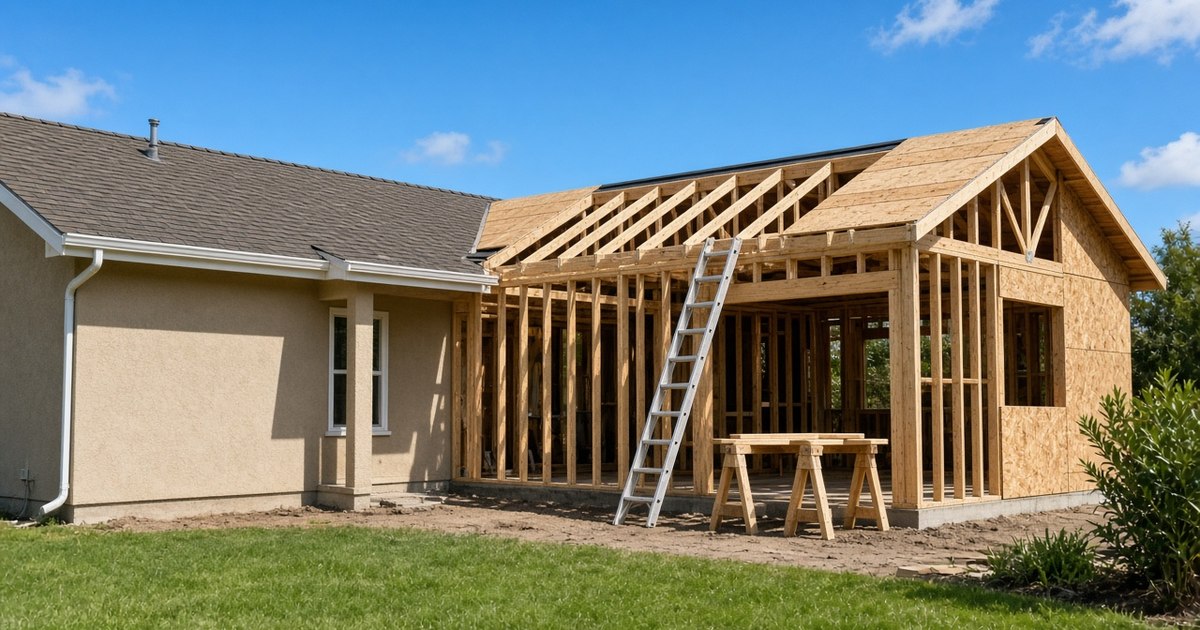
When you pull a building permit in California, the form asks who is doing the work. Checking the box for "owner-builder" can look like a simple way to save money on a remodel, an addition or a new roof. It is legal, and some homeowners do it well. But that signature carries real responsibilities, and the Contractors State License Board (CSLB) warns that many homeowners do not understand them. This guide explains what an owner-builder permit in California means, who qualifies, the risks, and when it makes more sense to hire a licensed contractor.
What is an owner-builder?
CSLB describes an owner-builder as the person who owns the property and acts as the general contractor on the job, either doing the work or having employees or licensed subcontractors do it.
Source: CSLB, "Owner-Builders Beware!" pamphlet, cslb.ca.gov, read November 20, 2026
The key words are "acts as the general contractor." You are not just the client. You are the person in charge of the job.
What you take on when you sign the permit
According to CSLB, when you sign a building permit application as an owner-builder, you assume full responsibility for all phases of your project and its integrity. You must pull all building permits, and your project must pass codes and building inspections. You are also responsible for ordering materials and making sure suppliers are paid, and for supervising, scheduling and paying subcontractors.
Source: CSLB, "Owner-Builder Responsibilities," cslb.ca.gov, read November 20, 2026
CSLB adds that if any work does not pass inspection, the owner-builder is responsible for correcting it and getting it re-inspected.
Source: CSLB, "Owner-Builders Beware!" pamphlet, cslb.ca.gov, read November 20, 2026
You may become an employer
This is the risk that surprises people most. CSLB says that if you use anyone other than a licensed subcontractor, you may be considered an "employer." Employers must register with the state and federal governments and handle income tax withholding, Social Security taxes, workers' compensation insurance, disability insurance and unemployment contributions.
Source: CSLB, "Owner-Builder Responsibilities," cslb.ca.gov, read November 20, 2026
Our guide on why workers' comp matters when you hire a roofer explains how coverage protects you when someone is hurt on your property.
Who qualifies as an owner-builder in California?
CSLB explains that a homeowner improving their principal residence is exempt from the license requirement if all of these are true:
- The work is performed before the home is sold.
- You have lived in the home for the 12 months before the work is completed.
- You have not used this exemption on more than two structures in any three year period.
Source: CSLB, "Building Officials: Owner-Builder Overview," cslb.ca.gov, read November 20, 2026 (see Business and Professions Code section 7044)
The exemption itself comes from Business and Professions Code section 7044, which CSLB points homeowners to for details. Different rules apply to building homes for sale. CSLB notes the limits on how many structures can be sold do not apply if the owner contracts with a General Building (B) contractor. Read what a B general building contractor license allows.
Source: CSLB, "Owner-Builders Beware!" pamphlet, cslb.ca.gov, read November 20, 2026
The biggest owner-builder risks
Mechanics liens
CSLB warns that subcontractors and suppliers who are not paid on schedule may file mechanics liens against your property. As the owner-builder, paying them is your job. Learn how a mechanics lien release in California works before any money changes hands.
Injuries and liability
If your workers are injured, or if your subcontractors are not licensed or do not carry liability or workers' compensation insurance and they are injured, CSLB says you could be asked to pay for injuries and rehabilitation through your homeowner's policy or face lawsuits.
Costly mistakes
CSLB also notes that unless you know construction, mistakes can be costly and take extra time to fix.
Source: CSLB, "Owner-Builder Risks," cslb.ca.gov, read November 20, 2026
Watch out for "consultants"
CSLB specifically warns homeowners to be wary of "consultants" or unlicensed individuals who try to talk them into becoming an owner-builder to save money. It says consultants who bid on projects or supervise a job by hiring subcontractors must be licensed by CSLB, and that some are people whose licenses were suspended or revoked, or who could not qualify for one.
Source: CSLB, "Owner-Builder Risks" and "Owner-Builders Beware!" pamphlet, cslb.ca.gov, read November 20, 2026
A contractor who asks you to pull the permit in your name is a warning sign. See our list of unlicensed contractor red flags, and for roofing jobs, read whether you need a permit to replace a roof in California.
Owner-builder vs hiring a licensed contractor
| Question | Owner-builder | Licensed general contractor |
|---|---|---|
| Who pulls permits and schedules inspections? | You | Usually the contractor, per the contract |
| Who hires and pays the trades? | You | The contractor |
| Who fixes work that fails inspection? | You | The contractor, per the contract |
| Is there a license bond and CSLB oversight? | No license involved for you | Yes, the contractor is licensed and bonded |
CSLB notes that anyone who contracts for or bids on a construction project valued at $1,000 or more in labor and materials must be licensed, and that to qualify, a contractor must pass a criminal background check, verify four years of journey level experience, pass trade and law exams, and post a license bond.
Source: CSLB, "Owner-Builders Beware!" pamphlet, cslb.ca.gov, read November 20, 2026
If you do hire trades yourself, our guide to roofing subcontractors in California explains what licenses and coverage to look for.
When owner-builder can make sense
- You plan to do the work yourself and have real experience with it.
- You will hire only licensed subcontractors for each trade, and you can manage the schedule, the inspections and the payments.
- You live in the home, plan to stay, and the project fits the exemption rules above. Some yard projects have their own rules too; see retaining wall permit rules.
For larger projects like an accessory dwelling unit, many homeowners find a licensed general contractor is worth the cost. Our guide to ADU permits in California walks through that process.
Checklist if you go owner-builder
CSLB's pamphlet suggests these steps if you choose not to hire licensed contractors: ask your city or county whether you need a business license; contact the Employment Development Department, the Franchise Tax Board and the IRS about registering as an employer; and check with your insurance company about workers' compensation and whether to increase your liability coverage.
Source: CSLB, "Owner-Builders Beware!" pamphlet, cslb.ca.gov, read November 20, 2026
Frequently asked questions
Do I need a license to work on my own house in California?
No, if you meet the owner-builder exemption. But the responsibilities above still apply.
Can an owner-builder hire a roofer?
Yes. Hire a licensed C-39 roofer as a subcontractor, check the license, and confirm workers' comp.
Can I sell my house after an owner-builder remodel?
Yes, but for the home improvement exemption, CSLB says the work must be done before the sale and you must have lived in the home for the 12 months before the work is completed. Ask a real estate attorney about disclosure.
Does an owner-builder permit cost less?
Permit fees are set by your city or county. The savings, if any, come from not paying a general contractor, and the risks above come with them.
Where ConFacts fits
If your owner-builder project includes a new roof, a ConFacts check on a California roofing contractor gives you a sourced background check on C-39 roofers built from public records, including CSLB license status, workers' comp, bond, the qualifier, certifications and reviews, with a 0 to 100 Trust Score. Your first report is free, then $7, or 3 for $15. We take no money from contractors. We show you the record, you make the decision.
Two companies. Two reports.
Got more than one bid? Check them side by side, against the same records.
Compare bids side by side