Foundation Cracks in California: When to Worry
Not every foundation crack is a problem. Learn which cracks are normal shrinkage, which signal settlement or soil movement and who to call in California.
Finding a crack in your foundation can make your stomach drop. In practice, many foundation cracks are harmless shrinkage that every concrete pour develops. Others are early signs of settling, soil movement or earthquake damage that are much cheaper to deal with early. This guide helps California homeowners tell the difference, explains what causes foundation cracks and shows who to call and what to ask before any repair.
Source: 2025 California Residential Code, Section R403.1.4, via up.codes, and Earthquake Brace + Bolt, "EBB Retrofit," earthquakebracebolt.com, both read November 25, 2026; code citation rechecked against the 2025 edition on November 28, 2026
Why foundations crack
Concrete shrinks as it cures and keeps moving slightly with temperature and moisture for years. Most homes have a few small cracks for that reason alone. Larger movement comes from the ground or from forces on the house:
- Expansive soil. Clay soils swell when wet and shrink when dry. A dry summer followed by a wet winter can lift and drop parts of a foundation. The California Residential Code requires foundations on expansive soils to be designed for it, unless a system has performed adequately on similar soil and the building official approves.
- Settlement. Poorly compacted fill, leaking pipes or water pooling against the house can soften the soil under a footing so it sinks.
- Drainage. Gutters that dump water at the foundation and soil sloped toward the house keep the ground wet in one spot. Our guide on clogged gutters and roof damage covers the roof side of that problem.
- Earthquakes. Shaking can crack foundations and shift older homes on them.
Source: 2025 California Residential Code, Section R403.1.8, via up.codes, read November 28, 2026
Which cracks are normal and which are not
Usually minor
- Thin hairline cracks, vertical or slightly angled, that are not growing.
- Shrinkage cracks in a garage or slab floor with both sides level.
- Cracks in stucco near window corners with no other signs.
Worth a professional look
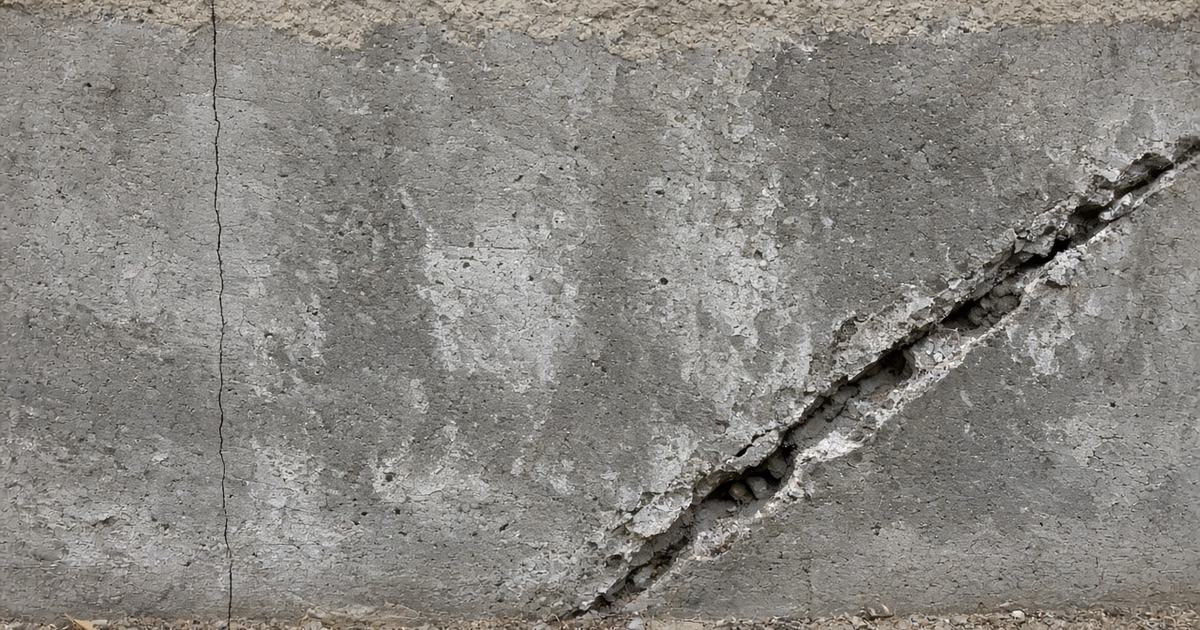
- Cracks wide enough to fit a coin, or that you can see getting wider over months.
- Horizontal cracks in a foundation wall, or a wall that bows.
- Stair step cracks in block or brick.
- One side of the crack higher than the other.
- Cracks with signs inside the house: doors and windows that stick, sloping floors, gaps at baseboards or new drywall cracks above doors.
A sagging roof line can also be a sign the house below it moved; our guide to a sagging roof and its causes explains how to tell.
Ask the engineer: is this crack from shrinkage, settlement or soil movement, and is it still moving?
How to monitor a crack yourself
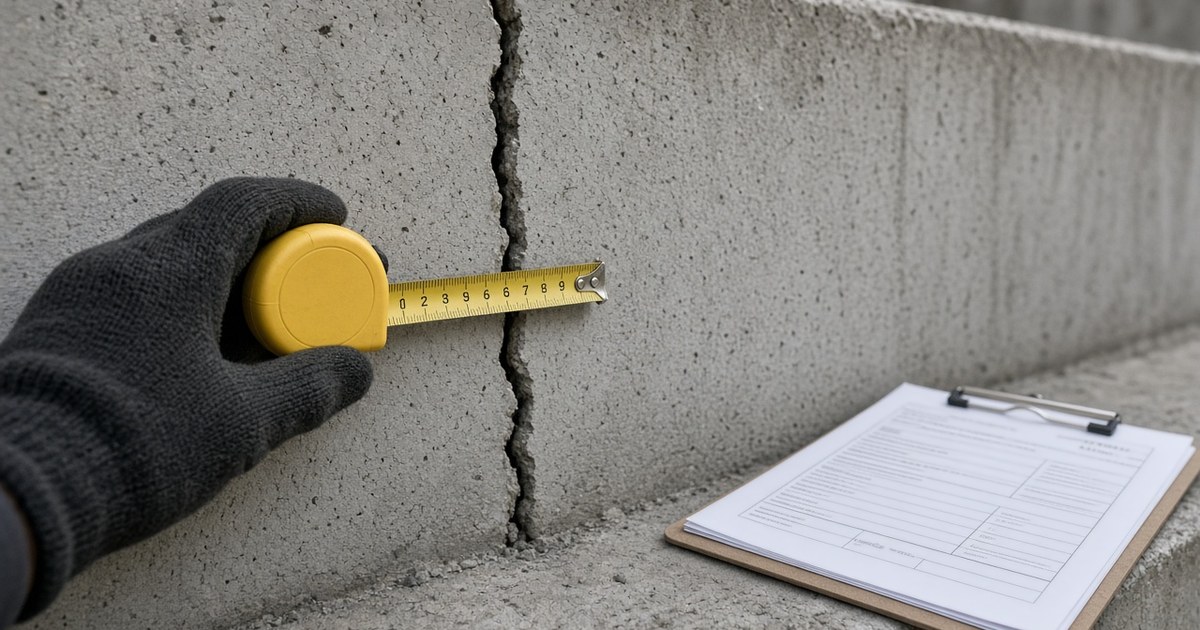
Before calling anyone, a simple record helps a lot. Mark the ends of the crack with a pencil and the date. Photograph it with a tape measure or ruler beside it. Check again every month or two, especially after the first heavy rains and at the end of summer. A crack that has not changed in a year tells a very different story than one that keeps growing.
Indoors, keep notes too. Write down which doors started sticking and when, and whether it changes between the dry and wet seasons. Seasonal sticking that comes and goes often points to soil moisture, while steady worsening is a stronger reason to call an engineer. A marble or a phone level app on a hard floor can show you whether a floor slopes, which is worth mentioning when you call.
Also walk the outside of the house after a rain. Note where water pools, where downspouts drain and which way the soil slopes. Fixing drainage is often the first, cheapest step.
Who to call: engineer, contractor or both
A structural engineer for diagnosis
For any crack on the "worth a look" list, start with a licensed structural or civil engineer, not a company that sells foundation repair. An engineer who is not selling the fix can tell you whether you need one at all. California's Board for Professional Engineers, Land Surveyors, and Geologists offers a license lookup on its consumer page.
Source: Board for Professional Engineers, Land Surveyors, and Geologists, "Consumers," bpelsg.ca.gov, read November 25, 2026
A licensed contractor for the repair
Repairs range from sealing a crack, to fixing drainage, to underpinning with piers or replacing a section of foundation. The CSLB issues a C-8 concrete contractor license and a B general building license among its classifications; our guide to what a B general building license covers explains the latter, and you can check a contractor's license in California before you hire. The CSLB also limits a home improvement down payment to 10% of the contract price or $1,000, whichever is less.
Source: CSLB, "Licensing Classifications" and "How do I find the right licensed contractor?," cslb.ca.gov, read November 25, 2026
Permits
Structural foundation repair is generally work that needs a building permit, because the code requires a permit to construct, alter or repair a building unless the work is specifically exempt. Ask who will pull it, and be wary of anyone who suggests skipping it. Retaining walls have their own rules; see retaining wall permits in California.
Source: 2025 California Residential Code, Sections R105.1 and R105.2, via up.codes, read November 28, 2026
Getting comparable bids
Once you have an engineer's report, give the same report to each contractor so the bids cover the same work. Ask each one to list the method, the number and location of any piers, how they will handle drainage, and what happens if they find something unexpected once they dig. A bid that is much lower than the others often leaves something out.
Earthquakes, retrofits and insurance
Many older California homes on raised foundations are not bolted to them. Earthquake Brace + Bolt says its retrofit, which bolts the house to the foundation and braces short cripple walls, is for wood framed, pre-1980 homes with a raised foundation, and offers grants of up to $3,000 when registration is open. Our guide to earthquake retrofits in California covers the program in more detail.
Source: Earthquake Brace + Bolt, "EBB Retrofit," earthquakebracebolt.com, read November 25, 2026
On insurance, the California Department of Insurance lists earthquake and earth movement among the perils generally not covered by a homeowners policy, along with wear and tear. Earthquake coverage is a separate policy.
Source: California Department of Insurance, "Residential Insurance: Homeowners and Renters," insurance.ca.gov, read November 25, 2026
Questions to ask before foundation repair
• What is causing the crack, and is it still moving?
• Is there an engineer's report, and does the repair follow it?
• Would fixing drainage solve this, or is structural work needed?
• Who will pull the building permit, and when is the inspection?
• What license classification do you hold for this work?
• What warranty comes with the repair, and is it transferable if I sell?
Frequently asked questions
Are hairline foundation cracks normal?
Which foundation cracks are serious?
Should I call an engineer or a foundation company first?
Does homeowners insurance cover foundation cracks?
Check the contractor before you sign
Foundation work is expensive and hard to undo, so who does it matters. Review what to check before you sign, then run a ConFacts check on the California contractor to review the state license, bond and workers' comp records in one place.
Two companies. Two reports.
Got more than one bid? Check them side by side, against the same records.
Compare bids side by side