How Long Does a Roof Replacement Take?
How long a roof replacement takes in California, from contract and permit to tear-off, weather delays and final inspection, plus what to ask before you sign.
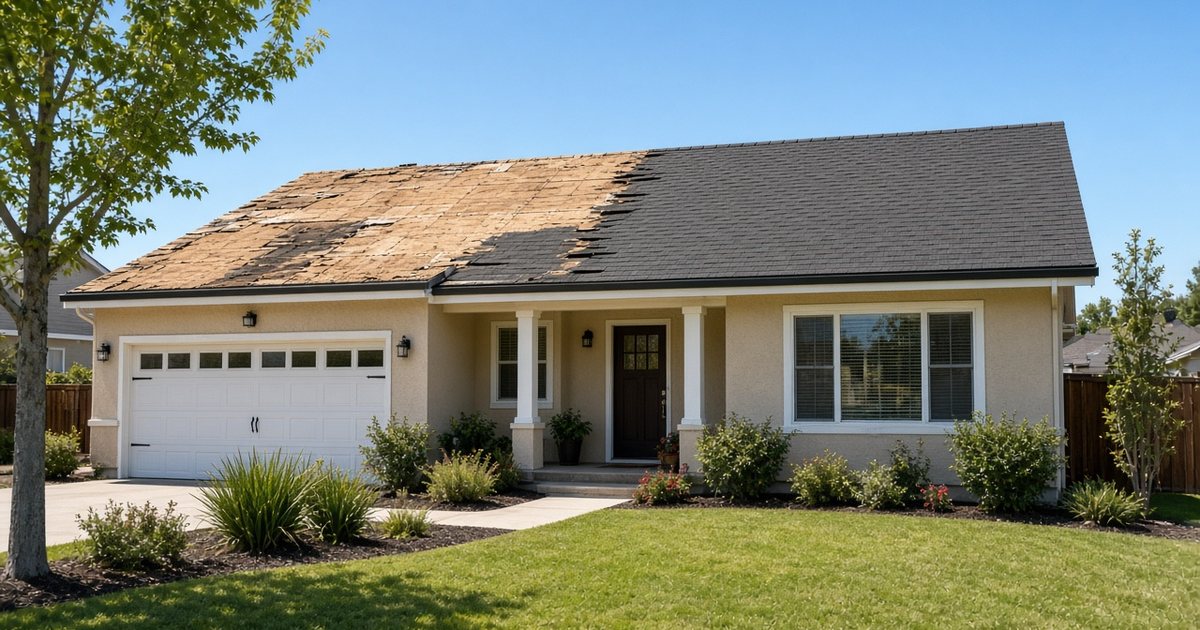
How long does a roof replacement take? People often mean the days a crew is on the house. That stretch can be short. The calendar from the day you sign to the day the city signs off is usually longer, because the contract, the permit, the materials and the weather all sit in front of the tear-off.
This guide walks through a typical California timeline, what a day of tear-off actually looks like, what slows a job down, and the dates that belong in your contract before you sign.
How long is the crew actually on the roof?
For an asphalt shingle replacement on an average-sized home, a manufacturer guide says the work can often be completed in one to two days. That is a starting point, not a promise. Steeper roofs, many valleys and penetrations, tight access, hidden deck damage and weather can stretch the same job to an extra day or more.
Source: GAF, "How Long Does It Take to Replace a Roof?" (Dec. 22, 2024)
Tile, metal and large or complex roofs generally take longer, because the details and the labor are different. If two bids give very different durations, ask each roofing contractor to walk you through the schedule, not just the price. See how to compare roofing bids.
The longer timeline: contract to start
In California, a home improvement contract over $500 must be in writing and signed before work starts. It has to include a statement of what counts as substantial commencement of work, an "Approximate Start Date" and an "Approximate Completion Date," plus a description of the significant materials. Those dates are estimates, but they should be filled in. A blank or "to be determined" line is a problem.
Source: California Business and Professions Code §7159(d)(7), (d)(10) and (d)(11)
You also have a right to cancel: three business days after you receive a signed copy, or five if you are a senior citizen, for contracts covered by that notice, and seven business days for certain disaster-repair contracts. Work should not start during that window if you may still cancel. See what should be in a roofing contract and cancel a roofing contract in California.
Source: California Business and Professions Code §7159(e)(6) and (e)(7)
Then comes the permit. In almost every California city and county, a re-roof needs a building permit, and work should not start until it is issued. How long that takes varies by office. As one example, the City of Menifee's re-roof guide says intake review may take up to 2 business days, then fees are billed, and the permit is issued after payment. Other cities are faster or slower, and incomplete paperwork is a common delay. See do you need a permit to replace a roof in California.
Source: City of Menifee, "Re-Roof Permit Guide"
Materials can add time too. A common asphalt shingle color may already be on a truck. A special color, a tile or metal system, or a long manufacturer lead time can push the start date. Ask whether the materials are in hand or on order before you lock the start date. If you live in a homeowners association, architectural approval can sit on the same calendar. Get that process moving early, because the city permit and the association review are separate.
A typical tear-off day, step by step
No two jobs run on the same clock, but a straightforward asphalt reroof often follows this sequence once the permit is in hand and the crew arrives.
- Set up. The crew protects landscaping, places a dumpster, sets ladders or staging, and gets materials onto the roof. Tight yards, fences and close neighbors can add hours before the first shingle comes off. See how to prepare for a roof replacement.
- Tear-off. The old covering comes off down to the wood deck. A manufacturer guide describes this as typically accomplished in a few hours on a typical job.
- Deck check and repairs. With the deck exposed, the roofer can see rot or water damage that was hidden. Damaged plywood has to be replaced. That can add a few hours or an extra day.
- A deck or tear-off inspection, if your city requires one. Some building departments want to see the bare deck (and any new nailing) before the new roof goes on. The City of Menifee, for example, requires a roof deck inspection after the old material is removed and the sheathing is sound, and it says work must not proceed to the next stage until that inspection is approved. The City of San Bruno requires a tear-off or overlay inspection and a final, plus a nailing inspection when new plywood is installed. Your city may use different names or combine steps. Ask the roofer who schedules the inspector.
- Dry-in. Drip edge, underlayment and flashing go on so the house is protected. Then the new covering, vents and ridge details are installed.
- Cleanup. Magnets pick up nails, debris leaves in the dumpster, and the property should be left safe.
- Final inspection. The city checks the finished roof, including underlayment, flashing, fasteners and ventilation as the local handout requires, and then closes the permit. Do not make the last payment until the permit is finaled.
Source: GAF, "How Long Does It Take to Replace a Roof?" (Dec. 22, 2024); City of Menifee, "Re-Roof Permit Guide"; City of San Bruno, "2025 Reroof Requirements"
What slows a roof replacement down?
- Weather. Rain can stop a job mid-day and bring the crew back later. Frost can delay a morning start. A good contract says how weather delays are handled. Our guide to replacing a roof in winter in California covers the rainy season.
- Roof shape and slope. A manufacturer guide notes that slopes greater than 8:12 need extra safety gear and go more slowly, and that many intersecting planes and penetrations mean more cutting and flashing.
- Hidden damage and extra work. Deck repairs, dry rot at eaves, or adding ventilation all take time. Extra work should be written as a change order, with any new completion date, before that work starts.
- Access. A steep driveway, a tight side yard or a house that is hard to reach with a dumpster can add hours.
- Inspection timing. The city's calendar is not the crew's calendar. If the inspector cannot come until the next day, a job that is otherwise ready will wait.
Source: GAF, "How Long Does It Take to Replace a Roof?" (Dec. 22, 2024); California Business and Professions Code §7159(d)(13) and (e)(3)
What should you ask before you sign?
"What is the approximate start date, the approximate completion date, and what happens if weather or deck repairs push those dates?"
Also ask who pulls the permit, when each inspection will happen, whether the materials are in stock, how the crew will keep the house dry overnight if the job spans two days, and whether the price includes deck repairs or treats them as extras. Confirm the roofing contractor holds a California contractor license with a C-39 classification, and that the company is licensed and insured. Look the license up on the CSLB website. See questions to ask a roofer before hiring and how to check a contractor's license in California.
Frequently asked questions
Can a roof be replaced in one day?
Sometimes, on a straightforward asphalt job with a sound deck and clear weather. Many average homes take one to two days of on-site work, and the permit and inspections add time around that.
What if it rains in the middle of the job?
The crew should dry in any open area or stop before the rain, and come back to finish. Ask about the contingency plan in advance.
Should I stay home during the tear-off?
It helps to be reachable, keep cars out of the way and keep pets inside. You do not need to watch every hour of the work.
When is the job actually done?
When the work is complete, the site is clean and the building department has finaled the permit, not just when the dumpster leaves.
Where ConFacts fits
A short job still needs a careful contractor. A ConFacts report builds a sourced background check on California C-39 roofing contractors from public records, including CSLB license status, workers' comp, bond and disciplinary history, and scores them from 0 to 100. Your first report is free, then $7, or 3 for $15. We take no money from contractors. We show you the record, you make the decision.
Two companies. Two reports.
Got more than one bid? Check them side by side, against the same records.
Compare bids side by side