How to Prepare for a Roof Replacement: A Checklist
A plain-English checklist for the weeks, days and morning before a California roof replacement, from paperwork and parking to pets, attic and yard.
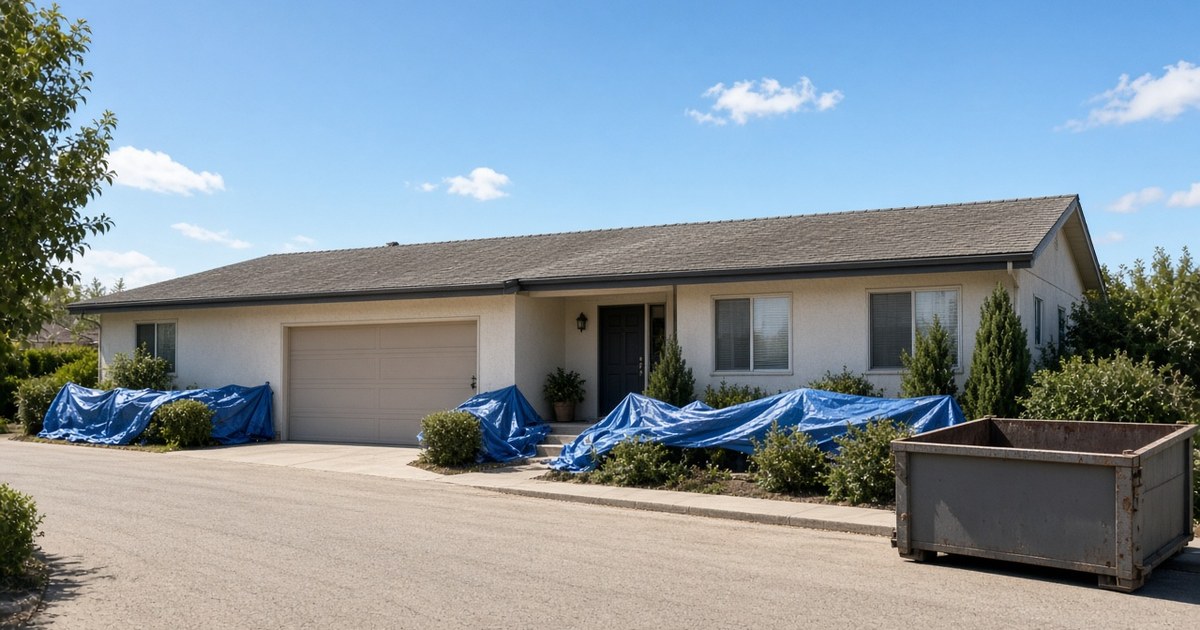
You signed the contract, picked a color and got a start date. Now what? A roof replacement is loud, dusty and fast, and a little preparation keeps it from turning into a stressful week. This guide walks you through how to prepare for a roof replacement in California: the paperwork to settle weeks ahead, what to move a few days before, and what to do on the morning the crew arrives.
Why preparing for a roof replacement matters
A reroof is not a quiet job on the outside of your house. On a typical tear-off, the crew strips the old roofing down to the roof deck, checks the deck and flashing, then installs new drip edge, underlayment, shingles, ridge caps and vents. Owens Corning calls removing the old roof the messiest part of the process. Debris comes off the roof edge, nails can land in the yard, and hammers and nail guns shake the framing.
Source: Owens Corning Roofing, "Roofing Process Step by Step: What to Expect" (published March 26, 2025)
California's residential code also says a roof replacement includes removing the existing layers of roof covering down to the roof deck, with narrow exceptions. That is why the crew needs room to work, a place to put a dumpster, and clear paths around the house.
Source: 2025 California Residential Code §R908.3 (effective January 1, 2026)
Four to six weeks before: get the paperwork right
Most of the real preparation happens on paper. Owens Corning suggests the inspection, contractor choice, financing, permitting and material ordering all happen in the weeks before install day, and notes that your shingle color must be final before materials can be ordered.
Source: Owens Corning Roofing, "Roofing Process Step by Step: What to Expect" (published March 26, 2025)
Read the contract before the crew shows up
In California, a home improvement contract over $500 must be in writing and signed before work starts. It has to include an approximate start date and an approximate completion date, and it must explain what counts as substantial commencement of the work. Check those dates now, so you can plan around them. If you are still comparing terms, see what should be in a roofing contract in California.
Source: California Business and Professions Code §7159(b) and (d)
Agree on how surprises are handled
The biggest surprise on most reroofs is what sits under the old shingles. Once the roof is open, the crew may find soft or rotted decking. State law says extra work becomes part of the contract only when a change order is in writing and signed before that work starts, and the change order must state the scope, the cost and the effect on the payment schedule. Ask now how the contractor prices deck repairs, and read our guide to roof decking replacement and dry rot.
Source: California Business and Professions Code §7159(d)
Confirm the permit and any HOA approval
Ask who is pulling the permit and when the inspection will happen. Owens Corning notes that a new roof may require a permit and inspections depending on where you live. If you have a homeowners association, get any required approval in writing before the start date. Our guides on roof permits in California and HOA roof approval cover the details.
Source: Owens Corning Roofing, "Roofing Process Step by Step: What to Expect" (published March 26, 2025)
Plan for solar panels, satellite dishes and other roof gear
Anything attached to the roof has to come off and go back on. Solar panels usually need a separate removal and reinstall by a qualified installer, and that has to be scheduled around the roofer. If you have panels or are planning them, read should you replace your roof before adding solar. Ask how the mounts will be resealed; our guide to leaks around solar panel mounts explains why it matters.
A few days before: clear the way
Owens Corning says a dumpster may arrive one to two days before work starts, and materials may be delivered a few days early or the morning of the job, sometimes on the roof and sometimes in the driveway. Talk with the contractor about where the dumpster goes so your car is not trapped in the garage.
Source: Owens Corning Roofing, "Roofing Process Step by Step: What to Expect" (published March 26, 2025)
Use these days to get the outside of the house ready:
- Park on the street if the driveway will hold the dumpster or materials.
- Move patio furniture, grills, planters, bikes and toys away from the walls.
- Cover delicate plants, or confirm the crew will tarp them.
- Mark sprinkler heads, outdoor lights and anything fragile in the yard.
- Take dated photos of the driveway, siding, windows and landscaping.
- Tell your neighbors. A few days of notice about the noise goes a long way.
Source: Owens Corning Roofing, "Roofing Process Step by Step: What to Expect" (published March 26, 2025)
Prepare the inside of the house too
Vibration travels. Take framed pictures and mirrors off walls on the top floor, and secure shelves with breakable items. If you store things in the attic, cover them with old sheets or plastic, since dust and bits of old roofing can fall through gaps in the deck during a tear-off. Move cars out of the garage if you will need them, because the dumpster may block the door.
On the morning of the roof replacement
Install day starts early. Owens Corning's checklist for the day is short and practical:
- Secure your pets, and tell the crew how gates should be left.
- Unlock gates and make sure nothing blocks ladder access to the roof.
- Point out valuable items in the yard so the crew can work around them.
- Raise special requests, such as bathroom use, before work begins.
Source: Owens Corning Roofing, "Roofing Process Step by Step: What to Expect" (published March 26, 2025)
You can usually stay home during the work, but Owens Corning warns it can be very noisy and disruptive if you work from home. Many families plan a day out for the tear-off, which is the loudest part. Small children and pets are often happier away from the house that day.
Source: Owens Corning Roofing, "Roofing Process Step by Step: What to Expect" (published March 26, 2025)
How long will it last? It depends on the size of the roof, the material and the weather. See how long a roof replacement takes for a realistic timeline.
During the job: stay in touch, stay off the roof
You have every right to ask questions while the work is underway. Keep the conversation on the ground. Do not climb up to look. If something looks wrong, such as rain in the forecast with the roof open, call the contractor and ask how the roof will be protected overnight.
When materials arrive, compare the bundles with your contract. The brand, product line and color should match what you agreed to. If you chose between two shingle types, our guide to architectural vs 3-tab shingles explains what you should see on the wrapper.
After the crew leaves
Owens Corning recommends a final walk-through with the contractor to confirm everything in the contract was done, and a sweep of the property for loose nails and debris. If you are not happy with the cleanup, ask for a second sweep. It also suggests registering your warranty, and knowing before you sign whether you or the contractor is responsible for registration.
Source: Owens Corning Roofing, "Roofing Process Step by Step: What to Expect" (published March 26, 2025)
Before the final payment, collect the paperwork: the final invoice, the signed permit inspection, product and warranty documents, and lien releases from the contractor and suppliers. Keep them with your house records. You will want them when you sell. Use our new roof final inspection checklist before you make the last payment.
A quick roof replacement prep checklist
- Check the contractor's California contractor license with the CSLB before you sign.
- Read the start date, completion date and change order terms.
- Confirm the permit, any HOA approval and solar removal dates.
- Clear the driveway, walls and yard, and photograph everything.
- Cover attic storage and take fragile items off upper walls.
- Plan for kids, pets and work calls on tear-off day.
- Walk the job at the end and collect every document.
Frequently asked questions
Do I need to be home during a roof replacement?
Usually not, as long as the crew has access to the yard, gates and an outdoor outlet. Be reachable by phone, and be there for the final walk-through.
Should I cover things in my attic?
Yes. Dust and small debris can fall through during a tear-off. Cover stored items or move them.
What happens if it rains during my roof replacement?
Ask the contractor before you sign how an open roof will be protected and who pays for interior damage if it is not.
Where ConFacts fits
The best preparation happens before you sign. A ConFacts report is a sourced background check on California C-39 roofing contractors built from public records, including CSLB license status, workers' comp, bond, the qualifier, certifications and reviews, scored from 0 to 100. Your first report is free, then $7, or 3 for $15. We take no money from contractors. We show you the record, you make the decision.
Two companies. Two reports.
Got more than one bid? Check them side by side, against the same records.
Compare bids side by side