Can You Replace a Roof in Winter in California?
Yes, most California roofs can be replaced in winter. Learn what cold and rain change, how shingles seal, and what to ask your roofer before you book.
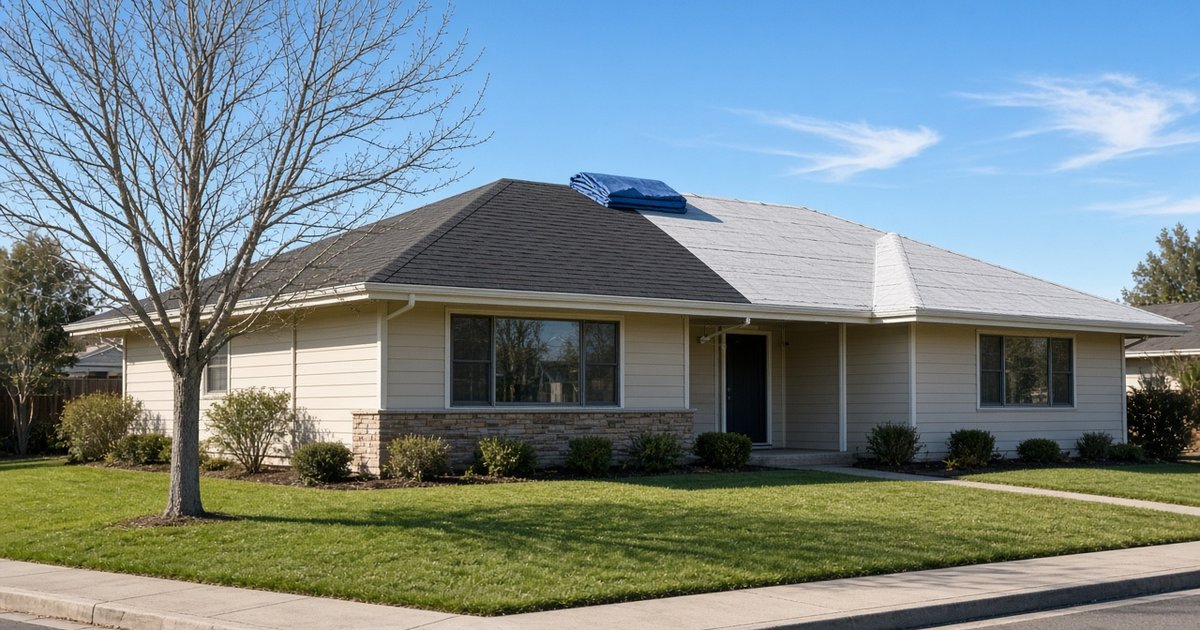
Your roof is old, the rainy season is here, and a roofer has an opening in December. Is it a bad idea to replace a roof in winter? In most of California, no. Roofs get replaced in every season. But winter does change how the job should be planned, how the shingles bond, and how a good crew protects your house when the weather turns. This guide explains what cold and rain really mean for a winter roof replacement and what to ask before you book.
Can you replace a roof in winter?
For asphalt shingles, the most common roof in California, the answer is yes. The shingle manufacturer GAF says there is no practical lower or upper temperature limit for when fiberglass asphalt shingles may be applied, as long as the right precautions are taken. For the easiest handling in cold weather, GAF says temperatures should be above 40 degrees F.
Source: GAF Technical Advisory Bulletin TAB-R-133, "Temperature Extremes & Fiberglass Asphalt Shingles," gaf.com, read November 20, 2026
Much of coastal and Southern California rarely sits below that for a whole workday. Mountain and high desert areas are different, and there the season can limit which days are workable.
What cold does to shingles
Cold makes asphalt shingles stiff. GAF says that in very cold weather, shingles may become brittle and crack, break or delaminate when bent, may curl and not lie flat, and may need to be hand sealed. It suggests storing shingles in a heated area above 70 degrees F for at least 24 hours before use, if possible.
Source: GAF TAB-R-133, gaf.com, read November 20, 2026
Why winter shingles may need hand sealing
Most shingles have a strip of sealant that the sun's heat activates, bonding each course to the one below. In cool weather, that can take a while. GAF says sealing time depends on the slope of the roof, which way it faces, and how much sun and heat it gets, and that hand sealing may be needed if it is too cold for the adhesive to activate promptly.
Source: GAF TAB-R-133, gaf.com, read November 20, 2026
Hand sealing means placing small dabs of roofing cement under the shingle tabs and pressing them in. GAF lists cold weather in fall or winter as one of the times to hand seal, and warns that too much cement can run down the shingle face or cause blistering. It also notes that a shingle failing to seal because of insufficient heat is not a manufacturing defect.
Source: GAF Technical Advisory Bulletin TAB-R-114, "Hand-Sealing Shingles," gaf.com, read November 20, 2026
That last point matters to you. If shingles blow off before they seal, the question becomes how they were installed, not whether the product was faulty. So ask how your roofer handles sealing on a winter job, and read the workmanship warranty.
Rain is the bigger risk in California
In most of the state, rain is a bigger concern than cold. A winter roof replacement means your roof is open for part of the job, and the deck must be dry before shingles go down. GAF's installation instructions for one of its shingle lines say roof decks and existing surfacing material must be dry prior to installation.
Source: GAF, Grand Sequoia installation instructions, gaf.com, read November 20, 2026
A careful crew watches the forecast, tears off only what it can dry in and cover the same day, and keeps tarps and underlayment on site. If a storm system is coming, a delay of a day or two is a sign of good judgment, not poor service. Our guide on how El Niño storms damage California roofs explains why this season's storms are worth planning around.
Ask for a written weather plan
Before work starts, ask the roofer to put the weather plan in writing or in an email: what they do when rain is forecast, what they do if it arrives early, and who pays for interior damage if the roof is left open. A clear answer protects both of you. A vague answer, or a promise that it "never rains on our jobs," tells you something too. Your contract should also say who cleans up nails and debris if a storm interrupts the job for several days.
Underlayment is your second line of defense
Underlayment is what keeps water out while the roof is half done and for years afterward. Ask which product your roofer will use and how quickly it goes down after tear-off. You can learn the differences in our guide to roof underlayment types and what they do.
Pros and cons of a winter roof replacement
Possible advantages
- Easier scheduling. Some roofers have more openings in the cooler months, which can mean an earlier start date. Ask, and do not assume.
- Fixing a known problem now. If your roof already leaks, waiting until summer can mean months of water damage to decking, insulation and ceilings.
- Cooler working conditions. Shingles are less likely to scuff or stick together than on a very hot day.
Possible drawbacks
- Weather delays. Rain days push the schedule. Our guide on how long a roof replacement takes covers what else affects the timeline.
- Slower sealing. Shingles may not fully seal until warmer, sunnier days.
- More pressure to rush. After big storms, door knockers show up offering fast, cheap jobs. Read how to spot a storm chaser roofer before you sign anything.
What about tile roofs?
Clay and concrete tile does not depend on a heat activated seal strip the way shingles do, but the underlayment under it does the waterproofing. Tile work in winter still needs dry decks and careful daily dry-in. If your tile roof leaks, see our guide to tile roof underlayment replacement.
Questions to ask before a winter roof replacement
• How do you protect the house if rain arrives mid-job?
• How much of the roof will you tear off each day?
• Will you store the shingles somewhere warm before installing them?
• Will you hand seal the shingles, and where?
• What does your workmanship warranty say about shingles that blow off before sealing?
• Who pulls the permit, and how will rain affect inspection timing?
To get your home ready for crews, dumpsters and noise, use our checklist to prepare for a roof replacement.
Frequently asked questions
Is it cheaper to replace a roof in winter?
Sometimes, but there is no reliable rule. Prices depend on the roofer's schedule, materials and your roof. Get more than one written bid and compare the scope line by line.
Can shingles be installed in the rain?
No. Decks and existing surfaces must be dry before shingles go on. A crew should stop and cover the roof when rain starts.
Will my new roof leak if the shingles have not sealed yet?
Unsealed shingles are more exposed to wind. Proper nailing and underlayment still protect the roof, and hand sealing helps in cold weather. Ask your roofer how they handle it.
What if my roof is leaking right now?
Start with a temporary fix and an inspection. Our guide on what to do when your roof leaks in the rain walks through the first steps.
Where ConFacts fits
Winter is when rushed decisions happen. Before you sign with any roofer, a ConFacts check on a California roofing contractor gives you a sourced background check built from public records, including CSLB license status, workers' comp, bond, the qualifier, certifications and reviews, with a 0 to 100 Trust Score. Your first report is free, then $7, or 3 for $15. We take no money from contractors. We show you the record, you make the decision.
Two companies. Two reports.
Got more than one bid? Check them side by side, against the same records.
Compare bids side by side