Roof Damage After an Earthquake: What to Check
After a California earthquake, here is how to check your roof and chimney safely, what insurance covers, and how to avoid unlicensed contractors during repairs.

When the shaking stops, your first thoughts are about people, not shingles. But once everyone is safe, the roof deserves a careful look. Earthquakes can crack chimneys, shift roof tiles and loosen flashing, and small damage can turn into a leak with the next rain. This guide explains how to check for roof damage after an earthquake in California without putting yourself at risk, how earthquake insurance fits in, and how to hire for repairs when scammers are out in force.
Safety first: do not climb on the roof
Ready.gov, the federal preparedness site, warns that there can be serious hazards after an earthquake, including building damage, leaking gas and water lines and downed power lines. It says to expect aftershocks and not to enter damaged buildings.
Source: Ready.gov, "Earthquakes," ready.gov, read November 21, 2026
The Earthquake Country Alliance (ECA) says aftershocks will continue for several weeks after major earthquakes, and some may be large enough to cause additional damage.
Source: Earthquake Country Alliance, "Step 7: Reconnect and Restore," earthquakecountry.org, read November 21, 2026
That makes a ladder and a sloped roof a bad combination for the days after a quake. Do your first check from the ground, from a window and from inside the house.
Gas, power and chimneys come first
- Gas. ECA says to shut off the main gas valve only if you suspect a leak, such as the smell or sound of gas or a fast spinning meter, because only the gas company can turn it back on.
- Wiring. ECA says to shut off power at the main breaker if house wiring is damaged and leave it off until repairs are made.
- Chimneys. ECA says to stay away from chimneys and walls made of brick or block, which may be weakened and could topple during aftershocks, and not to use a fireplace with a damaged chimney.
Source: Earthquake Country Alliance, "Step 6: Improve Safety," earthquakecountry.org, read November 21, 2026
How to check your roof after an earthquake
From the ground
- Cracks, leaning or missing bricks on the chimney, or a gap where it meets the house
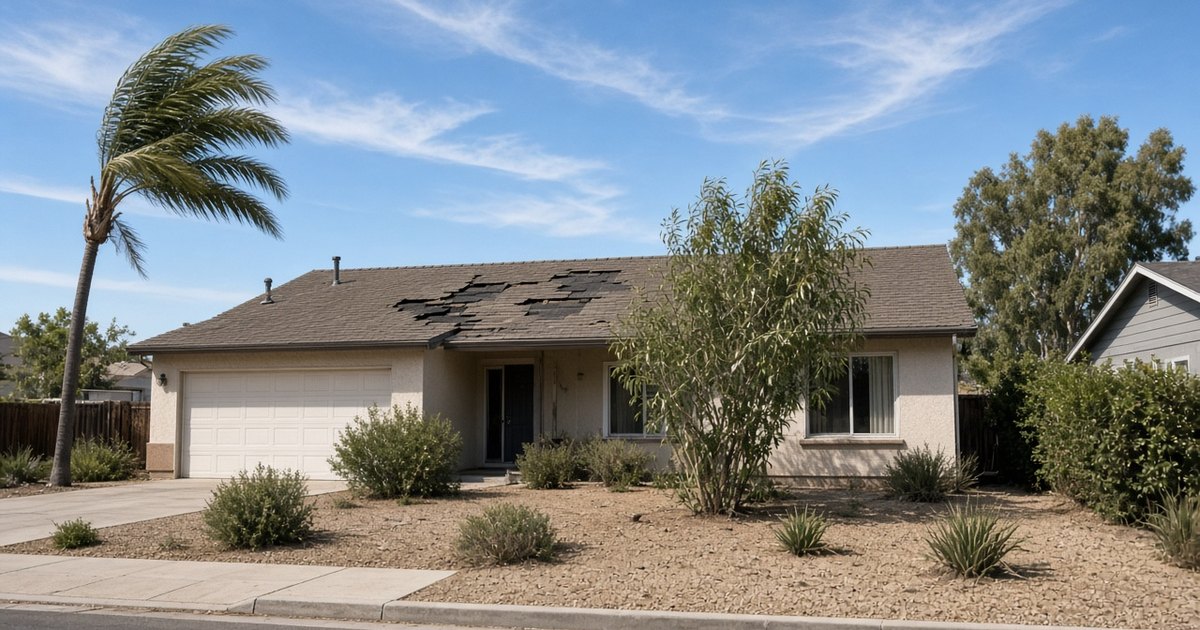
- Tiles that slid, cracked or fell, especially along ridges and edges
- Bent or loose metal at the chimney, walls and vents
- Sagging lines in the roof that were not there before
- Gutters pulled away from the fascia
Use binoculars or zoom in with your phone camera, and take dated photos of everything.
From inside
- New cracks in ceilings, especially near the chimney
- Daylight, debris or broken framing visible in the attic
- Water stains after the next rain
Flashing around chimneys and walls is where many leaks begin. Our guide on roof flashing types, leaks and repair explains what you are looking at.
Why chimneys matter so much
ECA calls inadequately braced chimneys a common problem and advises consulting a professional to determine whether your chimney is safe. It lists unreinforced masonry chimneys among the structural weaknesses homeowners should know about.
Source: Earthquake Country Alliance, "Step 4: Minimize Financial Hardship," earthquakecountry.org, read November 21, 2026
If the chimney is damaged, have it assessed before anyone repairs the roof around it. Fixing roofing around a chimney that may still fall wastes money.
Keep a simple damage record
Start a folder on your phone the same day. Add wide and close photos of each side of the house, the chimney and the attic, with the date. Write down when you noticed each problem, who you called and what they said. Save receipts for tarps, temporary lodging and emergency repairs. A clear record makes it easier to talk with your insurer, your building department and any contractor you hire, and it helps you compare what different bidders say they see.
Does insurance cover earthquake roof damage?
Ready.gov notes that a standard homeowner's policy does not cover earthquake damage.
Source: Ready.gov, "Earthquakes," ready.gov, read November 21, 2026
Earthquake insurance is a separate policy. The California Earthquake Authority (CEA) says its homeowners policies offer deductibles of 5%, 10%, 15%, 20% or 25%, and that some homes, including those with a dwelling limit over $1,000,000 or pre-1980 raised foundation homes without a verified retrofit, are only eligible for the higher deductibles. CEA says its Loss of Use coverage has no deductible, and that every CEA homeowners policy includes $10,000 of building code upgrade coverage.
Source: California Earthquake Authority, "Homeowners Earthquake Insurance," earthquakeauthority.com, read November 21, 2026
Because the deductible is a percentage of your coverage, small roof repairs may fall below it. Call your insurer or agent to learn what applies before you sign repair contracts. Our guide on filing a roof insurance claim in California covers documentation and timelines. If you want to reduce damage next time, read about earthquake retrofits and Brace and Bolt in California.
Hiring for repairs after a quake
ECA warns that fraud is common following a disaster and tells homeowners to check with the Contractors State License Board (CSLB) that a contractor is fully licensed.
Source: Earthquake Country Alliance, "Step 7: Reconnect and Restore," earthquakecountry.org, read November 21, 2026
CSLB says that after a declared disaster, the law treats rebuilding as a home improvement project. It says contractors must use a fixed price contract, cannot take a down payment of more than $1,000 or 10 percent of the contract price, whichever is less, and that other payments must be based on work completed or materials delivered.
Source: CSLB, "Disaster Help Center," cslb.ca.gov, read November 21, 2026
CSLB also advises checking with your city or county building department for the right permits before repairs start, even if a contractor says you do not need one.
Source: CSLB, "Fast Facts: Rebuilding After a Disaster," cslb.ca.gov, read November 21, 2026
Door knockers often show up within days. Learn how to spot a storm chaser roofer, and see our guide on how much deposit a California roofer can ask for.
Temporary protection
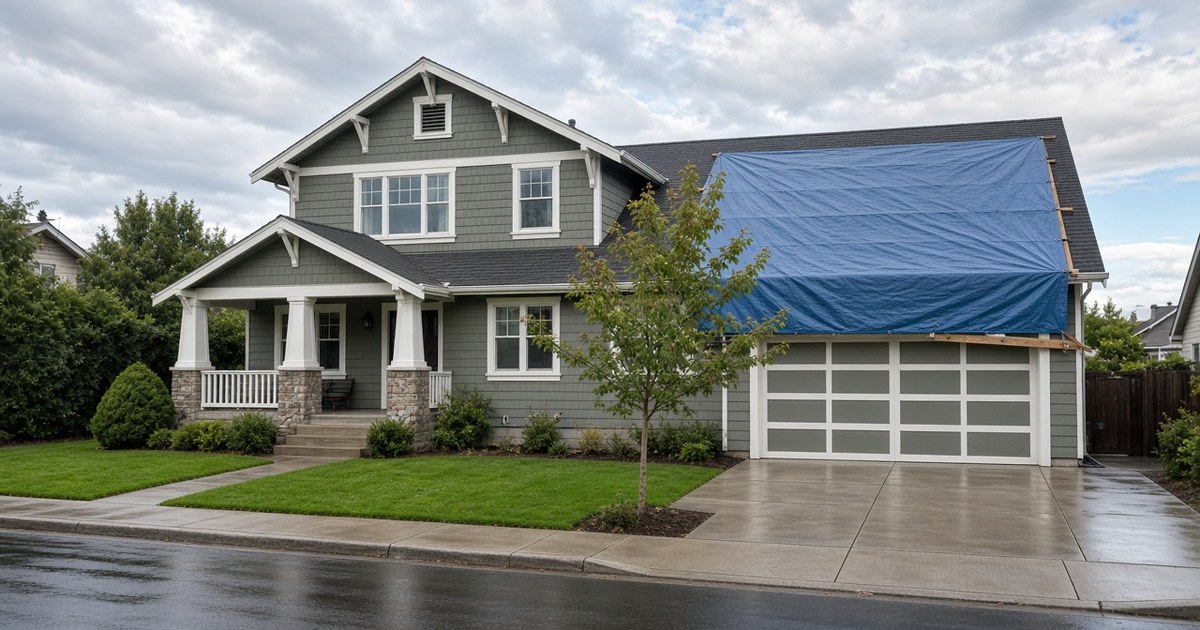
If tiles are missing and rain is coming, a tarp can buy time. Keep the emergency job small and separate from the full repair. Our guide on what to do first after roof damage walks through tarping and documentation.
Older roofs and hidden materials
If your home is older and roofing material was broken or disturbed, do not sweep it up or cut into it until you know what it is. Our guide to asbestos roofing in California explains why.
Frequently asked questions
Should I get a roof inspection after an earthquake?
If you see damage from the ground or inside, or if your chimney looks cracked, yes. Have a licensed professional look before the next rain.
Is earthquake roof damage covered by homeowner's insurance?
Ready.gov says standard homeowner's policies do not cover earthquake damage. You need separate earthquake coverage, and the deductible applies.
Can I use my fireplace after an earthquake?
ECA says not to use a fireplace with a damaged chimney. Have it checked first.
How fast should I sign a repair contract?
Not on the spot. Check the license and get the contract in writing with the payment limits above.
Where ConFacts fits
Before you let anyone repair a quake damaged roof, a ConFacts check on a California roofing contractor gives you a sourced background check on C-39 roofers built from public records, including CSLB license status, workers' comp, bond, the qualifier, certifications and reviews, with a 0 to 100 Trust Score. Your first report is free, then $7, or 3 for $15. We take no money from contractors. We show you the record, you make the decision.
Two companies. Two reports.
Got more than one bid? Check them side by side, against the same records.
Compare bids side by side