Window Replacement Permits in California
Do you need a permit to replace windows in California? Learn how city rules differ, the Title 24 energy rules for replacement windows, and who can install them.
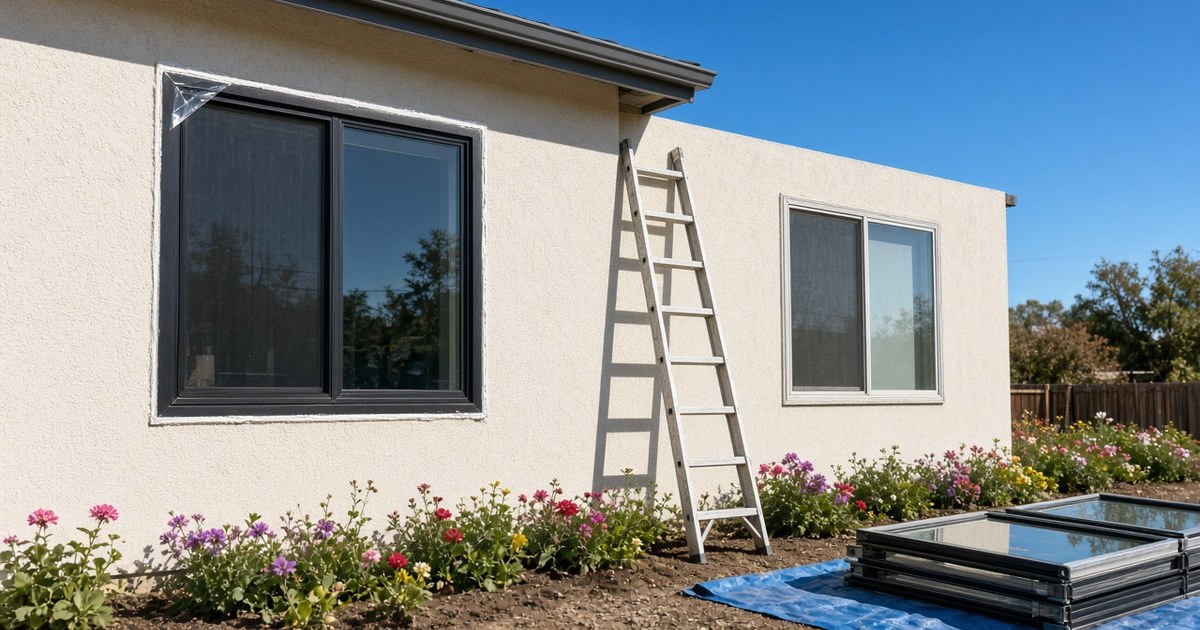
New windows can make a California home quieter, more comfortable and cheaper to cool. They are also one of the most common projects where homeowners are unsure about permits. Some installers say you do not need one for a same-size swap. Some cities agree, and others require a permit for every window. This guide explains when you need a window replacement permit in California, the state energy rules your new windows must meet either way, and how to hire the right contractor.
Do you need a permit to replace windows in California?
It depends on your city or county, and on whether the opening changes. Here is how a few California cities handle it:
- San Francisco says to get a building permit to replace existing exterior windows and skylights, including in-kind replacements of the same size in the same location, which can be applied for online.
Source: SF.gov, "Replace your windows," sf.gov, read November 21, 2026
- Oakland says building permits are required for any window replacement, in residential or commercial buildings.
- San Ramon says a building permit is required for window installation and replacement, and asks for an energy compliance form for the alteration.
Source: City of Oakland, "Replace Windows," oaklandca.gov, and City of San Ramon, "Window and Door," sanramon.ca.gov, read November 21, 2026 (via search extract)
- Watsonville says it does not require a permit to replace residential windows unless the size of the window opening frame is altered, including retrofit windows that fit over the existing frame.
Source: City of Watsonville, "Window Replacement Permit Policy," watsonville.gov, read November 21, 2026
So the honest answer is: call your building department or check its website before work starts. If you change the size or location of an opening, expect a permit almost everywhere. San Francisco, for example, sends those projects through in-person plan review.
Source: SF.gov, "Replace your windows," sf.gov, read November 21, 2026
Retrofit vs new construction windows
A retrofit window fits into the existing frame, so the stucco or siding stays put. A new construction window, sometimes called a full-frame replacement, removes the old frame. That difference often decides the permit question. Monte Sereno, for example, says a permit is not required when a window is replaced in the same configuration and the existing frame stays unchanged, but is required when the frame, location, size or header changes.
Source: City of Monte Sereno, "Residential Window Replacement" handout, montesereno.org, read November 21, 2026 (via search extract)
What a window permit usually involves
Monte Sereno lists two inspections, a rough frame inspection before stucco or siding goes back on and a final. San Ramon says a rough frame inspection is not required for retrofit installations, asks you to leave window stickers on until the final inspection, and says the contractor must fill out and give the homeowner an energy form for the installed windows (CF2R-ENV-01-E).
Source: City of Monte Sereno, "Residential Window Replacement" handout, montesereno.org, and City of San Ramon, "Window and Door," sanramon.ca.gov, read November 21, 2026 (via search extract)
California energy rules for replacement windows
Even where no permit is required, the state energy code still applies. The California Energy Commission's 2025 Single-Family Residential Compliance Manual lists replacing existing windows as an alteration under the Energy Code.
Source: California Energy Commission, 2025 Single-Family Residential Compliance Manual, Chapter 9, energy.ca.gov, read November 21, 2026
U-factor and SHGC limits
Two numbers matter. U-factor measures how much heat passes through the window; lower is better. Solar heat gain coefficient (SHGC) measures how much sun heat comes in. Under the 2025 code, the manual says replacement windows on the prescriptive path must meet:
| Climate zones | Maximum U-factor | Maximum SHGC |
|---|---|---|
| 1 to 5, 11 to 14, 16 | 0.27 | 0.23 in zones 2, 4, 11 to 14; no limit in 1, 3, 5, 16 |
| 6 to 10, 15 | 0.30 | 0.23 |
The manual notes that up to 75 square feet of replacement windows may instead meet a U-factor of 0.40 in all climate zones and an SHGC of 0.35 in climate zones 2, 4 and 6 through 15. A performance method is also allowed if a project cannot meet the prescriptive values.
Source: California Energy Commission, 2025 Single-Family Residential Compliance Manual, Chapter 9 (Section 150.2(b)1), energy.ca.gov, read November 21, 2026
Your installer or building department can tell you your climate zone. Many cities check the rating sticker: San Francisco says inspectors check the National Fenestration Rating Council or ENERGY STAR sticker on the window during inspection.
Source: SF.gov, "Replace your windows," sf.gov, read November 21, 2026
Safety rules that still apply
Watsonville's policy reminds homeowners that even without a permit, a bedroom emergency escape window cannot be made smaller or have its sill raised, and safety glazing must be installed where the California Residential Code requires it, such as near doors, tubs and showers.
Source: City of Watsonville, "Window Replacement Permit Policy," watsonville.gov, read November 21, 2026
Who can install replacement windows?
The Contractors State License Board (CSLB) defines a C-17 Glazing contractor as one who installs all kinds of glass and glazing, and fabricates and glazes frames, panels, sashes and doors.
Source: CSLB, "C-17 - Glazing Contractor," cslb.ca.gov, read November 21, 2026
Window work that is part of a larger remodel may be handled by a general contractor. Our guide on what a B general building contractor license allows explains when that fits. Either way, check the contractor's license in California before you sign, and watch for the warning signs in our list of unlicensed contractor red flags.
Window companies often sell through in-home sales reps. Our guide on home improvement salesperson rules in California explains what registration they need.
Should you pull the permit yourself?
If a contractor asks you to pull the permit in your own name, you may be taking on the job as an owner-builder, with the responsibilities that come with it. Read the risks of owner-builder permits in California first.
Questions to ask your window installer
• Does my city require a permit for this job, and will you pull it?
• Are these retrofit or full-frame windows?
• What are the U-factor and SHGC, and do they meet the code for my climate zone?
• Will you complete the energy compliance forms and schedule inspections?
• How will you flash and seal each window?
• What license do you hold, and who will do the installation?
Frequently asked questions
Do I need a permit for same-size window replacement in California?
Some cities, like San Francisco and Oakland, say yes. Others, like Watsonville, say no unless the opening frame changes. Check with your building department.
What happens if I replace windows without a required permit?
Rules and fees vary by city. Ask your building department how to permit the work after the fact, and keep the window rating stickers and receipts.
Do replacement windows have to be dual pane?
The code sets U-factor and SHGC limits rather than a pane count. Your installer can show you which products meet them.
Is an ADU window different?
Windows in a new ADU are part of new construction. See our guide to ADU permits in California.
Where ConFacts fits
If your window project is part of a bigger job that includes a new roof, a ConFacts check on a California roofing contractor gives you a sourced background check on C-39 roofers built from public records, including CSLB license status, workers' comp, bond, the qualifier, certifications and reviews, with a 0 to 100 Trust Score. Your first report is free, then $7, or 3 for $15. We take no money from contractors. We show you the record, you make the decision.
Two companies. Two reports.
Got more than one bid? Check them side by side, against the same records.
Compare bids side by side