Curling Shingles: Causes and When to Replace
Curling shingles point to age, heat or poor attic ventilation. Learn the difference between cupping and clawing, what causes them and when to replace the roof.
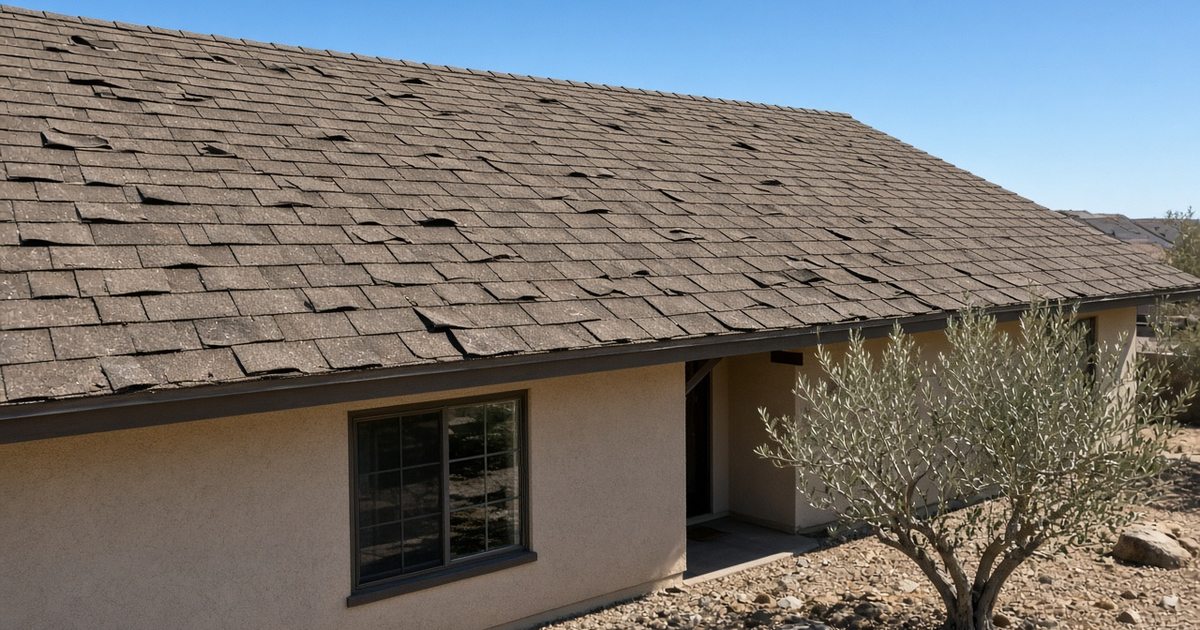
Asphalt shingles are meant to lie flat. When their edges turn up or their middles bulge, the roof starts to look wavy and uneven, and wind and rain get a grip they did not have before. Curling shingles are one of the clearest signs a roof is aging, but they can also point to a fixable problem in the attic. This guide explains what curling looks like, why it happens and how to tell whether you need a repair or a new roof.
Source: ARMA, "Frequently Asked Questions," asphaltroofing.org, and 2025 California Residential Code, Section R806.2, via up.codes, both read November 25, 2026; code citation rechecked against the 2025 edition on November 28, 2026
What curling shingles look like
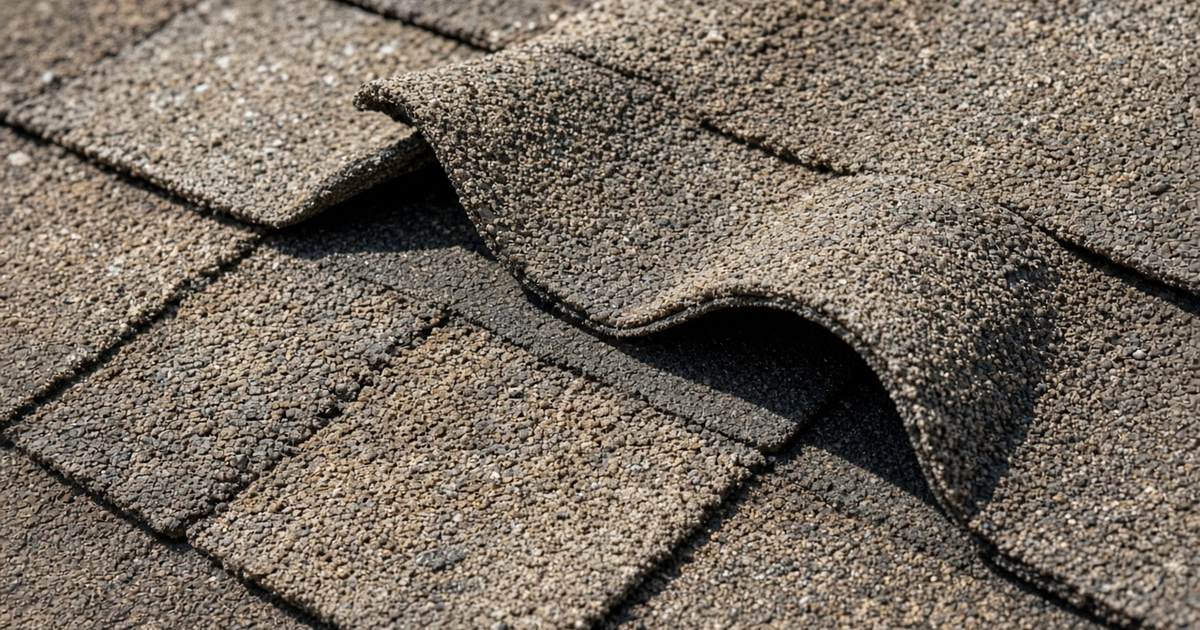
There are two kinds of curling, and roofers use different words for them:
- Cupping: the edges of the shingle turn upward, so the shingle looks like a shallow dish.
- Clawing: the edges stay down and the middle of the shingle bulges up, so the corners look like they are gripping the roof.
Light cupping at a few edges is the milder form. Clawing, where the middle lifts, usually means the shingle has aged and shrunk unevenly. Either way, a curled shingle no longer lies tight to the one below it.
Both make the roof look rippled, especially in low sun. Look from the street or a neighbor's driveway with binoculars rather than climbing up. The Asphalt Roofing Manufacturers Association (ARMA) suggests exactly that: inspect from the ground for cracked, curled or missing shingles and heavy granule loss, and do not climb on the roof.
Source: ARMA, "Frequently Asked Questions," asphaltroofing.org, read November 25, 2026
What causes shingles to curl
Age and sun
Over years of sun and heat, shingles lose the oils that keep them flexible. They shrink, stiffen and start to curl. In much of California, long hot summers and strong sun speed that up. ARMA says a residential roof more than 20 years old is a prime candidate for reroofing, and curling on a roof that age usually means it is wearing out.
Source: ARMA, "Frequently Asked Questions," asphaltroofing.org, read November 25, 2026
Poor attic ventilation
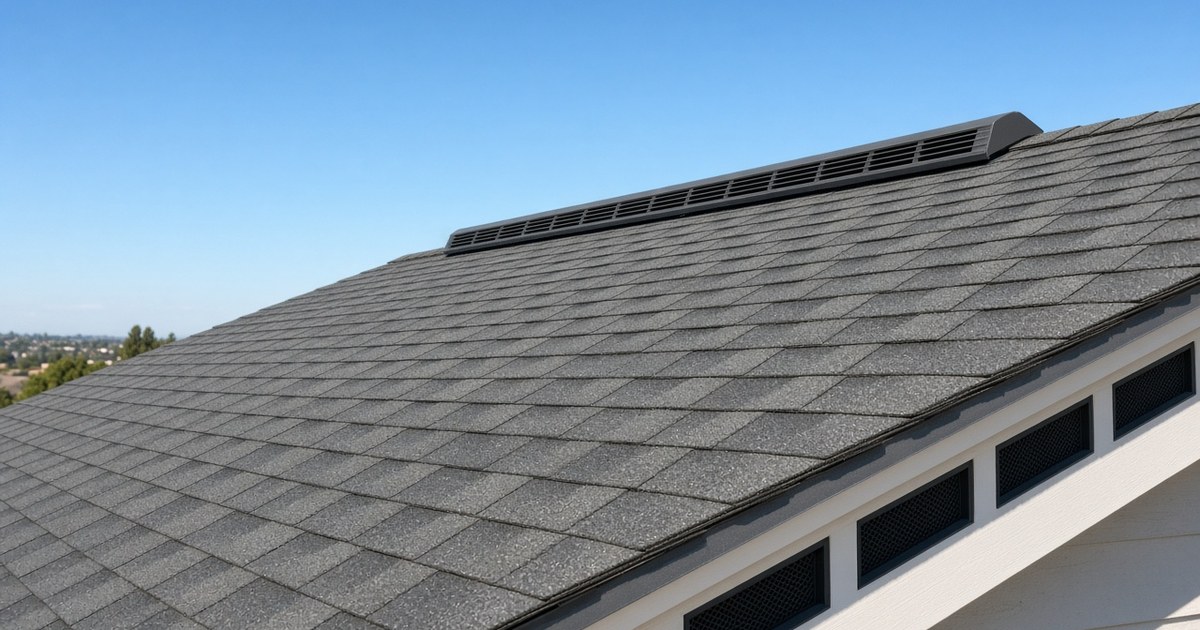
A hot, damp attic bakes shingles from below. ARMA explains that ventilation moves heat and moisture out of the attic and helps prevent premature shingle deterioration, and that it needs intake vents low (at the eaves) and exhaust vents high (at or near the ridge). Exhaust with no intake, or blocked soffit vents, severely limits air flow. Our guide to roof ventilation and attic heat explains how to tell if your attic is too hot.
Source: ARMA, "Attic Ventilation Best Practices for Steep Slope Asphalt Shingle Roof Systems," asphaltroofing.org, read November 25, 2026
The California Residential Code sets the minimum: net free vent area of 1/150 of the vented attic space, or 1/300 in certain cases when part of the vent area is placed high, with upper vents no more than 3 feet below the ridge.
Source: 2025 California Residential Code, Section R806.2, via up.codes, read November 28, 2026
Installation problems
Shingles nailed in the wrong place, installed over an uneven or wet deck, or laid over an old roof can curl early. If curling shows up within a few years of a new roof, ask the installer and check your workmanship and manufacturer warranties.
Ask the roofer: is this curling from age, from attic heat or from how the roof was installed, and what did you see in the attic?
How to check the attic yourself
On a warm afternoon, open the attic hatch and look and feel. An attic that feels like an oven, insulation pushed up against the roof deck at the eaves, soffit vents painted over or covered, and dark stains or frost marks on the underside of the deck all suggest the attic is not breathing well. You do not need to crawl around to see most of this; a flashlight from the hatch is enough. Take photos for the roofer, and if you see wet insulation or stains, mention them when you call.
From outside, look for vents along the eaves and near the ridge. A roof with exhaust vents up top but solid soffits below, or the reverse, is a common setup that ARMA says limits air flow.
Is curling a problem right away?
A few slightly cupped shingles on one slope are not an emergency. Widespread curling is a bigger concern because:
- Lifted edges catch wind, so shingles are more likely to crack or blow off. See our guide on what to do when shingles blow off in wind.
- Wind driven rain can get under curled edges and reach the underlayment.
- Brittle, curled shingles crack when someone walks on them.
- Curling often shows up with other aging signs, like bald spots. Our guide to shingle granule loss explains that one.
Repair or replace curling shingles?
When a repair can work
Start with how much of the roof is affected and how old the shingles are. Those two facts decide most cases.
If only a small area is curled, for example from one damaged spot or a single hot section of attic, a roofer can replace those shingles. Fixing the ventilation at the same time keeps the new ones from curling too.
Be cautious about products sold as a way to flatten or rejuvenate old shingles. Ask the roofer what the manufacturer says about it and whether it affects your warranty before you pay for any coating.
When it is time for a new roof
If curling covers most of the roof, the shingles are near the end of their life, and patching will only chase new problems. There is no fix that flattens an aged, curled shingle for good. Our guides to how long a roof lasts in California and signs you need a new roof help you judge where yours stands.
A new roof should include a ventilation check. If the attic was the cause, new shingles over the same hot attic can age early as well. When you collect quotes, compare how each roofer plans to handle ventilation; our guide on how to compare roofing bids shows what to look for line by line.
Questions to ask the roofer about curling shingles
• Is this cupping or clawing, and what is causing it?
• How much of the roof is affected?
• Did you check the attic, and is the ventilation adequate?
• Can this be repaired, or are the shingles at the end of their life?
• If I replace the roof, what will you change about the ventilation?
• What warranty comes with the work and the shingles?
Frequently asked questions
Can curling shingles be flattened?
Do curling shingles mean my roof leaks?
Why are my new shingles curling?
Is curling the same as granule loss?
Check the roofer before you sign
Whether you need a few shingles or a whole roof, the roofer matters. Before you sign, run a ConFacts check on the California roofer to review the state license, bond and workers' comp records in one place.
Two companies. Two reports.
Got more than one bid? Check them side by side, against the same records.
Compare bids side by side