Ridge Cap Shingles: Damage, Leaks and Repair
The ridge is the most exposed line on your roof. Learn how ridge cap shingles fail, how ridge leaks show up inside and what a proper ridge cap repair includes.
Ridge cap shingles are the row of folded shingles that runs along the peak of your roof, where two slopes meet. They seal the top of the roof, they often cover a ridge vent, and they take more sun and wind than any other part of the roof. When they crack or blow off, the leak can be hard to trace because water lands at the highest point and travels down. This guide explains how ridge cap shingles fail, what a ridge leak looks like inside and what a good repair includes.
Source: 2025 California Residential Code, Section R806.2, via up.codes, read November 28, 2026
What are ridge cap shingles?
The ridge is the uppermost horizontal line formed where two sloping roof planes meet. Hips are the sloped outside corners that run from the ridge down to the eaves. Both are covered with cap shingles bent over the peak and nailed through on each side, each one overlapping the next so water runs off.
Source: Asphalt Roofing Manufacturers Association, "Frequently Asked Questions" glossary, asphaltroofing.org, read November 26, 2026
Most shingle makers sell matching cap shingles that are thicker and pre-bent for this spot. Some older roofs and some budget jobs use field shingles cut into pieces instead. Those can work, but the thinner pieces are more likely to crack where they fold over the peak, especially after years of California sun. If you are not sure which shingle type you have, our guide to architectural vs 3-tab shingles shows how to tell.
Why ridge cap shingles fail
Sun and heat
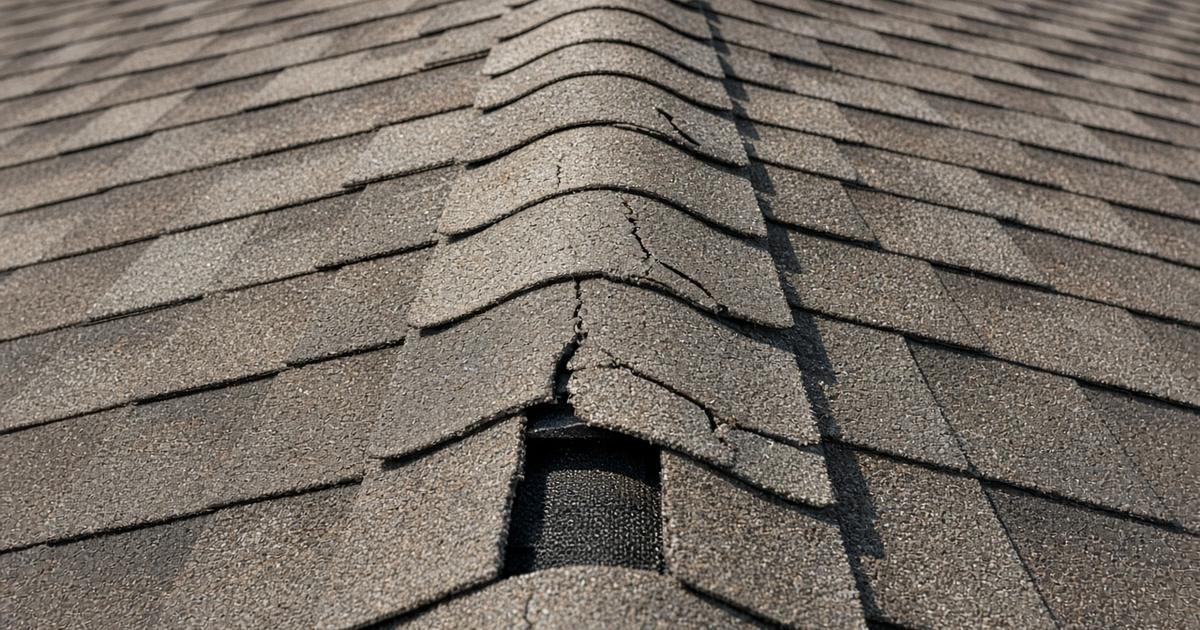
The ridge faces the sky all day. Heat dries out the asphalt and the fold over the peak is a natural stress line, so cracks often appear right along the bend.
Wind
The peak is open to wind from every direction, with nothing above it to break the gusts. A cap with a broken seal or loose nails can lift and tear off in a Santa Ana wind or a winter storm. Our guide to what to do when shingles blow off covers the first steps after wind damage.
Nails and nail pops
Cap shingles are nailed through on each side of the peak, close to where the next cap overlaps. If those nails back out or were left exposed without sealant, water can follow them in. The causes are the same as elsewhere on the roof, covered in our guide to roof nail pops and how they are fixed.
Ridge vent problems
Many roofs have a ridge vent: a slot cut along the peak and covered by a vent strip under the cap shingles. Hot air escapes there while cooler air comes in at the eaves. A vent that was cut too wide, installed without the correct end caps, or crushed by foot traffic can let wind driven rain in.
Ridge vents and attic airflow
Ridge cap repairs often touch the attic ventilation, so it helps to know the basics. The Asphalt Roofing Manufacturers Association describes balanced ventilation as intake low on the roof, at the soffits or eaves, and exhaust at or near the highest area of the roof, typically the ridge.
Source: Asphalt Roofing Manufacturers Association, "Frequently Asked Questions," asphaltroofing.org, read November 26, 2026
The California Residential Code generally requires net free vent area of 1/150 of the vented space. It allows 1/300 when certain conditions are met, including that 40 to 50 percent of the vent area sits in the upper part of the attic, no more than 3 feet below the ridge, with the rest low down. A roofer replacing ridge caps should not quietly cover or remove the ridge vent. Our guide to roof ventilation and attic heat explains the balance in more detail.
Source: 2025 California Residential Code, Section R806.2, via up.codes, read November 28, 2026
Ask the roofer: will the ridge vent stay open after the repair, and does the attic have enough intake vents at the eaves to match it?
Signs of a ridge cap problem
Stay off the roof. From the ground, binoculars and a sunny day are enough to spot most ridge damage:
- Cracked or split caps, especially along the fold.
- Missing caps, with a dark strip of vent or underlayment showing.
- Caps that are lifted, crooked or out of line with their neighbors.
- Shiny exposed nail heads along the peak.
Inside, a ridge leak often shows up as a stain near the center of a ceiling below the peak, or as damp insulation and dark wood along the top of the attic. Because water can run down rafters before dripping, the stain may be some way from the ridge. Our guide on what to do when the roof leaks in the rain walks through the first hour.
How ridge cap repairs are done
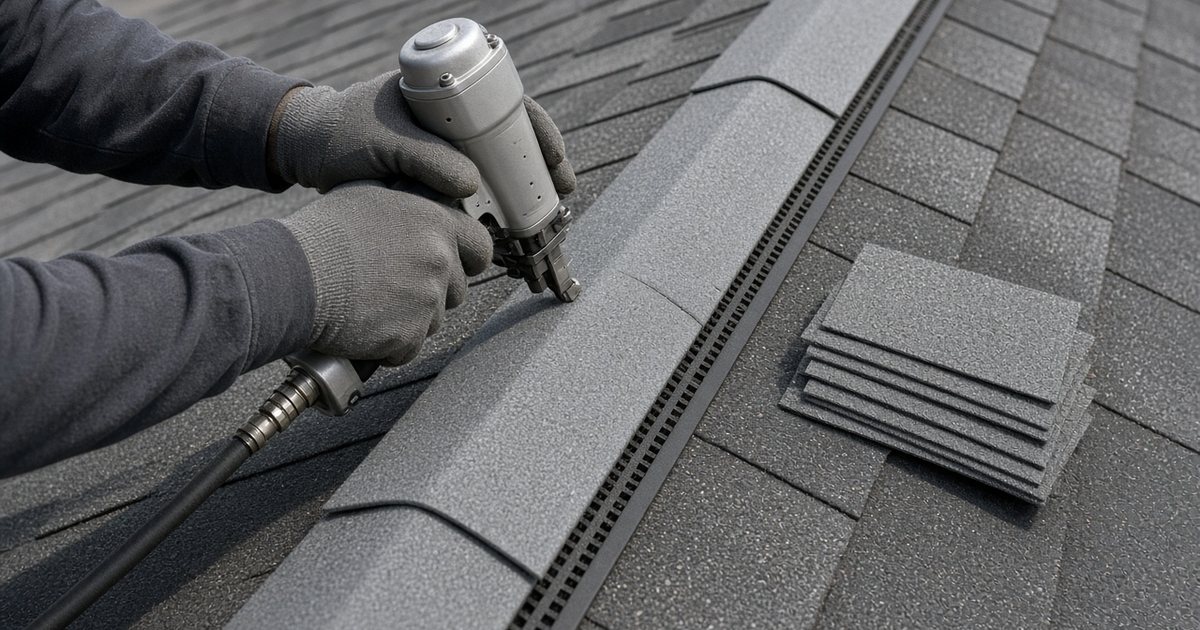
For a few damaged caps, a roofer removes them, checks the vent and underlayment below, and installs new caps overlapping the existing ones so water runs off and each cap covers the nails of the one before it. The last cap at the end of the ridge has exposed nails, which should be sealed.
When most of the ridge is cracked, replacing the whole run of caps is usually better value than patching one piece at a time. If the ridge vent is damaged or was installed poorly, it is replaced at the same time. Matching color can be tricky on an older roof, because new caps will look brighter until they weather.
If the ridge is failing along with the rest of the roof, with widespread granule loss, cracking or curling, the caps may simply be the first part to show its age. Our guide to when to get a roof inspection explains when a full look is worth it.
Questions to ask about ridge cap repair
• How many cap shingles are damaged, and can you show me photos?
• Will you use matching pre-formed cap shingles or cut field shingles?
• Is there a ridge vent, and what condition is it in?
• Will the repair change how my attic is ventilated?
• How will you seal the exposed nails at the end of the ridge?
• Is the repair covered by a written workmanship warranty?
Frequently asked questions
Can a leak at the ridge be fixed without a new roof?
Why do my ridge caps crack before the rest of the roof?
Is it a problem if the ridge cap does not match?
Should a roofer add a ridge vent during the repair?
Check the roofer before you sign
Ridge work means walking the very top of the roof. Before you hire, run a ConFacts check on the California roofer to review the state license, bond and workers' comp records, and our guide to workers' comp records explains why that one matters for roof work.
Two companies. Two reports.
Got more than one bid? Check them side by side, against the same records.
Compare bids side by side