Roof Pipe Boot Leaks: Signs and Repair
A cracked pipe boot around a plumbing vent is one of the most common roof leaks. Learn the signs, why boots fail in California sun, and how a roofer fixes it.
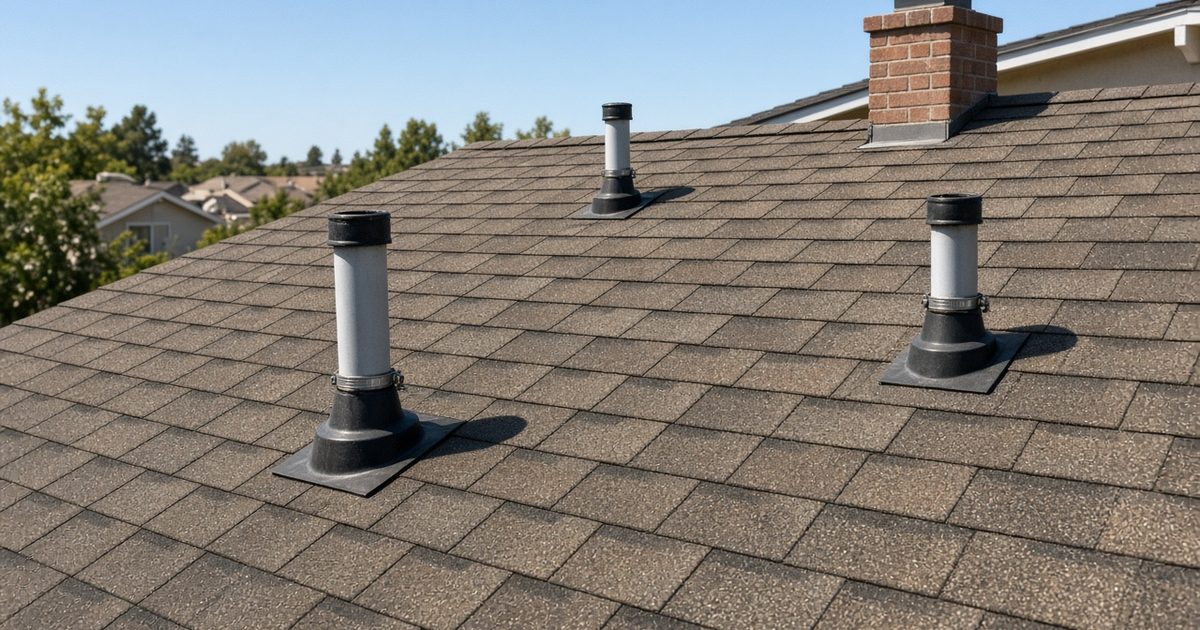
A small brown ring on the ceiling near a bathroom or kitchen is often traced to one modest part on the roof: the pipe boot. It is the collar that seals the gap where a plumbing vent pipe pokes through your shingles. When it cracks, rain runs down the pipe and into the attic. This guide explains what a pipe boot is, how to spot a roof pipe boot leak, how it is repaired, and what to ask before you hire someone.
What is a roof pipe boot?
Most homes have one or more plumbing vent pipes that stick up through the roof. They let sewer gases escape and keep drains flowing. Wherever a pipe passes through the roof, there is a hole that has to be sealed. A pipe boot, also called a vent pipe flashing or plumbing boot, does that job.
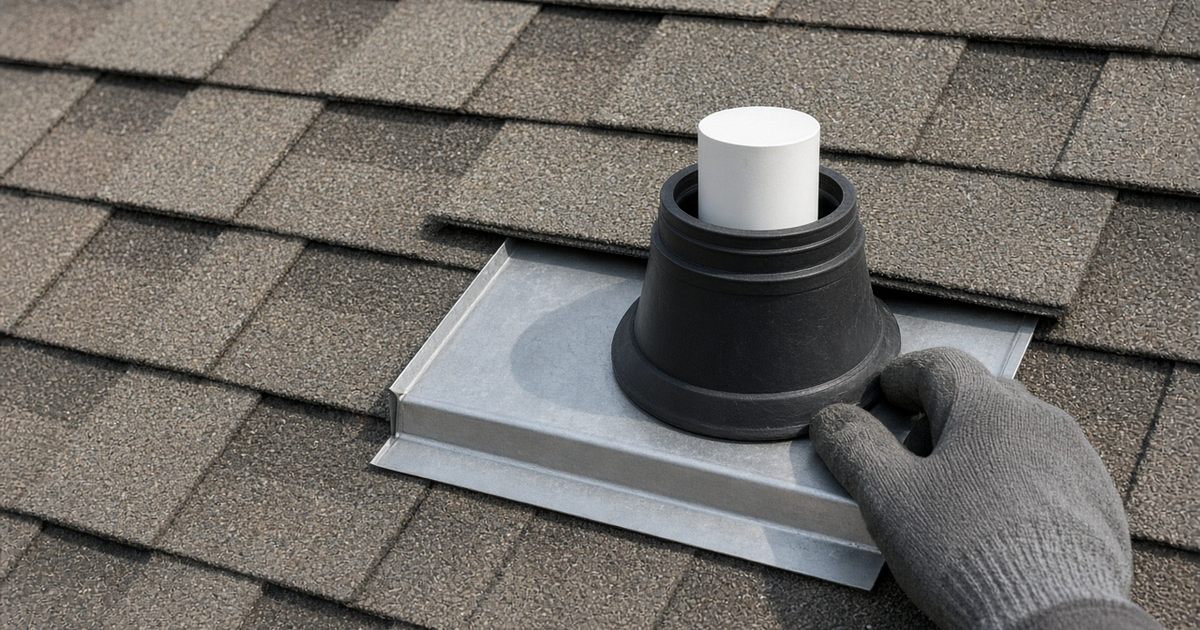
A typical boot has a flat base, usually metal or plastic, that slides under the shingles above the pipe and sits on top of the shingles below it. A rubber or neoprene collar on top hugs the pipe. Some older homes have soft lead boots that fold down into the top of the pipe instead.
Why the details matter
The 2025 California Residential Code requires flashing around roof openings, installed so that it keeps moisture from getting in at penetrations through the roof. A pipe boot is that flashing for a vent pipe. Our guide to roof flashing and the leaks it prevents covers the other places flashing is needed.
Source: 2025 California Residential Code, Sections R903.2 and R903.2.1, via up.codes, read November 28, 2026
Why pipe boots fail
Sun and heat
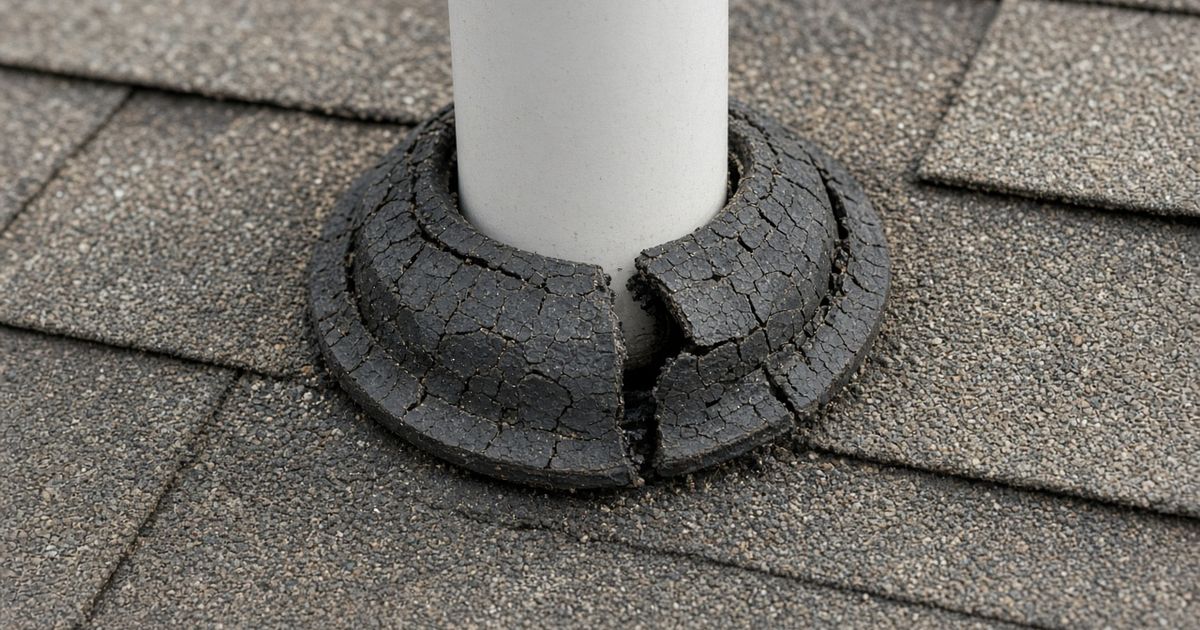
The rubber collar sits in full sun all year. Over time heat and sunlight dry it out until it hardens, shrinks and cracks. On many roofs the boots wear out before the shingles do, which is why a roof that looks fine can still leak at a vent.
Installation mistakes
A boot that sits on top of the shingles above it, instead of tucking under them, will funnel water into the roof. Exposed nails without sealant, a boot that is the wrong size for the pipe, or a collar that was cut too large can also let water in.
Damage from people and animals
Foot traffic from other trades, such as solar or satellite installers, can crack a brittle boot or bend its base. Soft lead boots can be dented or chewed. Our guide to roof rats in the attic covers how pests get in around a roof.
Signs of a pipe boot leak
A roof pipe boot leak tends to leave clues in a tight area. Look for:
- A water stain on the ceiling near a bathroom, kitchen or laundry room
- Damp insulation or a dark, wet ring on the roof deck around a vent pipe in the attic
- Water running down the outside of a vent pipe in the attic during rain
- A cracked, split or shrunken collar, visible from the ground with binoculars
- A lifted or loose boot base, or missing shingles around it
If water is coming in now, start with our guide on what to do when your roof leaks in the rain. Stains near the line where two roof slopes meet point more to the valley, and our guide to roof valley leaks covers that case.
Ask the roofer: can you send me a photo of the boot before and after the repair?
How a pipe boot leak is repaired
Replacing the boot
The usual fix is a new boot. The roofer lifts the shingles above the pipe, removes the old boot, slides a new one over the pipe, tucks the upper edge under the shingles, fastens it and reseals the shingles. If the roof deck around the pipe is soft from years of small leaks, that wood should be replaced at the same time.
Collars and covers
Some products slip over a cracked collar without removing the boot. They can be a reasonable stopgap when the base is still sound and well tucked, but they do not fix a boot that was installed wrong.
Sealant alone is a short fix
Caulk or roof cement smeared over a cracked collar may stop drips for a while, but sealant also breaks down in the sun. Treat it as a temporary patch, not a repair.
Repair now or wait for a new roof?
A single boot is a small job, and it is usually worth fixing right away, because a slow leak can rot the deck and stain the ceiling. If your roof is older and you see several worn boots, worn shingles and other leaks, it may be time to compare the cost of repairs with a new roof. Our guide to when to get a roof inspection in California explains when a full look is worth it.
When you do replace the roof, make sure the bid says every pipe boot will be replaced, not reused. That line is easy to miss and easy to skip.
A fall check is a good habit too. Our roof maintenance checklist before winter includes looking at vents and boots from the ground.
Who should fix a pipe boot?
Pipe boots are roofing work. In California, roofing contractors hold a C-39 license, and the CSLB says all active C-39 roofing contractors must carry workers' compensation insurance or have a valid certificate of self insurance on file, whether or not they have employees.
Source: CSLB, "How do I find the right licensed contractor?," cslb.ca.gov, read November 24, 2026
The same CSLB page says a contractor cannot ask for a down payment of more than 10 percent of the contract price or $1,000, whichever is less, on a home improvement project, with one exception for contractors that have a blanket performance and payment bond on file with CSLB.
Source: CSLB, "How do I find the right licensed contractor?," cslb.ca.gov, read November 24, 2026
For more ideas, see our list of questions to ask a roofer before hiring.
Questions to ask the roofer about the pipe boot
• Is the leak coming from the boot, the shingles around it or somewhere else?
• Will you replace the whole boot, or add a collar over the old one?
• What kind of boot will you install, and what size?
• Will you check the roof deck around the pipe and replace any soft wood?
• Is the repair covered by a written workmanship warranty?
Frequently asked questions
What is a pipe boot on a roof?
How do I know if my pipe boot is leaking?
Can I just caulk a cracked pipe boot?
Should pipe boots be replaced with a new roof?
Check the roofer before you sign
Even a small repair deserves a licensed roofer. Before you sign, run a ConFacts check on the California roofer to review the state license, bond and workers' comp records in one place.
Two companies. Two reports.
Got more than one bid? Check them side by side, against the same records.
Compare bids side by side