Roof Rats in the Attic: Entry Points and Fixes
Roof rats in the attic? Learn the signs, how they get in through roof vents, eaves and trees, what to seal and with what, and who to hire in California.
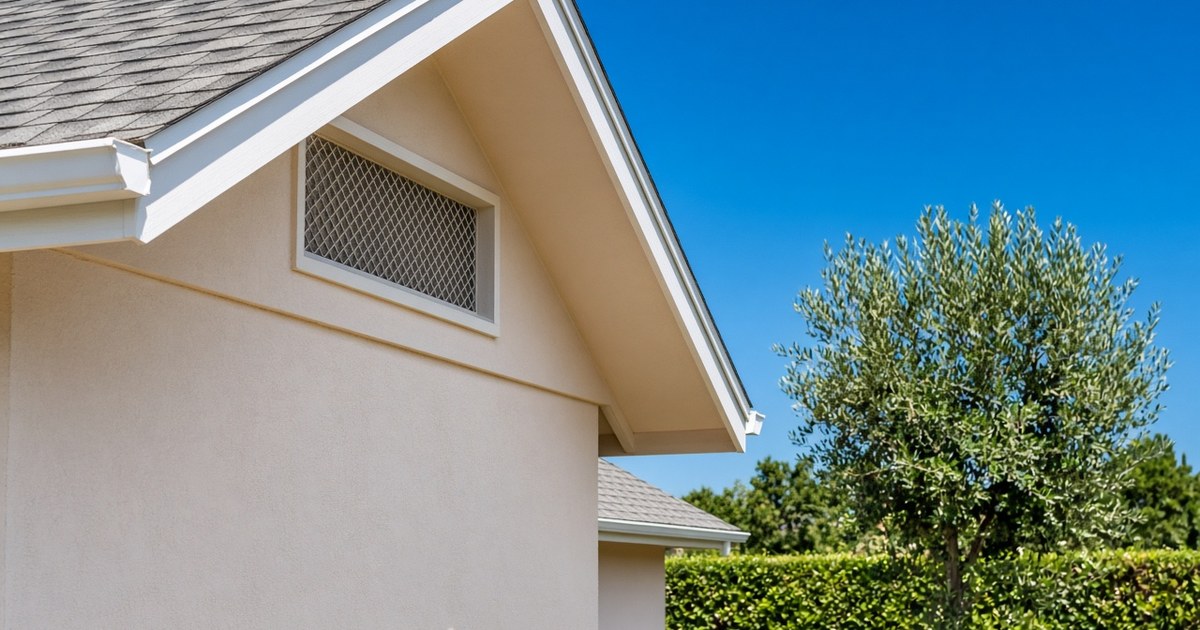
Scratching in the ceiling at night is one of the most common calls California homeowners make after the weather cools. Often the culprit is the roof rat, a climber that loves attics. Getting rid of the rats is a pest control job. Keeping them out is often a roof and attic job: gaps at vents, eaves, rooflines and pipe openings. This guide explains how roof rats get in, the signs to look for, what University of California experts say to seal, and how to hire the right people for each part.
What is a roof rat?
University of California Integrated Pest Management (UC IPM) describes roof rats as great climbers with a tail longer than their head and body. It says they usually live and nest above ground in shrubs, trees or dense vegetation, and indoors they favor attic spaces, walls, false ceilings and cabinets. The stockier Norway rat, by contrast, burrows along foundations and tends to stay on the ground floor.
Source: UC IPM, "Pest Notes: Rats," ipm.ucanr.edu, read November 22, 2026
Signs of roof rats in the attic
UC IPM lists signs of a rat infestation that include:
- Rat droppings near food preparation and storage areas or around pet food.
- Gnaw marks on fruit or nuts in your yard.
- Nests behind boxes, in cluttered garages and in woodpiles.
- Rats traveling along utility lines or on fence tops at dusk.
Source: UC IPM, "Pest Notes: Rats," ipm.ucanr.edu, read November 22, 2026
In the attic, also look for droppings on insulation, chewed wiring or ducting, and flattened paths through the insulation. Do not crawl across ceiling joists if you are unsure of your footing, and wear gloves and a mask around droppings.
How roof rats get in through the roof
Roof rats climb. UC IPM notes that they travel along the roof top and enter attics and soffit vents, and that because they are excellent climbers, openings above ground level must also be plugged. It says all holes larger than 1/4 inch should be sealed to exclude both rats and mice.
Source: UC IPM, "Pest Notes: Rats," ipm.ucanr.edu, read November 22, 2026
Common entry points on a California roof
- Attic and soffit vents with torn, rusted or missing screens.
- Gaps at the eaves where fascia boards or bird blocks have rotted or shifted.
- Roof-to-wall joints where flashing has pulled away.
- Pipe, wire and vent penetrations through the roof or walls.
- Gaps under tile roofs at the eaves where the first row of tile is open.
- Overhanging branches and vines that give rats a bridge onto the roof.
Some of these are roof defects in their own right. Gaps at the roof-to-wall line are a flashing problem, explained in our guide to roof flashing types and repairs. Soft fascia or eaves can point to rot, covered in our guide on roof decking replacement and dry rot.
What to seal roof openings with
Material choice matters. UC IPM says rats can chew through plastic, foam, wood and caulk, and recommends sealing openings with steel wool, wire screen or sheet metal. For vents, it says ventilator grills should be enclosed with 18-gauge, 1/2-inch mesh galvanized expanded metal or 16-gauge, 1/2-inch mesh galvanized wire cloth, and it warns never to use lightweight chicken wire.
Source: UC IPM, "Pest Notes: Rats," ipm.ucanr.edu, read November 22, 2026
Do not block your attic ventilation
Screen vents, do not seal them shut. Your attic needs airflow to control heat and moisture. Our guide on roof ventilation and attic heat explains why blocked vents can shorten a roof's life.
Trim trees and clean up the roofline
UC IPM recommends removing climbing plants from buildings and pruning tree limbs that are within 3 feet of a roof. It also suggests thinning dense plantings to leave at least 2 feet between shrubs and between shrubs and buildings.
Source: UC IPM, "Pest Notes: Rats," ipm.ucanr.edu, read November 22, 2026
Clean gutters help too. Rotting debris and damp fascia make easy nesting and entry spots, as our guide on how clogged gutters damage a roof explains. Large limbs over the house are also a storm risk; see our guide on what to do if a tree falls on your roof in California.
Removing the rats
Sealing a roof with rats still inside can trap them in the attic. Remove them first, then seal. UC IPM calls snap traps the safest, most effective and most economical way to trap rats, and for roof rats it suggests off-the-ground spots such as ledges, shelves, branches, fences, pipes or overhead beams. It warns that all rodenticides are toxic to nontarget species, pets and humans.
Source: UC IPM, "Pest Notes: Rats," ipm.ucanr.edu, read November 22, 2026
If roof rats are traveling on overhead utility wires, UC IPM says to contact a pest professional or the utility company for help.
Source: UC IPM, "Pest Notes: Rats," ipm.ucanr.edu, read November 22, 2026
Who to hire: pest control or a roofer?
Often both. A pest control company handles trapping and removal. When the entry points are damaged roofing, rotted eaves, torn vent screens or failed flashing, a licensed roofer can repair the roof itself so the fix lasts. Ask each one to explain exactly which openings they will close and how.
Questions to ask a roofer about rodent damage
- Which openings did you find, and can you show me photos?
- Is any decking, fascia or flashing damaged, and does it need replacement?
- Will you screen the vents with metal mesh rather than block them?
- Does this repair need a permit in my city?
- What is your license number, and do you carry workers' comp?
For more, see our list of questions to ask a roofer before hiring.
When rodent damage means a bigger roof job
Sometimes the entry point is a symptom. A rat hole at the eaves may sit on top of soft, rotted wood, and chewed vent screens may be the least of an aging roof's problems. If your roofer finds widespread rot, failed flashing or a roof near the end of its life, ask for a written comparison of a targeted repair and a replacement, with photos, so you can decide with the full picture in front of you.
Frequently asked questions
How do roof rats get into the attic?
They climb trees, vines, fences and utility lines onto the roof, then squeeze through gaps at vents, eaves and pipe openings. UC IPM says holes larger than 1/4 inch should be sealed.
Can roof rats chew through a roof?
UC IPM says rats can chew through plastic, foam, wood and caulk, which is why it recommends metal for sealing.
Should I seal the attic before or after trapping?
Trap and remove the rats first, then seal, so you do not trap them inside.
How far should trees be from my roof?
UC IPM recommends pruning limbs that are within 3 feet of a roof.
Check the roofer before the repair
If rodent damage means roof repairs, run a ConFacts check on a California roofing contractor first. You get a sourced background check from public records, including CSLB license status, workers' comp, bond, the qualifier, certifications and reviews, with a 0 to 100 Trust Score. Your first report is free, then $7, or 3 for $15. We take no money from contractors. We show you the record, you make the decision.
Two companies. Two reports.
Got more than one bid? Check them side by side, against the same records.
Compare bids side by side