Roof Valley Leaks: Causes and Repair Options
A roof valley carries more water than any other part of your roof. Learn why valleys leak, open vs closed valleys, California code rules and repair options.
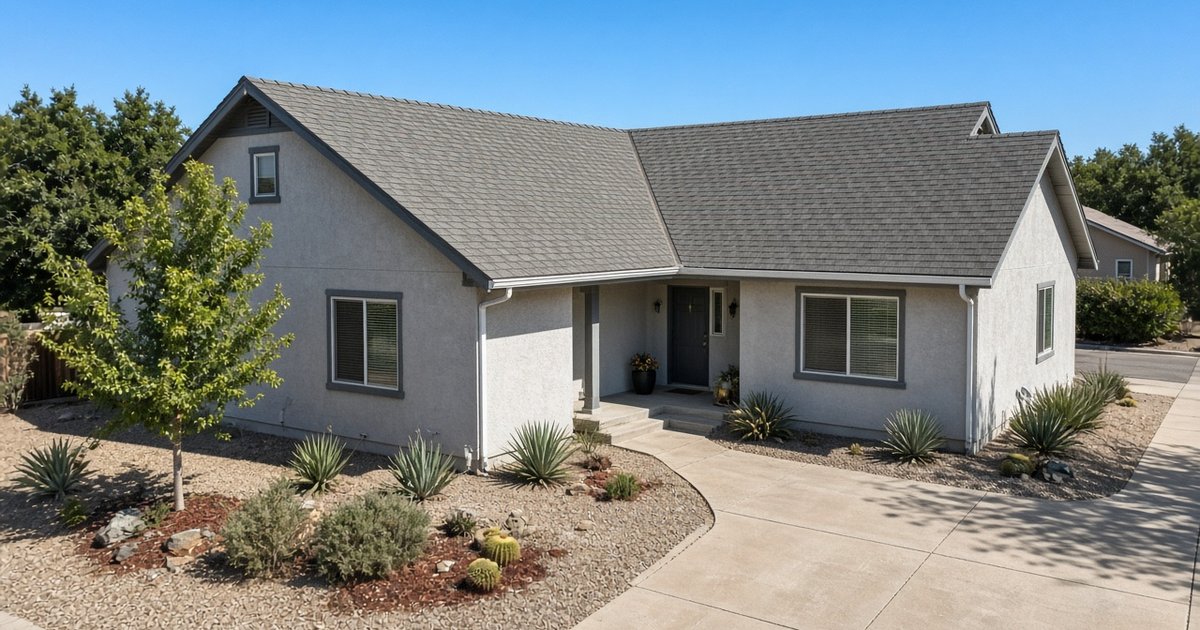
If your roof leaks and the stain sits under the spot where two roof slopes meet, the valley is the first place to look. A roof valley collects rain from two slopes at once and funnels it down a single line, so small flaws show up there first. This guide explains what a roof valley is, why roof valley leaks happen, what California code requires, and how to judge a repair quote.
Source: 2025 California Residential Code, Section R905.2.8.2 and Table R905.2.8.2, via up.codes, read November 28, 2026
What is a roof valley?
A roof valley is the inside angle where two sloped sections of roof meet, forming a V. You see valleys wherever a home has an L shape, a dormer, a garage roof that ties into the house, or a cross gable over the entry. Hips and ridges are the outside angles that shed water away. Valleys do the opposite: they gather it.
Because every drop from both slopes ends up in that channel, a valley can carry far more water than a flat stretch of shingles. That is why roofers treat the valley as one of the most important details on the roof, along with the flashing at walls and chimneys. Our guide to roof flashing and the leaks it prevents covers those other details.
Open and closed valleys
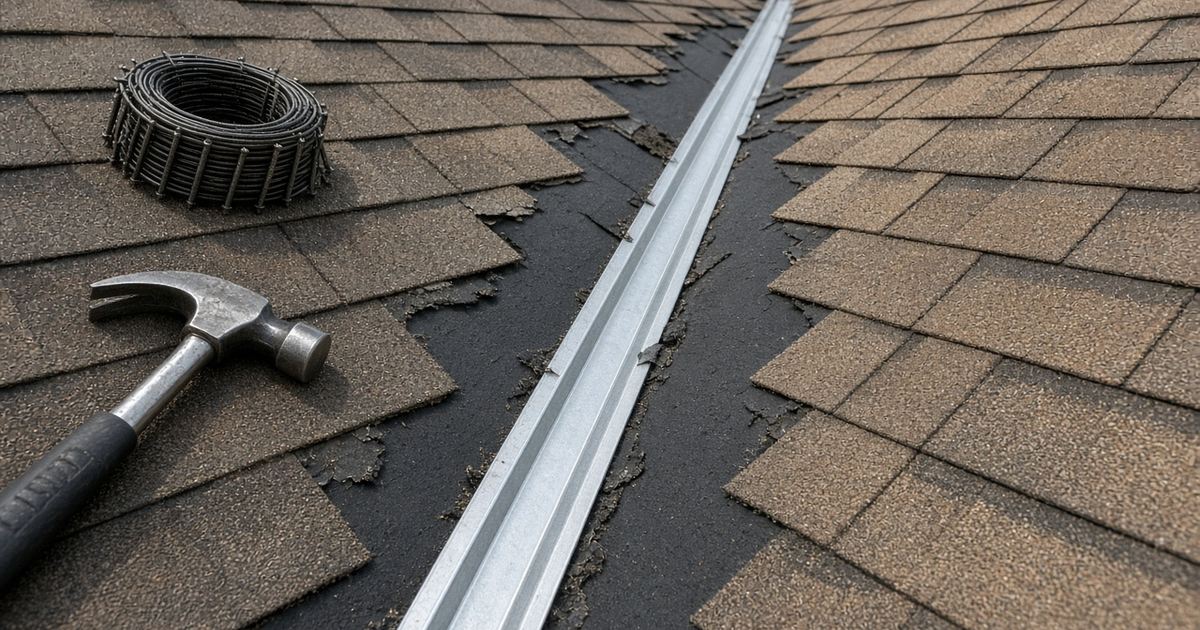
- Open valley: a strip of metal or roll roofing runs down the center and stays visible. The shingles are trimmed back on each side.
- Closed valley: the shingles cover the valley. In a woven valley the shingles from both sides overlap. In a closed cut valley one side runs through and the other side is trimmed in a straight line.
Both styles are common on California homes. Neither is automatically better. What matters is that the lining under the valley is right and the shingles are cut and sealed as the manufacturer requires.
Why roof valleys leak
Most valley leaks come down to a handful of causes. A roofer can usually tell which one it is after looking at the valley and the attic below it.
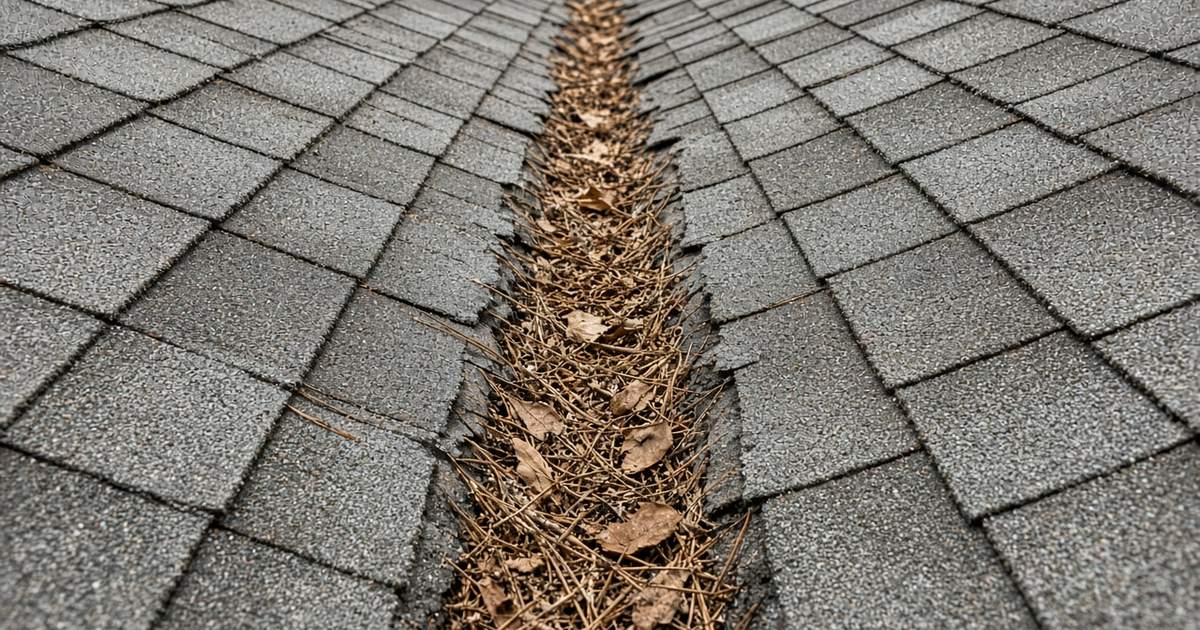
Debris that dams the water
Pine needles, oak leaves and seed pods slide down both slopes and pile up in the valley. The pile slows the water, pushes it sideways under the shingle edges and keeps the area damp. If your gutters overflow at the bottom of a valley, read our guide to clogged gutters and roof drainage.
Worn shingles and a worn lining
The valley gets more water and more sun than most of the roof, so it often wears out first. Shingles in the valley may lose their surface, crack or curl before the rest of the roof does. On older roofs the metal lining can rust or split, and older roll roofing can dry out.
Installation problems
Common mistakes include nails driven too close to the center of the valley, shingles cut without sealing the corners, and a lining that is too narrow or missing. These problems may stay hidden for years and then show up during a long, heavy storm.
Where two roofs were tied together
Additions and garage conversions often create a new valley where an old roof meets a new one. If the tie in was rushed, the valley may have mismatched layers that let water in.
What California code says about valleys
For asphalt shingle roofs, the 2025 California Residential Code says valley linings must be installed according to the manufacturer's instructions before the shingles go on. It allows three types of lining:
- For open valleys lined with metal, corrosion resistant metal at least 24 inches wide.
- For open valleys, two plies of mineral surfaced roll roofing, with the bottom layer 18 inches wide and the top layer at least 36 inches wide.
- For closed valleys, one ply of smooth roll roofing at least 36 inches wide, or either of the linings above.
The code also permits self adhering polymer modified bitumen underlayment in place of those linings. That is the sticky membrane many roofers now run down valleys first. Our article on how roof underlayment works explains the layer under your shingles.
Source: 2025 California Residential Code, Section R905.2.8.2, via up.codes, read November 28, 2026
Your city or county building department enforces the code, and tile, metal and other roof types have their own valley details.
Ask the roofer: what lining will go under the valley, how wide is it, and is it written into the contract?
Signs your roof valley is leaking
You can often spot valley trouble without climbing on the roof. Look for:
- Water stains on the ceiling or wall below where two roof slopes meet
- Dark, damp or stained wood in the attic along the line of the valley
- Debris piled in the valley, or plants growing in it
- Shingles in the valley that look worn, cracked or lifted compared with the rest of the roof
- Rust, gaps or bent metal in an open valley
- Gutters that overflow at the bottom of the valley during rain
If water is coming in now, our guide on what to do when your roof leaks in the rain walks through protecting the inside of the home first. Valleys are not the only common leak point; plumbing vents are another, and our guide to roof pipe boot leaks covers them.
How roof valley leaks are repaired
Cleaning and small fixes
If debris is the cause and the shingles are sound, cleaning the valley and the gutters below it may stop the leak. A roofer may also reseal a lifted shingle edge or replace a few damaged shingles.
Rebuilding the valley
When the lining is worn or was installed wrong, the better fix is to remove the shingles along the valley, replace any wet or soft roof deck, install a new lining and new underlayment, and reshingle the valley. A good repair also blends the new shingles into the old ones on both slopes.
When it points to a new roof
If the valleys are failing because the whole roof is near the end of its life, repairing one valley may only buy a short time. Our guide to roof repair vs replacement can help you weigh the cost of a repair against a new roof. Ask for the repair scope in writing, including the lining type and how far up each slope the work will go, so you can compare roofing bids side by side.
Questions to ask the roofer
• What do you think is causing the valley leak, and can you show me photos?
• Will you replace the valley lining, or only the shingles?
• What lining will you use, and how wide is it?
• Will you check and replace any soft roof deck under the valley, and at what price?
• Is the valley repair covered by your workmanship warranty, and for how long?
Frequently asked questions
Why do roof valleys leak so often?
Is an open or closed valley better?
Can a roof valley be repaired without a new roof?
What lining does California code require in a roof valley?
Check the roofer before you sign
A valley repair is only as good as the roofer doing it. Before you sign, run a ConFacts check on the California roofer to review the state license, bond and workers' comp records in one place.
Two companies. Two reports.
Got more than one bid? Check them side by side, against the same records.
Compare bids side by side