Chimney Leaks: Causes, Signs and Repair Options
Water around a chimney usually comes from flashing, the crown, the cap or the brick. Learn how to tell where a chimney leak starts and how each one is repaired.
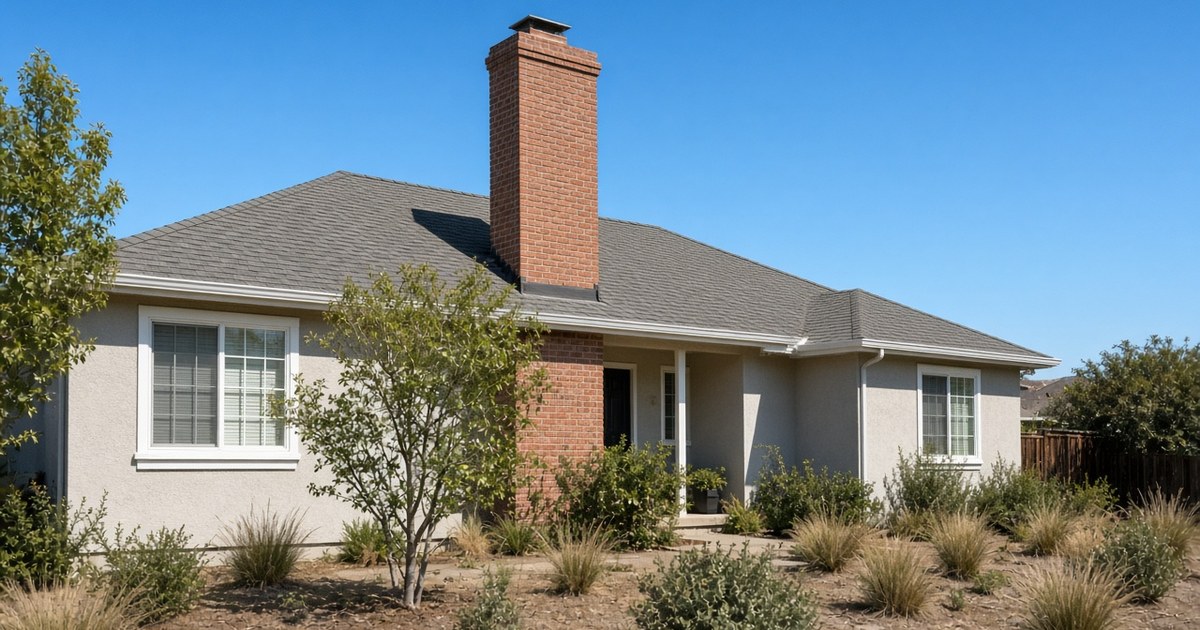
A chimney is a big masonry box punched through your roof, and every side of it is a place water can get in. That is why stains on the ceiling or wall next to a fireplace are one of the most common leak calls after the first winter storms. This guide explains where chimney leaks start, how to tell a chimney leak from a roof leak, and what each repair involves so you can talk to a roofer or chimney professional with confidence.
Source: 2025 California Residential Code, Sections R903.2.2, R1003.9 and R1003.20, via up.codes, read November 28, 2026
Why chimneys leak so often
Where a chimney meets the roof, two very different materials have to work together. The roof moves a little with heat and wind; the brick does not. The joint between them is sealed by metal flashing, and water running down the slope piles up against the uphill side of the chimney. Add a flat top that catches rain and brick that can soak up water, and you have several possible leak points in one spot.
The California Residential Code requires flashing around roof openings and where walls meet roofs, and it requires a cricket (a small peaked roof section that splits water around the chimney) on the uphill side of any chimney or penetration more than 30 inches wide.
Source: 2025 California Residential Code, Sections R903.2.1 and R903.2.2, via up.codes, read November 28, 2026
The five usual leak points
Flashing
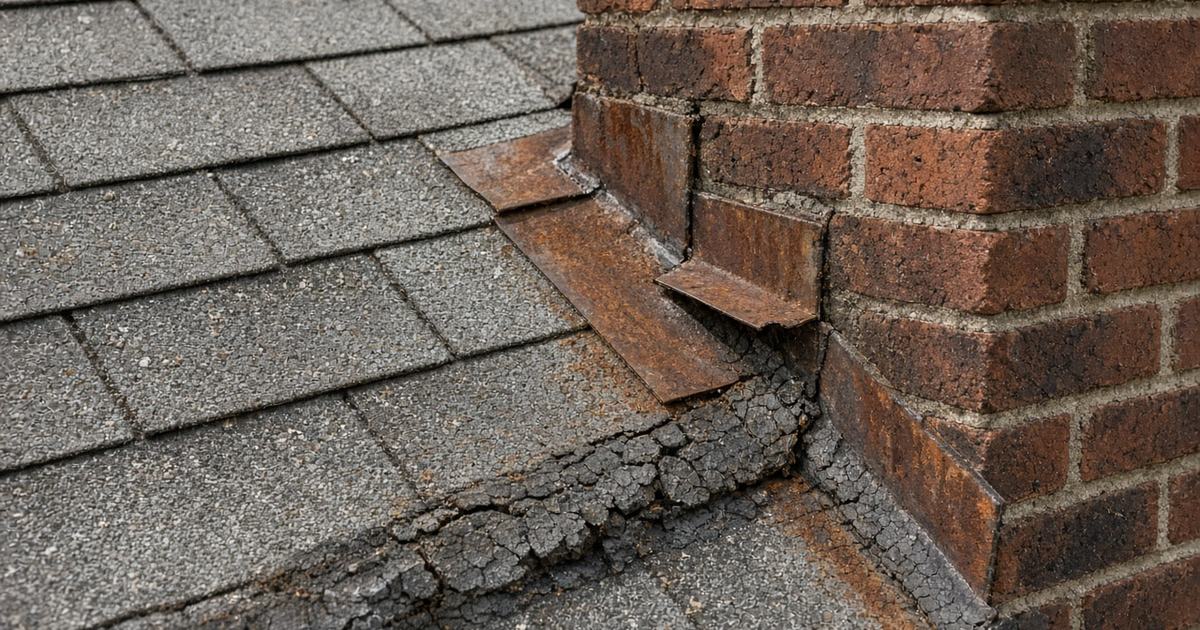
Good chimney flashing has two parts: step flashing woven into the shingles along the sides, and counterflashing set into the mortar joints that laps down over it. Leaks start when the counterflashing pulls out of the brick, the metal rusts through, or someone relied on a bead of caulk instead of proper flashing. Our guide to roof flashing and how it works shows each type.
A missing or failed cricket
On a wide chimney with no cricket, water and leaves pile up against the uphill side and eventually work under the flashing. The code's chimney section ties the cricket's size to the roof slope, and the cricket itself must be flashed and counterflashed like the rest of the chimney.
Source: 2025 California Residential Code, Section R1003.20, via up.codes, read November 28, 2026
The crown
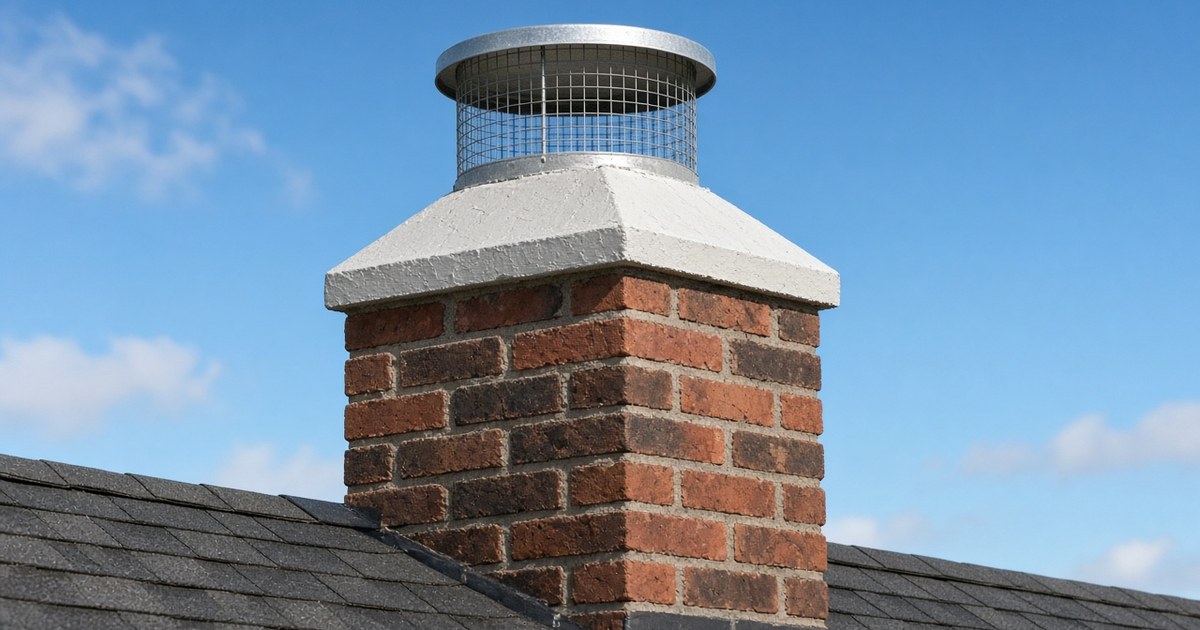
The crown is the concrete or mortar top of a masonry chimney. Cracks in it let rain straight into the masonry. The code calls for masonry chimneys to have a concrete, metal or stone cap with a drip edge.
Source: 2025 California Residential Code, Section R1003.9.1, via up.codes, read November 28, 2026
No chimney cap
A cap with a mesh screen over the flue keeps rain, leaves and animals out. Without one, rain falls straight down the flue and can show up as water in the firebox.
Porous brick and mortar
Old brick and cracked mortar joints absorb water, which can wick through to the inside. Repointing (replacing worn mortar) and, where appropriate, a breathable masonry water repellent are the usual fixes.
Ask the roofer: is the water coming in at the flashing, the crown, the flue or through the brick itself, and how did you test it?
Chimney leak or roof leak?
Water travels before it drips, so a stain near the chimney does not always mean the chimney is the source. A few clues help:
- Water in the firebox or damper area points to the cap, crown or flue.
- Stains on the ceiling right beside the chimney often mean flashing or a missing cricket.
- Damp or stained brick inside, or white chalky deposits suggest water soaking through the masonry.
- Stains farther away may be a roof leak elsewhere, such as a leaking roof valley or a cracked pipe boot.
A good contractor will often water test one area at a time with a hose while someone watches inside. That takes longer than guessing, but it avoids paying for the wrong repair.
What you can safely do first
Stay off the roof. From the ground, use binoculars to look for missing or rusty flashing, a cracked crown and a missing cap, and take photos. Inside, put a bucket under drips, move furniture and photograph the stains with a date. If the leak only shows up in heavy rain, note the wind direction; it helps the roofer narrow the source. Our guide on what to do when the roof leaks in the rain walks through the first hour.
How chimney leaks are repaired
The fix should match the source, which is why diagnosis matters:
- Flashing: new step flashing and counterflashing cut into the mortar joints. Caulk alone is a short term patch, not a repair.
- Cricket: framed and flashed on the uphill side when the chimney is wide enough to need one, often done during a reroof.
- Crown: small cracks can be sealed; a crumbling crown is usually rebuilt.
- Cap: a new metal cap with mesh over the flue.
- Masonry: repointing worn mortar joints and replacing damaged brick.
Flashing and crickets are roofing work, usually done by a roofer with a C-39 license; our guide to what a C-39 roofing license covers explains it. Masonry and crown work may be done by a masonry contractor or chimney professional. If you are replacing the roof soon, plan the chimney flashing as part of that job rather than paying twice.
If your leak started after an earthquake, see our guide to roof damage after an earthquake before anyone patches it.
Because a chimney is a fire safety system as well as a roof penetration, ask whoever works on it not to block the flue or change its height. The code requires a chimney to rise at least 3 feet above the highest point where it passes through the roof and at least 2 feet higher than any part of the building within 10 feet.
Source: 2025 California Residential Code, Section R1003.9, via up.codes, read November 28, 2026
Questions to ask about a chimney leak
• Where exactly is the water getting in, and can you show me photos?
• Will you replace the step flashing and counterflashing, or only reseal it?
• Does this chimney need a cricket, and will you add one?
• What condition are the crown, cap and mortar joints in?
• Who will do the masonry work, and are they licensed for it?
• Is the repair covered by a written workmanship warranty?
Frequently asked questions
Why does my chimney only leak in heavy rain?
Can I just caulk around my chimney?
What is a chimney cricket?
Should a roofer or a chimney company fix it?
Check the roofer before you sign
Chimney flashing is detailed work that is easy to do badly. Before you sign, run a ConFacts check on the California roofer to review the state license, bond and workers' comp records in one place.
Two companies. Two reports.
Got more than one bid? Check them side by side, against the same records.
Compare bids side by side