Metal Roof Leaks: Common Causes and Repairs
Most metal roof leaks start at screws, seams, flashing or penetrations, not the panels. Learn how to find the leak and when to repair, coat or replace the roof.
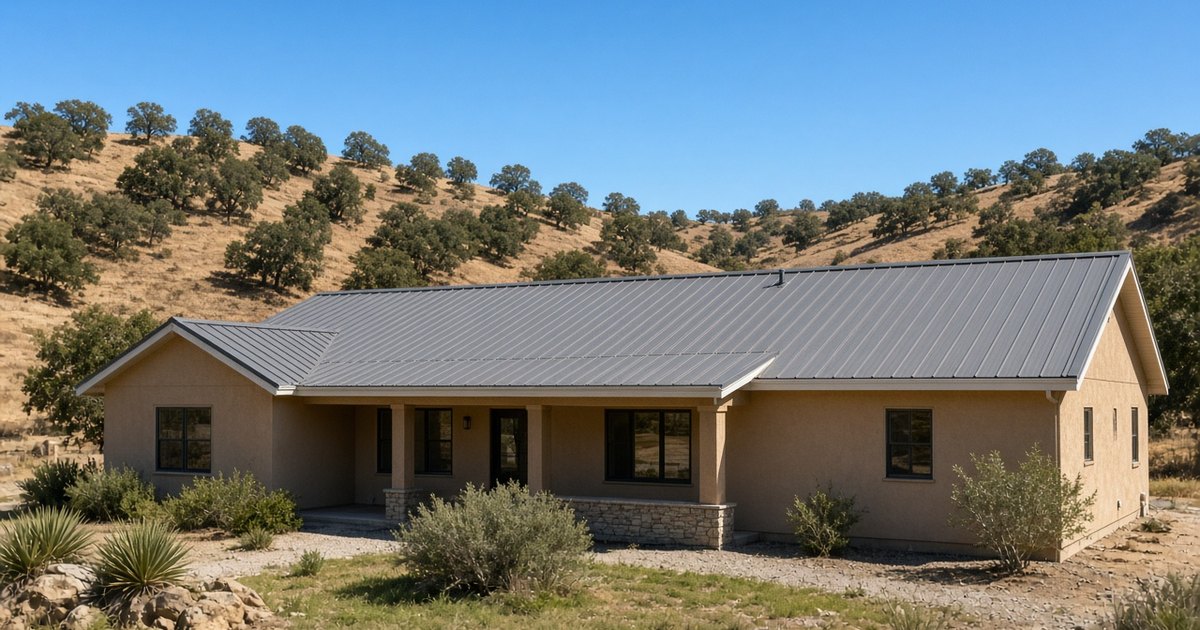
Metal roofs last a long time, but they are not leak proof. When a metal roof leaks, the panels themselves are rarely the problem. The water almost always gets in at a fastener, a seam, a piece of flashing or a pipe or vent that passes through the roof. This guide explains the common causes of metal roof leaks, the difference between exposed fastener and standing seam roofs, and what a lasting repair looks like.
Two kinds of metal roof
How your metal roof leaks depends a lot on how it is built.
Exposed fastener panels
These are ribbed or corrugated panels screwed straight through the face of the metal into the framing. Each screw has a rubber or neoprene washer that seals the hole. They are common on barns, sheds, patio covers and many lower cost homes. Every screw is a possible leak point, and there can be hundreds of them.
Standing seam panels
These panels are joined by raised seams, and they are held down by clips hidden under the seams, so there are few or no screws through the face of the metal. They usually leak less, but when they do, the cause is often at the seams, the ends of the panels, or the flashing around chimneys, skylights and vents.
The California Residential Code sets the minimum roof pitch for each type. Lapped, nonsoldered seam panels need at least 3 in 12 without lap sealant, or 1/2 in 12 with sealant applied as the maker directs. Standing seam systems can go as low as 1/4 in 12. A panel installed below its minimum slope is more likely to leak at the laps. Our guide to roof pitch and what it means explains how slope is measured. A third type, stone-coated steel, imitates tile or shake: see stone-coated steel roofing.
Source: 2025 California Residential Code, Section R905.10.2, via up.codes, read November 28, 2026
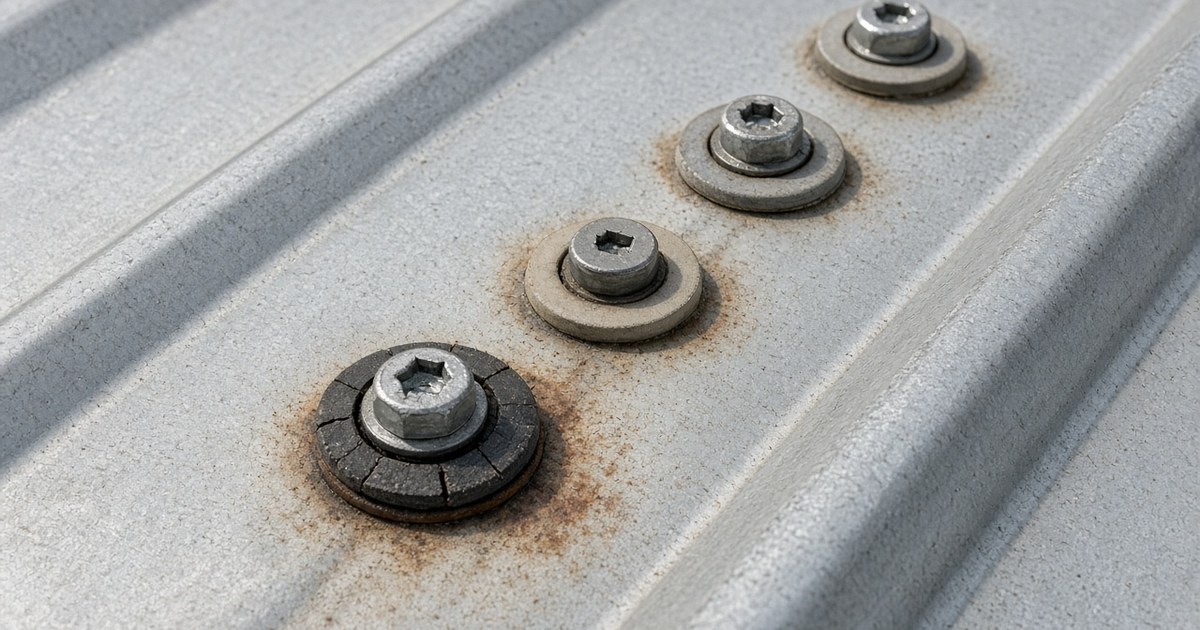
The most common causes of metal roof leaks
Worn screw washers
Rubber washers dry out and crack after years of sun and heat. Once the seal fails, rain runs down the screw shank. This is the most common leak on exposed fastener roofs.
Loose, missing or wrong screws
Metal expands in the afternoon sun and shrinks at night. Over time that movement can loosen screws or wallow out the holes. Screws driven too tight crush the washer; screws too loose never seal. Screws that miss the framing underneath have little to hold. The code also calls for fasteners that suit the metal: galvanized fasteners for steel roofs, stainless steel being acceptable for metal roofs, unless the panel maker's instructions say otherwise.
Source: 2025 California Residential Code, Section R905.10.4, via up.codes, read November 28, 2026
Seams and laps
Where panels overlap, sealant or tape keeps wind driven rain out. Old sealant shrinks and cracks. On standing seam roofs, a seam that was not fully closed or was bent by foot traffic can let water in.
Flashing and penetrations
Pipes, vents, skylights, chimneys and solar mounts all pass through the roof. Each needs a boot or flashing designed for metal. Our guides to roof flashing and how it works and roof pipe boot leaks cover these details, which apply to metal roofs too.
Rust and scratches
Coated steel resists rust until the coating is scratched or worn. Cut edges, scratches from foot traffic, and places where dirt and leaves sit wet for a long time are where rust starts. Mixing metals, such as copper fittings on a steel roof, can also speed up corrosion.
Ask the roofer: is this an exposed fastener or standing seam roof, and where exactly is the water getting in?
How to find a metal roof leak
Stay off the roof. Metal panels can be slippery when wet or dusty, and soft spots can dent. From the ground or a window, look for:
- Rust rings or streaks around screw heads.
- Screws that sit higher than their neighbors or are missing.
- Gaps, lifted edges or cracked sealant at seams and flashing.
- Dents or bent seams where people have walked.
Inside, a metal roof leak often shows up as drips in the attic along a line of screws, or stains near a vent or skylight. A good roofer will test one area at a time with a hose while someone watches inside, rather than sealing everything and hoping. Our guide to skylight leaks and repairs may help if the water appears near one.
Repair, coating or replacement?
Targeted repairs
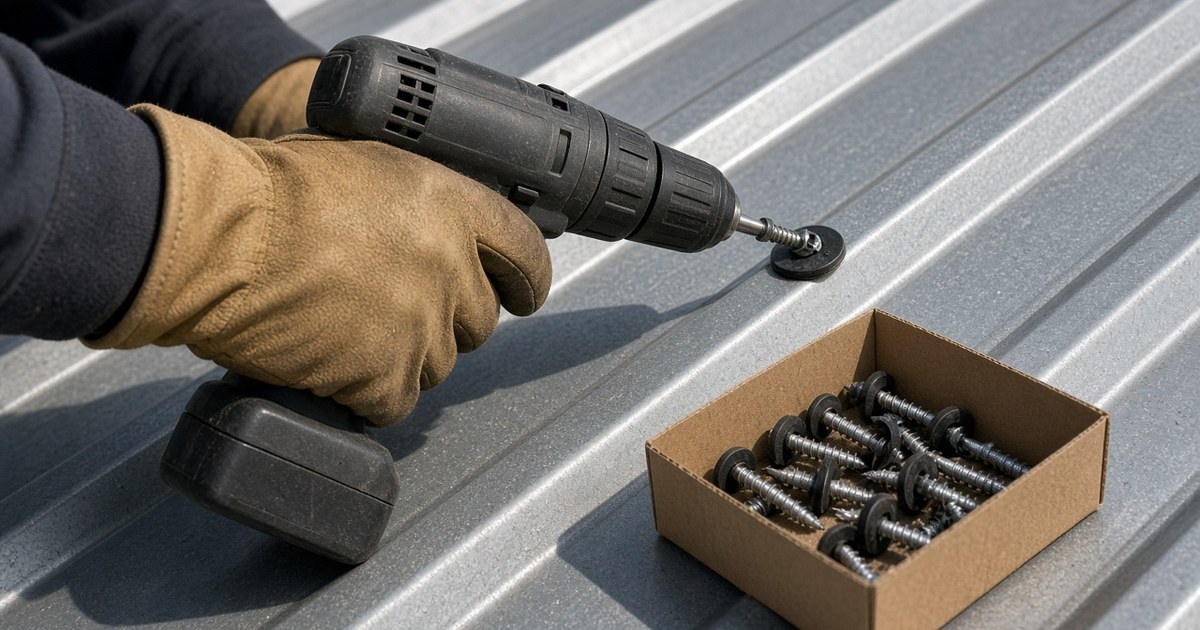
Many metal roof leaks are fixed by replacing worn screws, often with slightly larger screws where the old holes are enlarged, resealing laps, and replacing failed boots and flashing. Rusted sections can sometimes be patched or a single panel replaced.
Roof coatings
On an exposed fastener roof with many aging screws and light surface rust, a coating system that seals the fasteners and seams can extend its life. It is not a fix for loose panels, heavy rust or a structural problem. Our guide to roof coating vs replacement explains when it makes sense.
Replacement
If rust has eaten through panels, the roof was installed below its minimum slope, or leaks keep coming back after repairs, replacement may be better value. Our guide to tile vs shingle vs metal roofs in California compares options. If your roof is still under a warranty, read our guide to tile and metal roof warranties before anyone else touches it.
Timing and upkeep
Most California metal roof leaks show up with the first winter storms, after a long dry summer has baked the washers and sealant. A quick check from the ground each fall, clearing leaves and dirt from valleys and around penetrations, and fixing loose screws before the rain starts can prevent many leaks. Wet metal is slippery, so a roofer will usually wait for a dry day for anything beyond an emergency cover. Keep photos and invoices for every repair, because they help with warranty and insurance questions later.
Questions to ask about a metal roof leak
• Is my roof exposed fastener or standing seam?
• Where is the leak coming from, and how did you confirm it?
• Will you replace screws and washers, or only seal over them?
• Are the fasteners and flashing compatible with the metal on my roof?
• Is there rust that will keep spreading, and where?
• Will this repair affect any manufacturer or workmanship warranty?
Frequently asked questions
Why does my metal roof only leak in heavy rain?
Is condensation a leak?
Can I just caulk the screws?
Who should repair a metal roof?
Check the roofer before you sign
Metal roofing is specialized work. Before you sign, run a ConFacts check on the California roofer to review the state license, bond and workers' comp records in one place.
Two companies. Two reports.
Got more than one bid? Check them side by side, against the same records.
Compare bids side by side