What Is Drip Edge on a Roof? Why It Matters
Drip edge is the metal strip at your roof edge that keeps water off the fascia and deck. Learn what it does, California code rules, and how to check your bid.
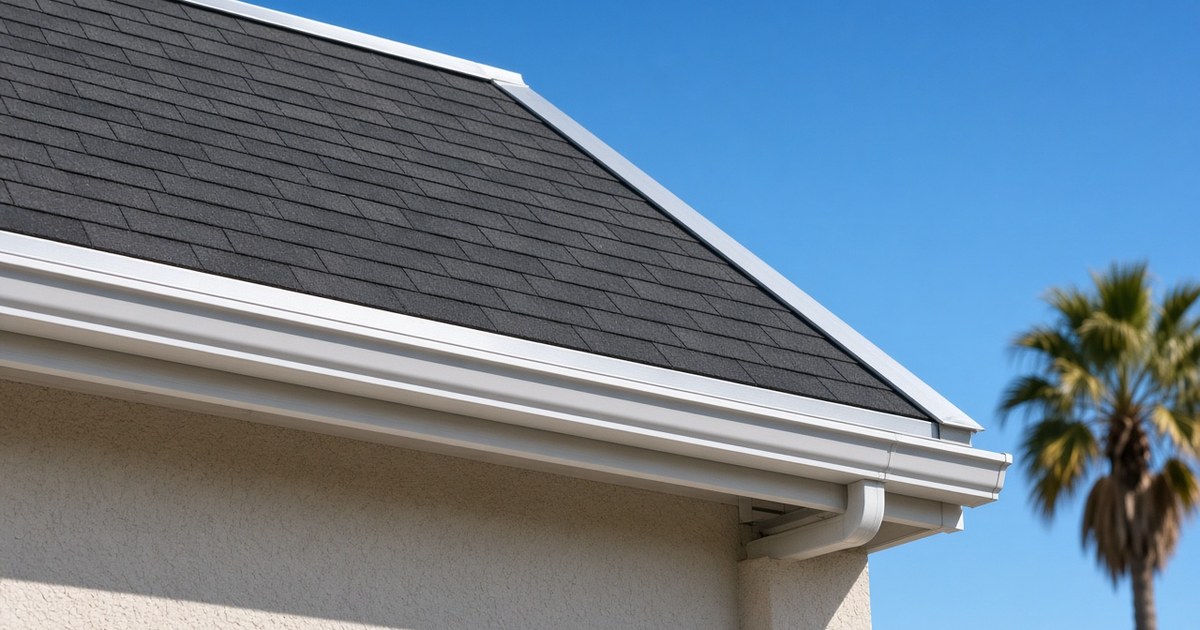
Drip edge is one of the smallest parts of a roof, and one of the easiest to leave off a bid. It is a strip of bent metal that runs along the edges of the roof. It does a quiet but important job: it carries water off the roof and away from the wood underneath. This guide explains what drip edge is, what California code requires for shingle roofs, how it should be installed, and what to look for in your roofing estimate.
Source: 2025 California Residential Code, Section R905.2.8.5, via up.codes, read November 28, 2026
What is drip edge?
Drip edge is a long, narrow piece of metal, usually aluminum or coated steel, bent into an L or T shape. One side lies flat on the roof deck under the roofing. The other side hangs down over the edge of the roof, slightly away from the fascia board. Rain that runs off the shingles drips from that lower lip into the gutter or onto the ground, instead of curling back under the roof edge.
Where it goes
- Eaves: the lower, horizontal edges of the roof, where the gutters usually hang.
- Rakes: the sloped edges on the gable ends of the roof.
Drip edge is a type of roof flashing. Our guide to roof flashing and the leaks it prevents covers the other kinds, such as step flashing at walls and flashing around chimneys.
Why drip edge matters
Water is good at clinging to surfaces. Without a drip edge, some of the water running off the roof follows the underside of the shingles back toward the house. Over time that water can:
- Soak the edge of the roof deck, which can lead to soft or rotted sheathing
- Run behind the gutter and rot the fascia board
- Stain the soffit and the siding or stucco below
- Give insects and small animals a gap at the roof edge
Drip edge also gives the shingles a straight, supported edge, so they are less likely to curl or crack where they hang over the side. If you are already seeing rot at the roof edge, read our guide to fascia and soffit repair.
Signs your drip edge is missing or failing
You can often spot problems from the ground. Look along the eaves for shingles that hang over the edge with nothing under them, dark streaks or peeling paint on the fascia, and water marks on the soffit after rain. Bent, loose or rusted metal at the edge is another clue. If the gutter sits so low that water misses it and drips behind, the gap between the drip edge and the gutter may be the cause. Take photos and share them with a roofer, rather than climbing up to check.
Is drip edge required in California?
For asphalt shingle roofs, yes. The 2025 California Residential Code says a drip edge shall be provided at the eaves and rake edges of shingle roofs. The same section sets out how it is installed:
- Adjacent pieces overlap by at least 2 inches.
- The drip edge extends at least 1/4 inch below the roof sheathing.
- It extends back onto the roof deck at least 2 inches.
- It is mechanically fastened to the deck at no more than 12 inches on center.
- Underlayment goes over the drip edge along the eaves and under it along the rakes.
Source: 2025 California Residential Code, Section R905.2.8.5, via up.codes, read November 28, 2026
Tile, metal and flat roofs have their own edge details, and manufacturers publish their own instructions. Your city or county building department enforces the code where you live, and some add local amendments.
Ask the roofer: is new drip edge included at every eave and rake, and is it listed in the contract?
How drip edge is installed
The order of layers matters
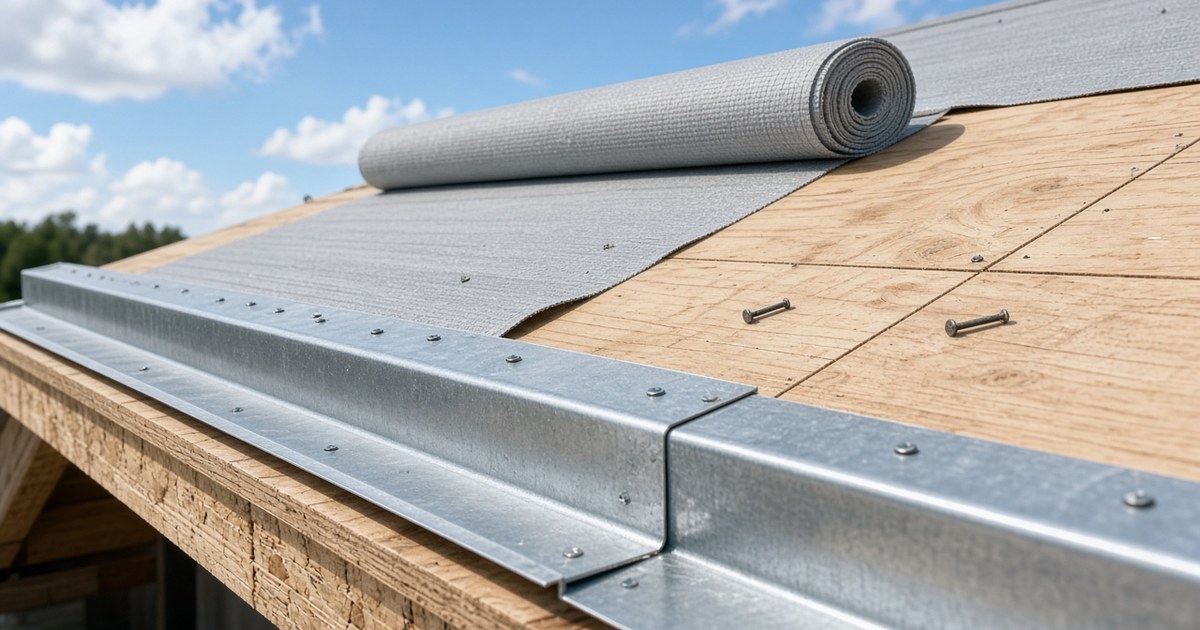
At the eaves, the drip edge goes on first, right on the deck, and the underlayment laps over it. That way any water that gets under the shingles runs over the metal and out. At the rakes, the order flips: the underlayment goes down first and the drip edge sits on top of it. Getting this order wrong is a common reason a new roof shows water stains at the edge. Our article on roof underlayment explains what that layer does.
New or reused?
On a full replacement, many roofers install new drip edge, because the old metal is often bent, rusted or nailed through. Some bids reuse the old metal to save money. Neither choice is automatically wrong, but you should know which one you are paying for.
Color and gutters
Drip edge comes in colors to match the roof or trim. If you are replacing gutters at the same time, the roofer and gutter installer should agree on how the gutter hangs relative to the drip edge so water lands inside the gutter.

How to check drip edge in your roofing bid
Drip edge is a small cost compared with the whole job, which is exactly why it can be quietly skipped or reused. When you compare bids, look for:
- Drip edge listed as a line item, with the edges it covers
- Whether it is new or reused, and the material and color
- How it ties into the underlayment and gutters
- Whether it is covered by the workmanship warranty
Our guide on how to compare roofing bids side by side shows how to line up the details, and our article on what should be in a roofing contract in California covers getting the full scope in writing. After the job, our new roof final inspection checklist shows what to check before the last payment.
Questions to ask the roofer
• Will you install new drip edge at every eave and rake?
• What material and gauge is the drip edge?
• Will the underlayment go over the drip edge at the eaves and under it at the rakes?
• How will the drip edge line up with my gutters?
• Will you replace any rotted deck or fascia you find at the edge, and at what price?
Frequently asked questions
Is drip edge necessary on a roof?
Does drip edge go over or under the underlayment?
Can drip edge be added without a new roof?
What happens if my roof has no drip edge?
Check the roofer before you sign
A roofer who explains small details like drip edge clearly is usually careful with the big ones too. Before you sign, run a ConFacts check on the California roofer to review the state license, bond and workers' comp records in one place.
Two companies. Two reports.
Got more than one bid? Check them side by side, against the same records.
Compare bids side by side